The Opium Wars and the Tea Trade: A Dark History
Britain's appetite for Chinese tea created a catastrophic trade deficit. The 'solution' was opium — and two wars that broke a civilisation.
Sameera
· 9 min read
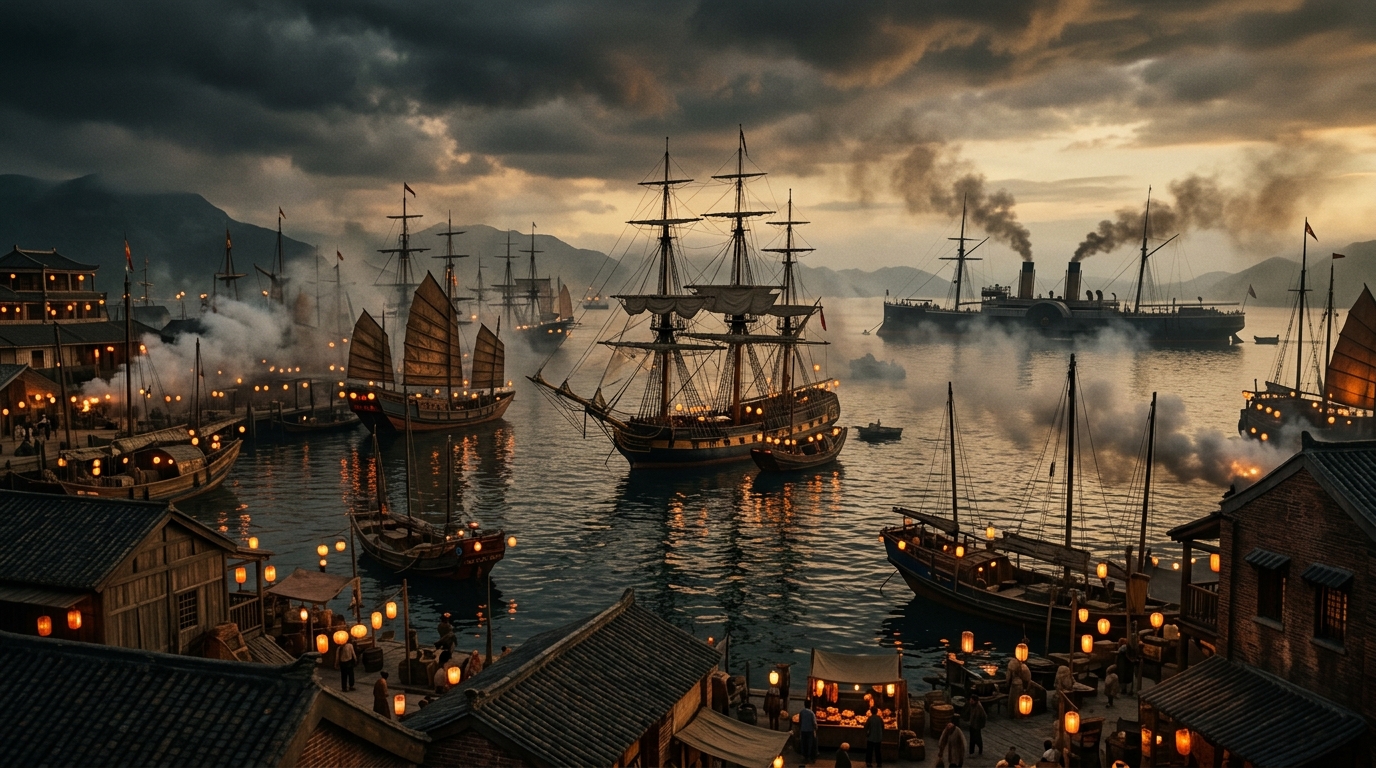
Most histories of tea skip lightly over what happened in China between 1839 and 1860. The truth is harder to look at: two wars, a national addiction crisis, and the violent opening of an entire civilisation to Western trade — all driven, at root, by the British appetite for tea.
The trade imbalance. By the late 1700s, Britain was buying enormous quantities of Chinese tea, silk, and porcelain. The Qing dynasty primarily accepted silver in payment. British silver flowed east; almost nothing acceptable flowed back. Britain faced sustained bullion outflows that strained the East India Company and Treasury, not the entire imperial economy.
The opium fix. The British East India Company found a solution that would, in any modern jurisdiction, constitute a transnational drug-trafficking operation. It grew opium under monopoly conditions in Bengal, sold it through licensed agents to private ships flying neutral flags, and private traders smuggled it into Chinese ports — recapturing the silver Britain had just paid for tea. By 1830, the flow had reversed: silver was now leaving China, addiction rates were climbing, and the Qing government was facing a public-health emergency.
First Opium War (1839–42). Commissioner Lin Zexu seized about 1,200 tonnes of foreign-owned opium in Canton and destroyed it. Britain, claiming an injury to free trade, sent the Royal Navy. Chinese junks, however brave, were no match for steam-powered gunboats and superior smoothbore cannon. China lost decisively. The Treaty of Nanjing (1842) ceded Hong Kong Island, opened five 'treaty ports', and imposed an indemnity of 21 million silver dollars.
Second Opium War (1856–60). When Britain demanded further concessions, China refused, and a second war followed — this one joined by France. Anglo-French troops marched on Beijing and burned the Old Summer Palace, the Yuanmingyuan, an act of cultural vandalism that is still raw in Chinese memory.
The legacy. China calls the period from 1839 to 1949 the Century of Humiliation. Many of the unequal treaties signed in that century were tied, in one way or another, to foreign trade. It is uncomfortable but broadly accurate to say that the modern global tea industry, aspects of Hong Kong’s rise as a financial centre, and parts of contemporary Chinese national identity trace back partly to British silver, Indian opium, and tea.
Follow The Tea List