Chamomile, Revisited
The humble chamomile flower has been underestimated for too long. A case for the most misunderstood herbal.
Sameera
· 4 min read
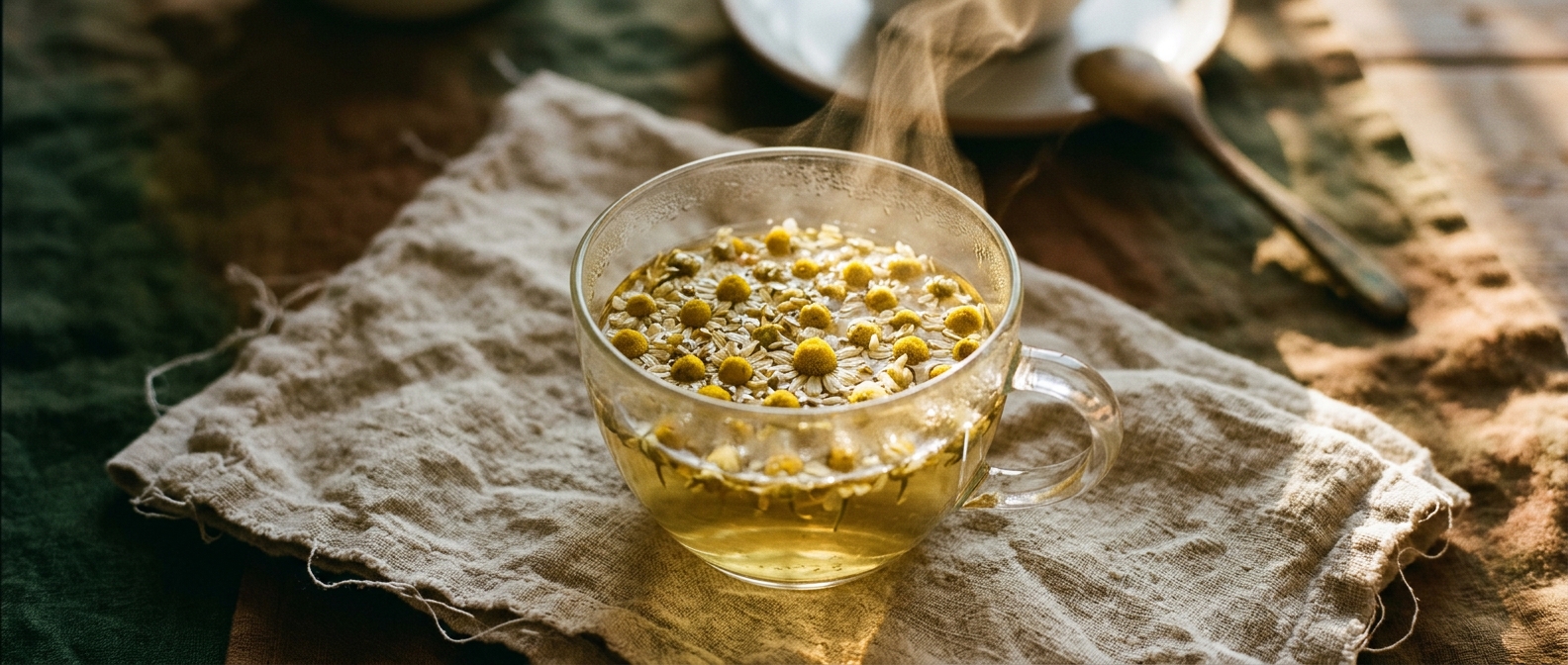
Most chamomile you've had was bad. Teabags stuffed with dust, steeped too long, made from stale flowers. The real thing — whole dried flowers from Egypt or Croatia — is something else entirely.
Use a heaping tablespoon of flowers per cup. Use freshly boiled water and follow the infusion time on the packaging — typically at least five minutes. Food-safety agencies such as Germany's BfR recommend boiling water and a proper steep for herbal and fruit infusions on hygiene grounds, so don't trade that away for a flavour theory. If you find a particular chamomile tastes harsh, adjust the quantity of flowers or the steep time rather than the water temperature. The cup should taste of apple skin and warm hay, never bitter. A good Egyptian chamomile is bright and almost honey-like. A good Croatian chamomile is more medicinal, a little earthier.
The scientific evidence for chamomile as a sleep aid is mixed and modest. The compound apigenin, present in chamomile, binds weakly to the benzodiazepine site on GABA-A receptors, which may help explain a mild calming effect. But the larger truth is probably ritual: making a hot drink, sitting down, and giving yourself ten minutes of unhurried space before bed can help many people sleep better, regardless of what's in the cup.
Good chamomile is not a sleep aid. It is a slow exhale.
Follow The Tea List