From China to the World: 5,000 Years of Tea's Journey
How a Chinese leaf became Japan's ceremony, Britain's empire, India's economy, and a half-billion daily cups across nine time zones.
Sameera
· 9 min read
Tea's biography is a study in how slowly cultures change — and how violently, when they do.
c. 200 BCE – 200 CE: A Chinese drink. For many centuries, tea was a regional habit confined to southwestern China. Used first as a chewed stimulant, then as a boiled medicine, it gradually became a daily beverage among Buddhist monks who valued its calm-alertness for long meditation sessions.
9th century: Japan adopts the leaf. Buddhist monks studying in China carried tea seeds and a method back to Kyoto. By the 15th–16th centuries, tea drinking had been formalised into chado, the Way of Tea, the most refined ceremonial use of the leaf anywhere in the world. Powdered tea whisking — popular in Song-dynasty China but largely abandoned there — survived in Japan as shade-grown matcha, where it became the centrepiece of an entire aesthetic philosophy.
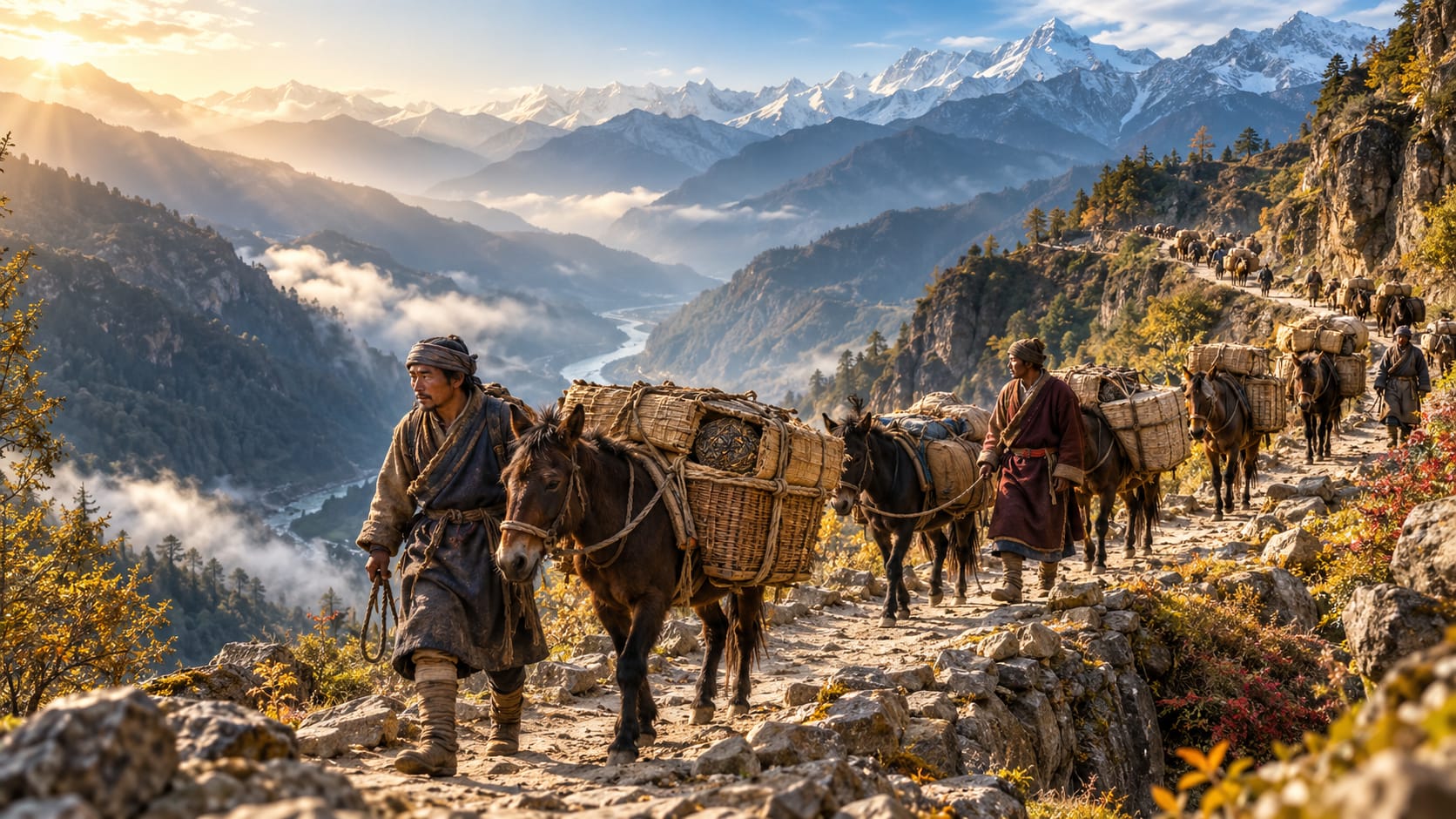
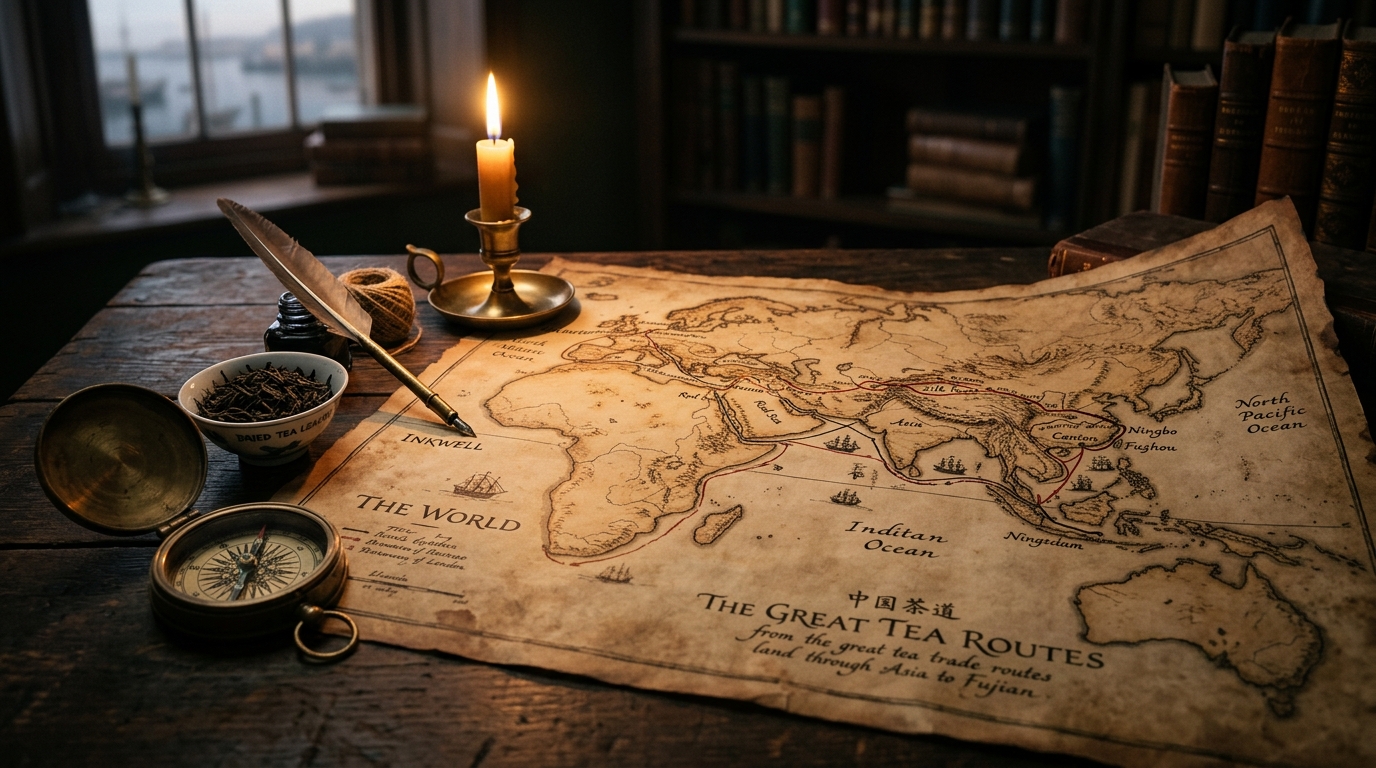
13th–19th century: Tea on the Silk and Tea Roads. Tibetan caravans carried compressed tea bricks across the Himalayas, where they were churned with yak butter and salt — fuel for high-altitude life. From 1727, Russian traders met Chinese caravans at the border town of Kyakhta, beginning the centuries-long love affair between Russia and strong black tea (later marketed as Russian Caravan).
1610: The first European cargo. The Dutch East India Company shipped the first commercial cases of tea to Amsterdam. By the 1650s, tea had reached London. By 1700, England was importing 300,000 pounds of it a year; by 1801, it was importing about 24 million.
1848–1851: Botanical theft. The Scottish plant-hunter Robert Fortune, working for the British East India Company, smuggled live Camellia sinensis plants and skilled tea-makers from Fujian to Darjeeling and Assam. Within fifty years, British India and Ceylon were supplying more tea to Britain than China.
20th century: The global commodity. Tea spread to Sri Lanka (post-1860, after coffee blight devastated the island's coffee plantations), Kenya (1903), Argentina, Turkey, Iran, Vietnam. By 2000, tea was being produced on six continents and drunk in every country on Earth.
No other plant has travelled like this. None has shaped trade routes, sparked revolutions, or settled into so many cultures so quietly. The next time you make a cup, remember: you are stirring 5,000 years of human movement.
Follow The Tea List