Tea on the Silk Road: The Original Global Commodity
Long before container ships, tea bricks crossed deserts on camel-back. The 1,500-year story of tea's first journey out of China.
Sameera
· 8 min read
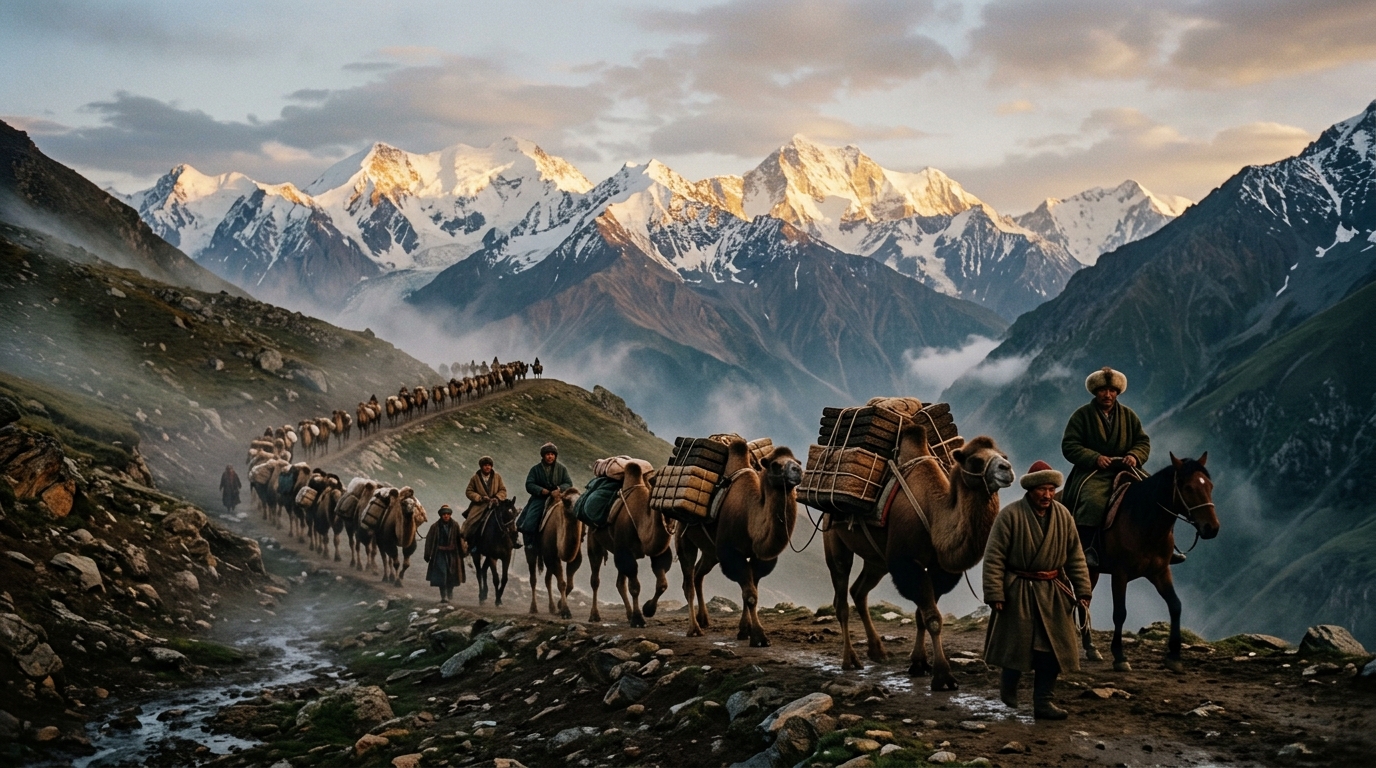
Before the cargo ship, there was the camel. Before the supermarket, there was the caravan town. And long before tea was a Western drink, it had already traversed Asia in compressed brick form, exchanged for horses, salt, and silver across a 4,000-kilometre network of trade routes that historians have come to call the Tea Horse Road.
Why bricks. Loose tea is fragile, bulky, and quick to spoil. Tea pressed and steamed into dense bricks (cha zhuan) is portable, durable, and easy to count. By the Tang dynasty (618–907 CE), Chinese producers were sending compressed tea toward Tibet and parts of Central Asia; Mongol and Russian markets came centuries later. A single brick could be broken into pieces and used as currency in regions where coins were rare.
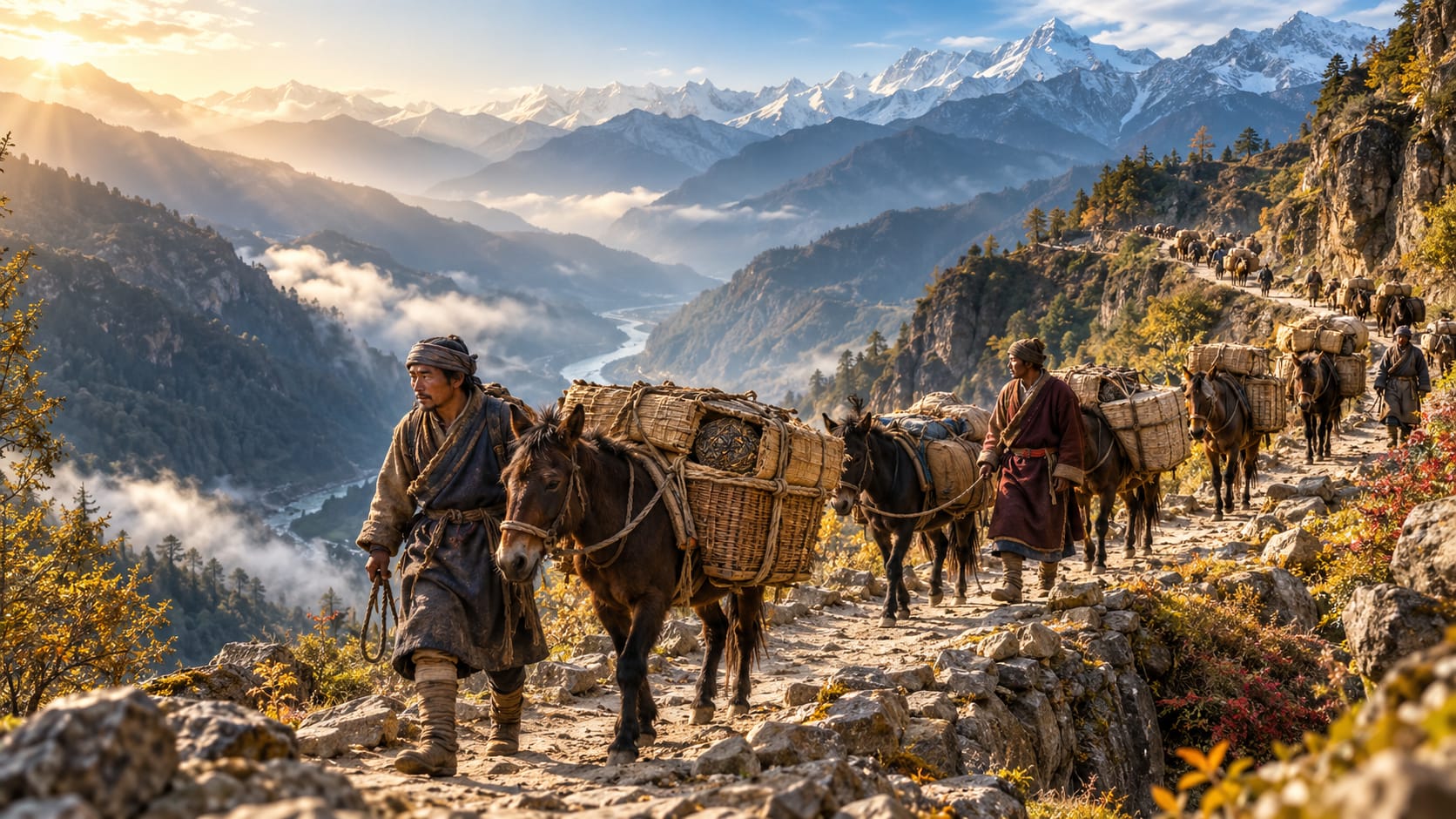
The Tibetan exchange. Tibet sat at the heart of the trade. Tibetans needed tea — both for nutrition (a nomadic, meat-and-dairy diet lacked fresh plant foods; tea was valued for flavour, hydration and digestion, with only modest vitamin content in the brew) and for ritual. China needed warhorses, which Tibet had in abundance. By the eleventh century, an institutionalised barter system was running: tea bricks for Tibetan ponies, at fixed exchange rates, mediated by border-town markets.
The Northern route. Tea also moved north and west, joining the Silk Road proper. Chinese caravans met Russian traders at the border town of Kyakhta in the early eighteenth century, beginning a 200-year love affair between Russia and strong Chinese black and oolong teas — a romantic backstory for the Russian Caravan blend; its smokiness is typically from Lapsang Souchong added at source, not campfire smoke absorbed en route.
Why it mattered. The tea brick was, arguably, the world's first international caffeine currency. It moved across cultures and political boundaries that resisted almost every other Chinese export, carrying with it tea know-how rather than live Camellia sinensis plants, the technology of fermentation, and the social ritual of preparing and sharing a hot drink. Long before colonialism made tea a global commodity in the modern sense, the Silk Road had already done the work — slowly, on hooves.
Follow The Tea List