Storing Tea Like a Professional
Your cupboard might be killing your tea. A practical guide to airtight tins, temperature, light and odours — and the one rule that makes the fridge safe to use.
Sameera
· 5 min read
Tea has four enemies: light, heat, moisture, and strong smells. Your spice cupboard, next to a window, with a half-open bag of oolong? That tea is already stale.
The four enemies, explained.
• Light. UV breaks down chlorophyll and aromatic compounds. Clear glass jars on a sunny shelf are tea's worst home.
• Heat. Warmer temperatures accelerate oxidation and aroma loss. Above the stove? Don't.
• Moisture. Tea is hygroscopic — it absorbs water from the air. Damp tea grows mould. Even mild humidity dulls flavour.
• Smells. Tea also absorbs aroma. Store next to coffee, cumin, or onions, and you'll be drinking those flavours for weeks.
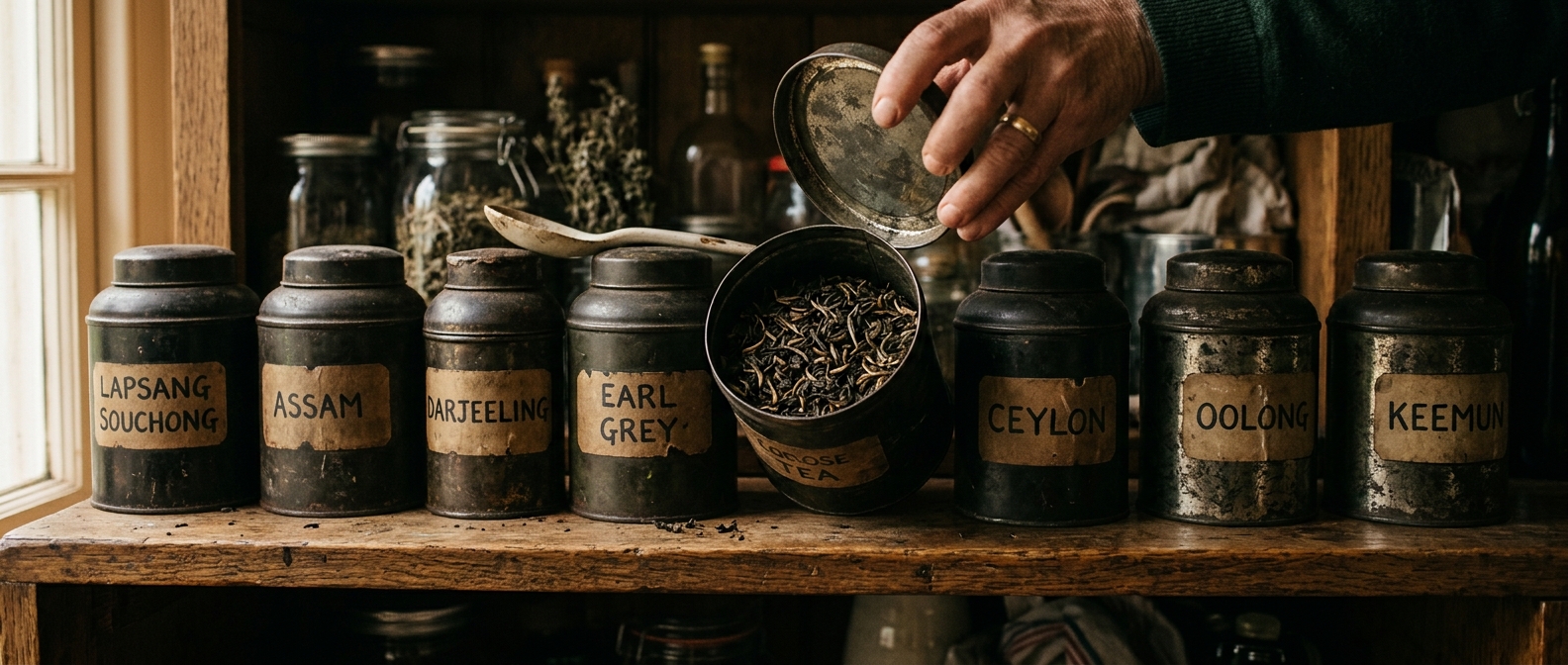
The fix. Opaque, airtight tins. A cool, dark drawer. Buy in smaller quantities more often. Label the opening date on the underside of the tin in pencil.
Different families, different rules.
• Greens: the most fragile for freshness. Buy in 50–100g amounts and drink within a few months of opening, or as the producer advises.
• Whites: fresh white teas such as Silver Needle are best enjoyed young, but white tea is also deliberately aged—well-stored compressed white cakes develop honeyed, dried-fruit depth over years. Treat fresh and aged white tea as different products with different storage goals.
• Black tea and roasted oolong: more forgiving. Hold for 12–18 months in proper conditions.
• Pu-erh and dark teas: often benefit from time, some air circulation, and a stable, slightly humid environment. Avoid fully airtight storage for aging pu-erh; keep it in its paper wrap or other breathable packaging so it can breathe.
• Matcha: the most fragile of all. Opens fast, stales fast. Keep it tightly sealed; many producers recommend refrigerating sealed matcha, and the same can apply to unopened, well-sealed Japanese greens. Follow the producer's directions and finish within a few weeks of opening.
The one rule for the fridge. Chilling is fine for an appropriate, well-sealed tea—the risk is condensation. If a cold tin is opened before it warms to room temperature, moisture condenses on the leaf, and repeated cycles degrade flavour and risk mould. So: refrigerate only sealed containers, let them come fully to room temperature before opening, and never put an opened, half-used tin in and out of the fridge. Everything else—black, oolong, pu-erh, most whites—belongs in a cool cupboard.
One more rule. Keep jasmine, lapsang souchong, and any flavoured or smoked teas separated from everything else. They will perfume whatever sits next to them within a week — sometimes within a single day.
Follow The Tea List