Water Quality Guide: The Best Water for Brewing Tea in Australia
From Sydney's soft catchments to Adelaide's changing blend of reservoir, River Murray and desalinated water, the minerals from your tap shape every cup. How to read your own water—and what a TDS meter can't tell you.
Sameera
· 9 min read
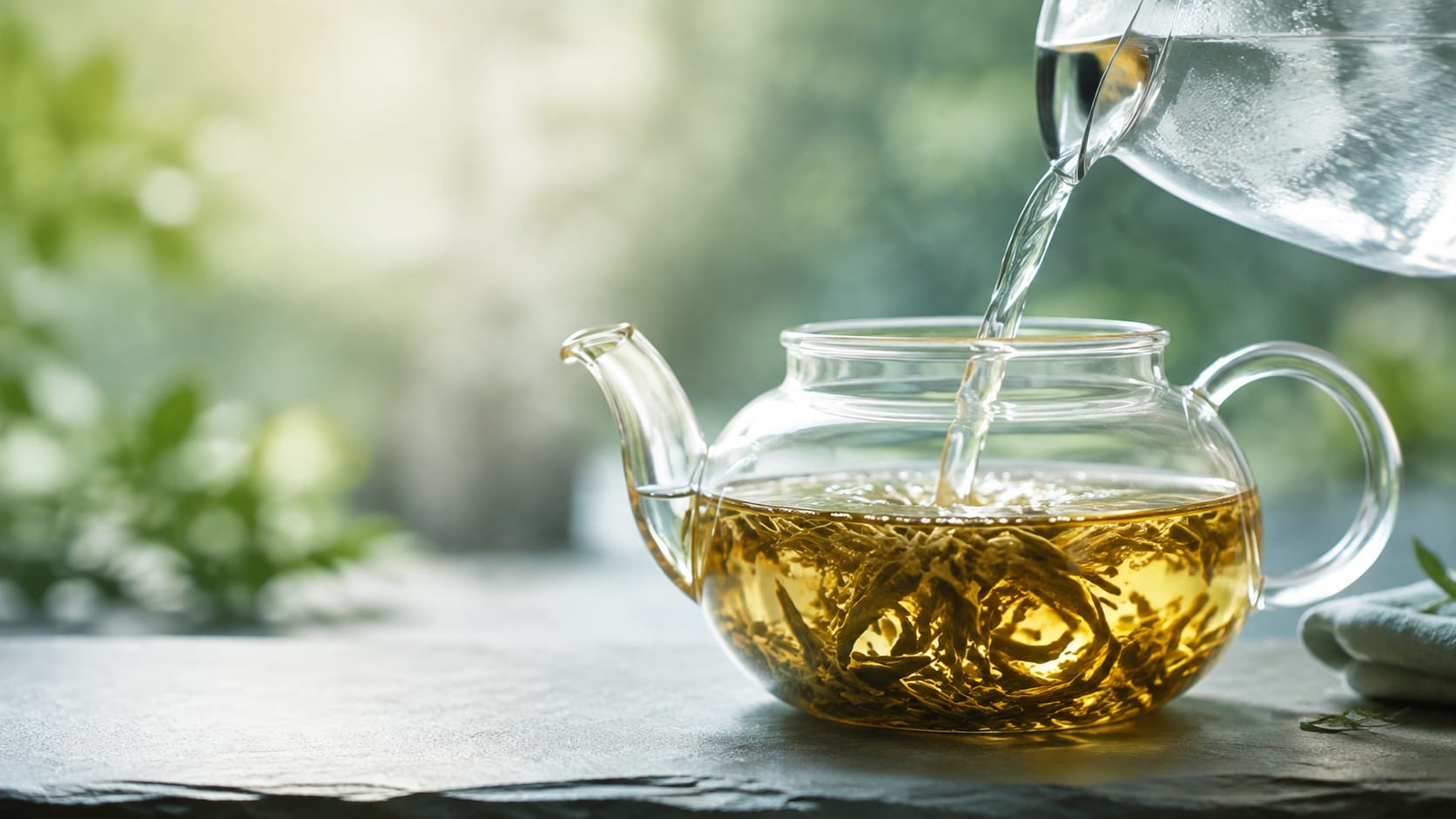
The moment before water meets leaf is when chemistry becomes ceremony. In Sydney, that water has travelled through sandstone catchments south of the city. In Melbourne, it's been filtered through ancient volcanic plains. In Adelaide, it is a shifting blend of Mount Lofty Ranges reservoirs, River Murray water and desalinated seawater, with a mineral signature that changes through the year. These invisible differences — in hardness, alkalinity, dissolved solids and disinfectant — shape whether your Silver Needle blooms or your Darjeeling dulls. For Australian tea drinkers, understanding your local water is as fundamental as knowing your cultivar.
The Chemistry of a Perfect Cup
Water is never just water. Even the purest rainwater collects minerals as it filters through soil and rock. Hardness is caused mainly by calcium and magnesium ions and is reported as mg/L as CaCO₃. Total dissolved solids (TDS) is a different measurement—everything dissolved in the water, including sodium, chloride and sulfate—so a TDS reading cannot tell you how hard your water is, what its alkalinity is, or whether it is safe to drink. Alkalinity (mostly bicarbonate) is a third variable again, and it is the one that most affects how tea's acids and polyphenols taste. Many tea drinkers prefer moderately soft, low-alkalinity water with a near-neutral pH; that is a widely shared tasting preference rather than a scientific threshold.
Very soft or demineralised water can taste thin or sharp with some teas, lacking perceived body. Hard, alkaline water tends to form the familiar film on the surface of black tea (calcium reacting with tea polyphenols) and to mute delicate aromatics. The sweet spot allows the amino acid L-theanine to express fully, the catechins to balance astringency with body, and volatile compounds to release their fragrance into steam.
This matters profoundly for gongfu brewing, where short, concentrated infusions expose water quality more ruthlessly than Western-style steeping. The same Tie Guan Yin brewed in a harder-water city and in a very soft-water city will taste like two different teas—the first flatter and heavier, the second brighter and thinner.
Sydney: Soft, Pure, and Nearly Perfect
Sydney's water is drawn mainly from the Warragamba, Prospect and Woronora catchments and is generally soft. Sydney Water publishes detailed quarterly water-analysis tables by supply system—hardness, pH, conductivity, chlorine and more—and because the figures vary by system and by quarter we point you to those tables rather than quoting numbers that would be out of date within months.
This softness suits delicate teas beautifully. A first flush Darjeeling from Tielka's collection opens with clarity in Sydney water, the muscatel notes singing without mineral interference. Japanese gyokuro reveals its full umami depth. Even robust Assam blacks maintain brightness rather than turning muddy.
The only caution is chlorination. Sydney Water adds chlorine to maintain safety through the distribution network, and while levels stay below 0.5 mg/L, it's detectable in a porcelain gaiwan. A carbon filter removes most of it; letting water stand is unreliable for chlorine and ineffective for chloramine, which some Sydney supply zones use. Check which disinfectant and which supply system your suburb is on in Sydney Water's published analysis.
Melbourne: The Goldilocks Standard
Melbourne's water comes largely from protected forested catchments in the Yarra Ranges and the Thomson Reservoir, with minimal treatment and very low mineral pickup. The result is notably soft water; Melbourne Water and the retail utilities (Yarra Valley Water, South East Water, Greater Western Water) publish the current hardness, pH and disinfectant figures for each supply zone.
This is arguably the best water for brewing tea in Australia if you prefer Chinese greens, white teas, and high-mountain oolongs. A Bai Hao Yin Zhen (Silver Needle) brewed in Melbourne water tends to show textbook clarity — sweet, floral, with very little astringency.
The softness does present one challenge: very robust, malty teas can taste thin. A strong Ceylon breakfast blend or a smoky Lapsang Souchong might benefit from remineralisation. Some tea obsessives add a small, measured pinch of food-grade mineral salts to very soft water to give it more body. Be clear about what you are doing: magnesium sulfate (Epsom salt) adds magnesium, and magnesium is hardness—so you are hardening the water, not adding "structure without hardness". Start with tiny amounts and taste; there is no agreed recipe.
Chlorination remains minimal but present. A simple carbon pitcher filter removes chlorine taste and leaves the mineral content essentially unchanged, which in Melbourne is usually all you need.
Adelaide: The Hardest Problem
Adelaide faces the most challenging water for tea brewing among major Australian cities. SA Water supplies the city from a variable blend of Mount Lofty Ranges reservoirs, River Murray water pumped over the ranges, and the Adelaide Desalination Plant, and the proportions change with rainfall and demand. Hardness therefore varies by suburb and by season. SA Water publishes a drinking-water profile for each supply area; look yours up rather than relying on suburb-level figures from an article, which we have removed for that reason.
This hardness is primarily calcium carbonate, which creates that telltale film on tea and suppresses aromatic volatiles. A delicate white tea brewed in Adelaide's harder suburbs loses its personality entirely. Even forgiving teas like a Kenyan or Australian-grown black can taste flatter.
The practical options are filtration or blending. Filters differ in mechanism: a carbon filter removes chlorine and some organics but does not soften; an ion-exchange softening cartridge swaps calcium and magnesium for sodium or potassium, lowering hardness while leaving total dissolved solids roughly unchanged; reverse osmosis removes nearly everything. Which result you get depends on the exact cartridge, not the brand name, so check the manufacturer's specification for the model you are considering. Alternatively, blend tap water with low-mineral bottled or RO water until it tastes right to you—there is no fixed ratio.
Tea retailers in harder-water cities often suggest sorting out your water before spending on expensive tea. It's sound advice: a modest filter can preserve more flavour than an upgrade in leaf.
Brisbane, Perth, and Beyond
Brisbane's water from Seqwater catchments is generally moderate in hardness and slightly alkaline; Urban Utilities publishes the current figures by supply zone. Alkalinity can dull very tart infusions such as hibiscus. A simple carbon filter addresses chlorine and taste but won't materially change pH or hardness.
Perth's supply blends groundwater, which tends to be harder, with desalinated seawater and surface water, so hardness varies by season and location; the Water Corporation publishes zone-by-zone quality data. Where the water is hard, softening or RO plus remineralisation can help if you brew delicate teas—a preference, not a requirement.
Canberra's water from the Cotter and Googong catchments is generally soft, as is Hobart's from the Derwent catchment; both utilities publish current data. The southern winter chill means many Tasmanian tea drinkers prefer robust blacks that handle any water well.
Filtration: What Actually Works
Not all filters suit tea. Reverse osmosis systems strip nearly all dissolved minerals, and many tea drinkers find the result flat or sharp. If you have RO installed, consider blending with tap water or using a measured remineralisation product sold for coffee and tea—then taste and adjust, because the right level is a preference.
Activated carbon filters remain a staple: they remove chlorine and off-flavours while leaving minerals largely intact. Note that not all pitcher filters are alike—some (ZeroWater, for example) use ion-exchange resin that removes nearly all dissolved solids, which is a very different result from a carbon-only pitcher. Read the specification, and replace cartridges on the maker's schedule.
For dedicated tea households, an under-sink carbon system gives consistent chlorine-free water; add a softening or RO stage only if your published local hardness and your own tasting say you need it. Match the cartridge to the problem rather than buying by brand.
Kettles, Temperature, and Calcium
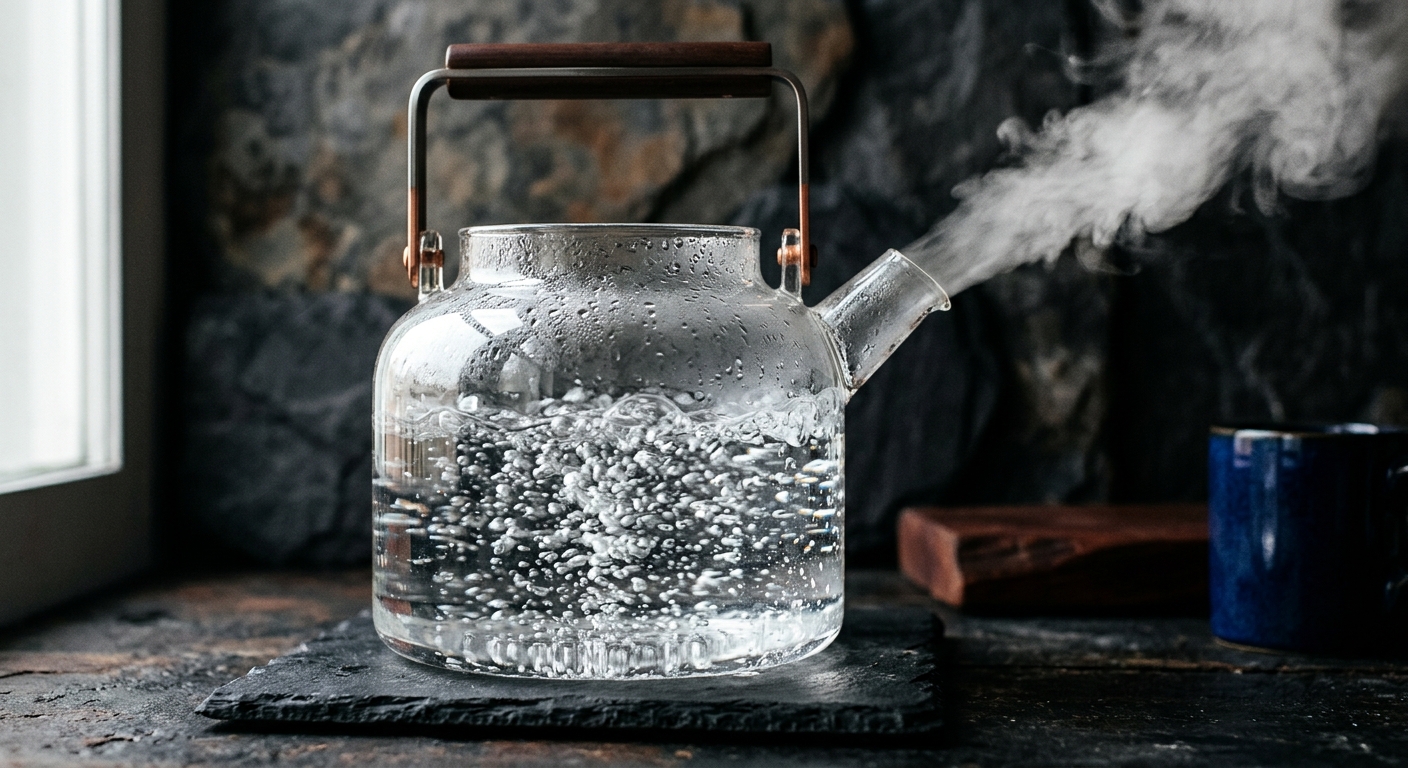
Hard water leaves limescale deposits in kettles, which isn't merely aesthetic. The calcium flakes can enter your teapot, affecting texture and adding chalkiness. Stainless steel kettles with concealed elements resist buildup better than exposed coil models. Descale regularly with food-grade citric acid if you see scale forming, following the kettle maker's guidance; white vinegar isn't recommended for some kettles.
Variable-temperature kettles (brands like Breville, KitchenAid, or specialty models from tea retailers) allow precise brewing — 70°C for Japanese greens, 85°C for oolongs, 95°C for blacks. Water chemistry interacts with temperature: with harder water, slightly lower temperatures (a few degrees below standard) can sometimes improve taste.
Boil-and-cool methods work for most teas, but a variable-temperature kettle is worth considering if you drink delicate greens or whites daily. The control matters as much as the water itself.
Bottled Water: When and Which
For special teas — a competition-grade Tie Guan Yin, a vintage aged puer, a limited-release Nilgiri — consider bottled spring water. Choose a still water whose label states its mineral analysis, and read it: you are looking at calcium, magnesium and bicarbonate, not just a TDS number. Heavily mineralised waters tend to overwhelm delicate tea; we have removed the brand-by-brand figures previously printed here because bottled analyses change and we could not verify them against current labels.
Distilled and purified waters sit at the very bottom of the mineral range; many tasters find them flat for tea, although some prefer them for certain Japanese greens. Treat it as an experiment, not a rule.
Reality check: bottled water for daily tea becomes expensive and environmentally questionable. Filtration makes more sense for regular brewing. Reserve bottles for special occasions or comparative tastings where you want to isolate water as a variable.
Testing Your Own Water
Curiosity pays. Inexpensive TDS meters are easy to find, but understand what they measure: total dissolved solids, estimated from conductivity. A TDS meter cannot tell you your water's hardness, alkalinity or safety, and there is no TDS number that guarantees good tea. Use it to compare—tap versus filtered versus bottled—rather than to diagnose. If you want hardness and alkalinity, use an aquarium GH/KH test kit or your utility's published figures.
Most Australian water utilities publish quarterly quality reports online with detailed mineral breakdowns by postcode. Sydney Water's water-analysis pages report hardness, pH, chlorine and conductivity by supply system; SA Water publishes a drinking-water profile for each area; Melbourne's retailers and other state utilities offer similar reports. Check your actual numbers rather than guessing.
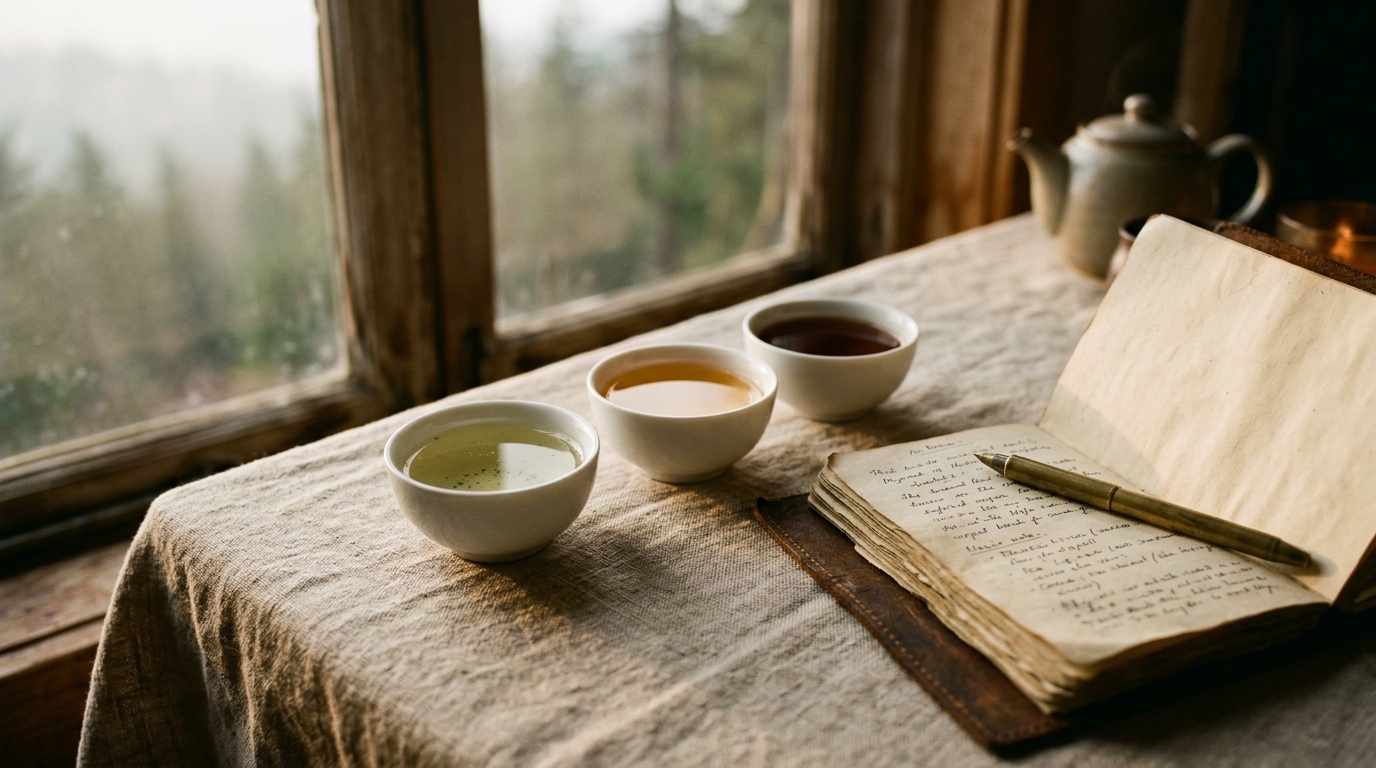
Some tea obsessists keep tasting notes that include water TDS — it sounds excessive until you realise a single Sheng puer tastes four different ways in Sydney, Melbourne, Adelaide, and filtered versions of each.
The Ritual of Attention
All this talk of minerals and filtration might seem to complicate what should be simple: boiling water, steeping leaves. But the best water for brewing tea in Australia is ultimately the water you've considered, tested, and perhaps adjusted to honour the leaves you've chosen. Whether that's Sydney's soft catchment water, Melbourne's forested-catchment softness, or Adelaide's shifting blend passed through carbon and care, the attention itself is ceremony. The water knows when it's been respected.
Your tea will taste the difference. 🍵
Follow The Tea List