The Japanese Tea Ceremony: Chado and the Philosophy of Wabi
Sixteenth-century Japan refined matcha-making into one of the most demanding art forms in human history. A primer on chado — the Way of Tea.
Sameera
· 9 min read
Chado (茶道), the Way of Tea, is one of the most demanding aesthetic practices in human history. A formal Japanese tea gathering can take four hours. Every gesture is choreographed. Every utensil is chosen for the season, the guests, and the mood. The host has often spent many years studying.
The 16th-century origin. The tea ceremony as we know it was codified in the late 1500s by Sen no Rikyu, tea master to the warlords Oda Nobunaga and Toyotomi Hideyoshi. Rikyu inherited an existing Buddhist tradition of matcha-drinking and pared it down to its philosophical core. The four principles he formulated — wa (harmony), kei (respect), sei (purity), and jaku (tranquility) — still anchor every chado school.
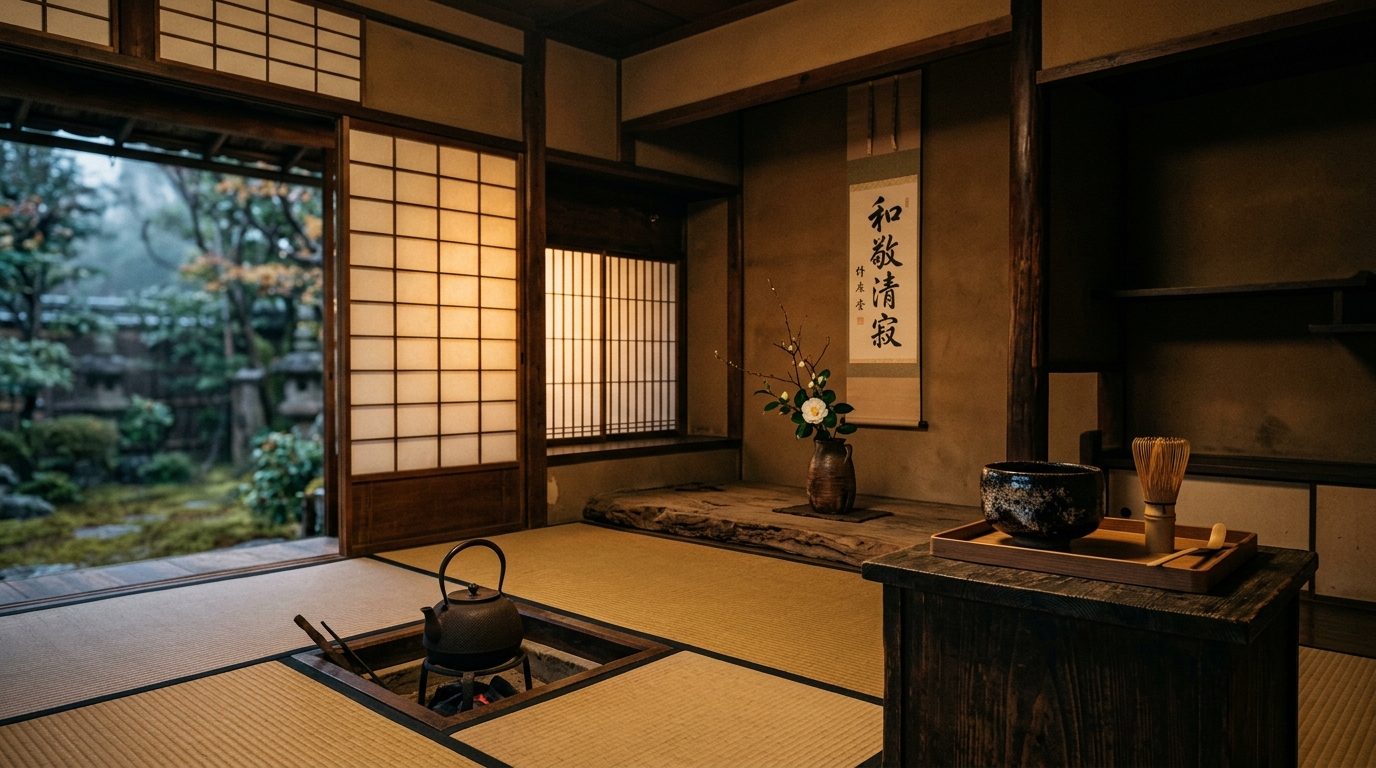
Wabi-sabi: the aesthetic core. Rikyu's revolution was aesthetic. Where elite tea culture often favored Chinese-inspired display rooms and ornate imported wares, Rikyu chose plain wood, paper screens, irregular hand-thrown bowls, and a tea-room tiny enough that guests had to crawl through a low door. His philosophy — wabi, an appreciation of the rustic, the imperfect, and the impermanent — became the defining sensibility of Japanese tea, ceramics, and architecture for the next 450 years.
A tea gathering, briefly. A formal chaji unfolds in stages. Guests gather in a small waiting room, then walk through a stone garden (the roji) to wash hands at a stone basin. They enter the tea room one by one, examine the hanging scroll and flower arrangement, then sit in seiza on the tatami. The host serves a light kaiseki meal, then withdraws. After a short pause, the host returns and prepares two styles of matcha — first a thick koicha, shared from a single bowl, then a thin usucha, served individually. Conversation is minimal and formal, with long quiet stretches broken only by the kettle, the water, the whisk.
What it isn't. It isn't a meditation. It isn't a religion. It isn't a performance. The ceremony is an exercise in being completely present with the people and objects in the room, for as long as it takes to share a cup of tea slowly and properly.
Should you try it? If you live near a city with a Japanese cultural centre, almost certainly yes. A beginner introduction of an hour or two will give you a real sense of the practice; check your local Japanese cultural centre or tea school for current sessions and fees. After that, if you want to study seriously, the three main Sen schools — Urasenke, Omotesenke and Mushakojisenke — all have international branches, and details of procedure, utensils and etiquette vary between schools and even between teachers.
Follow The Tea List