The Mystery of High Mountain Teas: Why Altitude Matters
At higher elevations (often above ~1,000 metres in Taiwan), tea bushes tend to grow more slowly, may accumulate more aromatic compounds, and can produce a different cup. The science of altitude.
Sameera
· 6 min read
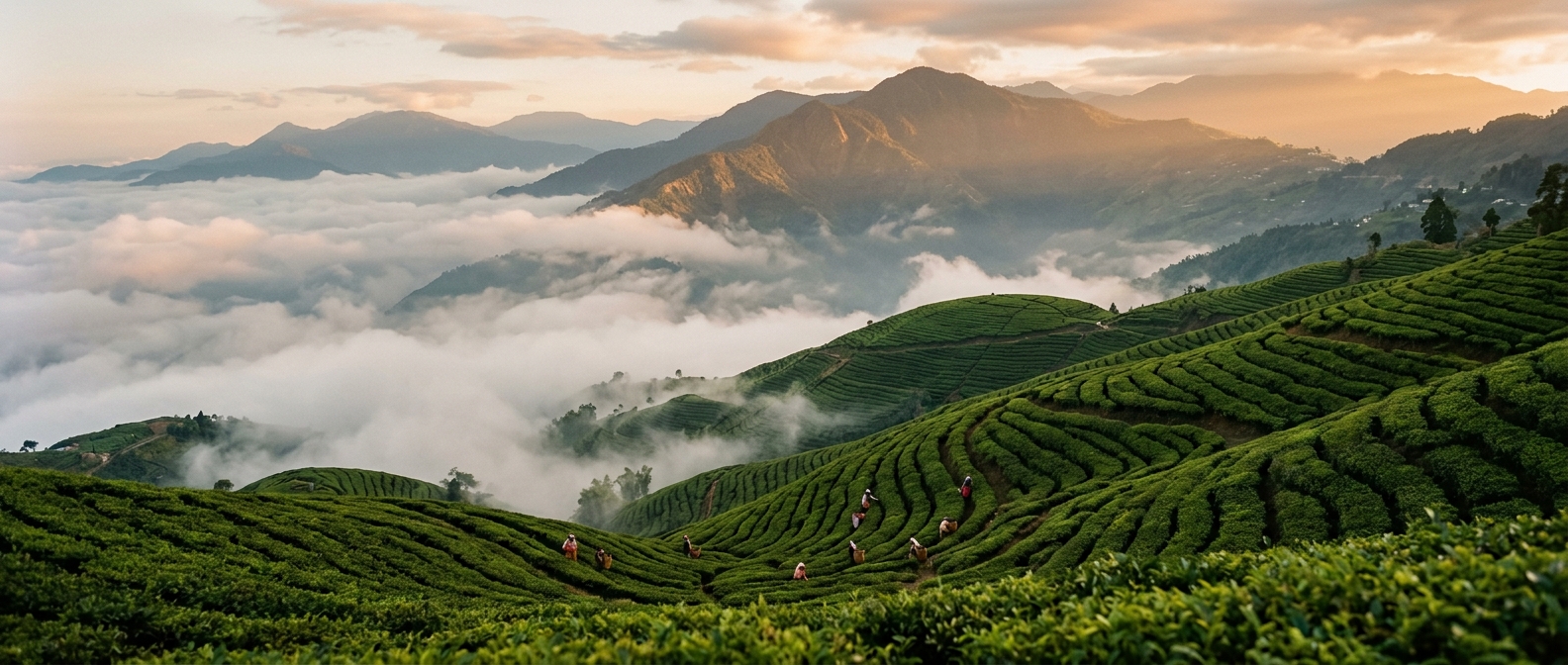
Walk through any specialty tea shop and you'll see the term 'high mountain' on dozens of labels — Taiwanese gao shan cha, Indian Darjeeling, Sri Lankan Nuwara Eliya, Taiwanese Alishan, Japanese Yame. It's not marketing inflation. Altitude genuinely changes the leaf, and the science is interesting.
Why slow growth matters. Tea bushes at altitude grow more slowly. Cooler temperatures, thinner soil, more variable weather, and reduced sunlight all conspire to produce smaller leaves with thicker cell walls and more concentrated metabolic compounds. The plant, defending itself against environmental stress, accumulates higher levels of the secondary metabolites — terpenes, esters, polyphenols — that we taste as 'flavour' and 'aroma.'
The mist effect. High mountain growing regions tend to be enveloped in cloud cover for substantial parts of the day. The diffuse light tends to preserve chlorophyll and L-theanine while limiting catechin accumulation. The result is a tea that's smoother, sweeter, and lower in astringency than its lowland equivalent.
The temperature swing. At 1,500m, daytime highs in the growing season can reach 25°C while night-time lows fall to 8–10°C. The diurnal temperature swing causes the plant to accumulate sugars during the day (when photosynthesis is active) and slow respiration at night (when sugars would otherwise be burned). The net result: more sugar, more flavour density, more complexity in the cup.
The famous high-mountain teas:
• Taiwan: Alishan, Lishan, Shan Lin Xi (1,000–2,500m). Floral, creamy, with notes of orchid and sweet pea.
• India: Darjeeling, Nilgiri (up to 2,400m). Muscatel, almost wine-like.
• China: Wuyi, Anxi (varies). Mineral, complex.
• Sri Lanka: Nuwara Eliya (1,800m+). Pale, almost Champagne-like.
• Japan: Yame, Ujitawara (200–700m, modest by Asian standards but high for Japan). Vegetal, umami-dense.
The catch. High mountain teas are more expensive — sometimes 3–10x the price of lowland equivalents — because they yield less per acre and are typically harvested by hand. But the per-cup cost difference is smaller than the per-100g price suggests, because these teas re-steep beautifully.
Follow The Tea List