The Tea Bag Origin Story and the Sullivan Legend
A New York merchant's silk sample pouches are usually credited with inventing the tea bag. The patent record says otherwise — two Milwaukee women got there first in 1901.
Sameera
· 5 min read
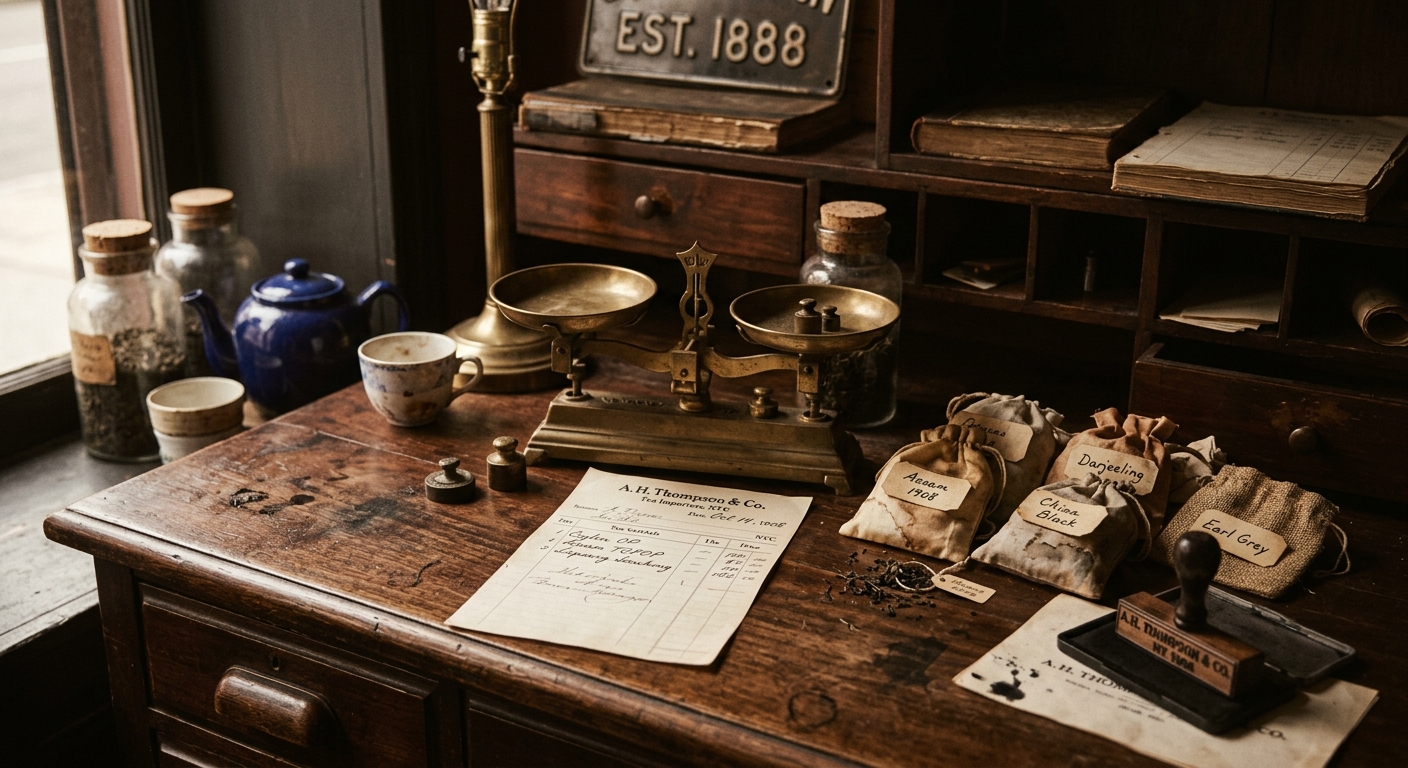
The story everyone tells goes like this. Around 1908, a New York tea merchant named Thomas Sullivan was reportedly looking for a cheaper way to send tea samples to his clients. Instead of the traditional small tin, he packaged the loose leaves into small hand-sewn sample pouches (often described as silk or gauze) and mailed them out.
His customers, expecting tin samples, didn't know what to do with these strange little bags. So they did the obvious thing: they dropped the whole pouch into a pot of hot water and let it steep. When they wrote back to Sullivan asking why the silk was so fine — too fine, in fact, to release the leaves properly — he understood, almost too late, what he had stumbled onto.
The part the legend leaves out. Sullivan did not invent the tea bag. In 1901 two Milwaukee women, Roberta C. Lawson and Mary McLaren, filed a patent for a stitched mesh "tea-leaf holder" designed to brew a single cup and be thrown away; US Patent 723,287 was granted in 1903, five years before the Sullivan anecdote. The Sullivan story — which survives mainly through retelling rather than documents — is best understood as a popular account of how bagged tea caught on in the American trade, not as the moment of invention.
The early adoption. Manufacturers switched the silk for cheaper gauze, then for paper, and a global industry was born. By the 1920s, tea bags were common in American restaurants. Tetley introduced tea bags to the UK in 1953, but Britain — once the most stubbornly loose-leaf country in the world — took its time: the UK Tea & Infusions Association puts bags at under 3% of the British market in the early 1960s, with adoption growing through the later twentieth century. (We have removed a specific "crossover" year from this article because we could not find a dated source for it.)
The pyramid bag, 1996. PG Tips introduced the pyramid-shaped tea bag in 1996, claiming it gave the leaves more room to expand. It does, marginally. What's inside varies by brand — many mass-market bags use small graded particles, while some pyramid bags hold larger whole-leaf grades — so judge a bag by its leaf, not its shape.
Today. The UK Tea & Infusions Association has put the share of British tea drunk from bags at around 96% — a figure it attributes to 2007. Many of those bags contain what the trade calls fannings, small graded leaf particles; true 'dust' is a finer, separate grade. A fast brew, a quick fix, and a taste so familiar that most British drinkers no longer know it's a 20th-century invention.
Whether or not Thomas Sullivan's customers really dropped his sample pouches into the pot, the tea bag was coming anyway — two women in Milwaukee had already patented it.
Follow The Tea List