Australia's Tea Regions: An Emerging Origin to Watch
From Daintree rainforest to the New South Wales hinterland, a small but ambitious Australian tea industry is producing world-class single-origin teas.
Sameera
· 6 min read
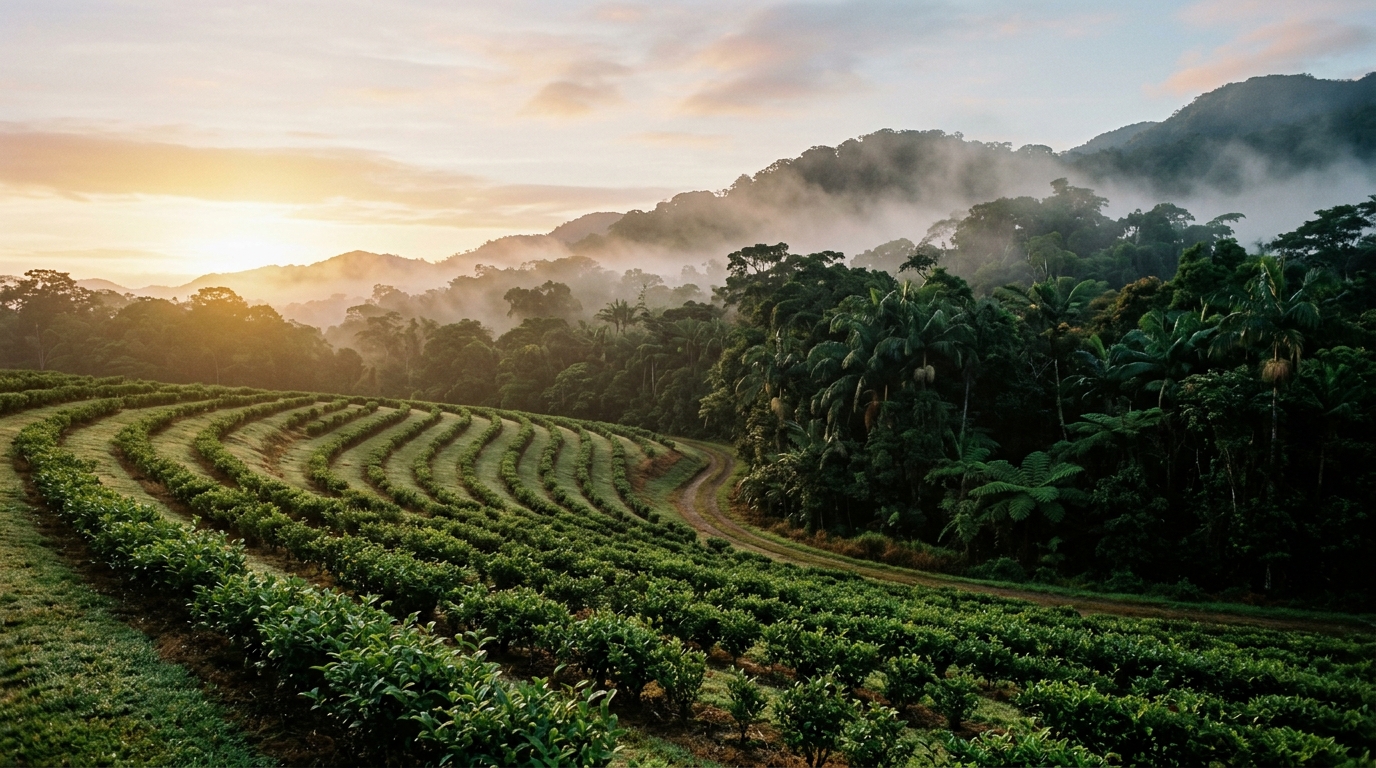
Australia is not on most tea drinkers' radar — and that's about to change. A small but ambitious group of Australian estates have spent the last two decades proving that the continent can produce specialty tea worthy of comparison to Sri Lanka, Taiwan, and Japan.
Daintree, Far North Queensland. Daintree Tea Plantation, established in 1978, sits in the rainforest hinterland north of Cairns. The combination of tropical climate, rainforest soils and abundant rainfall produces a clean, brisk black tea with a distinctive citric brightness; the plantation says no pesticides are used on the tea crop, which is the producer's own statement rather than a certification. The plantation uses mechanical harvesters and produces CTC black tea, aligning it with mainstream Australian estate production.
Madura, New South Wales. Madura Tea Estate, on the far north coast of NSW, has been producing tea since 1978 — making it one of Australia's earliest modern commercial tea plantations and among the longest-running. Madura's tea is sub-tropical, slightly malty, and increasingly used as a base for specialty Australian blends.
Tasmania's experiment. A handful of small estates in Tasmania, mostly working with cool-climate cultivars from Yunnan and Darjeeling, are experimenting with high-elevation tea production. The cooler climate slows growth and concentrates flavour; early results suggest a delicate, almost first-flush-Darjeeling character.
Nerada, Atherton Tablelands. The largest Australian producer, Nerada, farms a roughly 360-hectare estate at Malanda on the Atherton Tablelands west of Cairns, which in 2023 handled more than six million kilograms of fresh leaf a year according to the company. In May 2023 Nerada announced it would put the estate into "hibernation" from the end of June 2023, citing drought, rising costs and falling supermarket demand for black tea, while it sought investment for higher-value products. We have not confirmed its current production status; check with the company directly.
Why the industry is small. Tea is labour-intensive. Australia's high labour costs make commercial-scale production challenging — which is why the existing industry has focused on premium, mechanically harvested, often orthodox- or CTC-style products rather than competing on price with Kenya or India. Volume is small—no dated official national figure for made tea is published, and after Nerada's 2023 pause any older estimate is unreliable—but quality, increasingly, is high.
Where to taste it. Daintree Tea is the easiest to find internationally — many Australian premium-brand tea bags use it as a base. For specialty single-origin Australian tea, look for boutique brands like Two Rivers, Arakai Estate (in Queensland's Sunshine Coast hinterland), and Buderim Forest Tea (in Queensland's Sunshine Coast hinterland).
Australia's tea industry is small. It is also one of the most quietly impressive emerging origins in the world — and worth watching over the next ten years.
Follow The Tea List