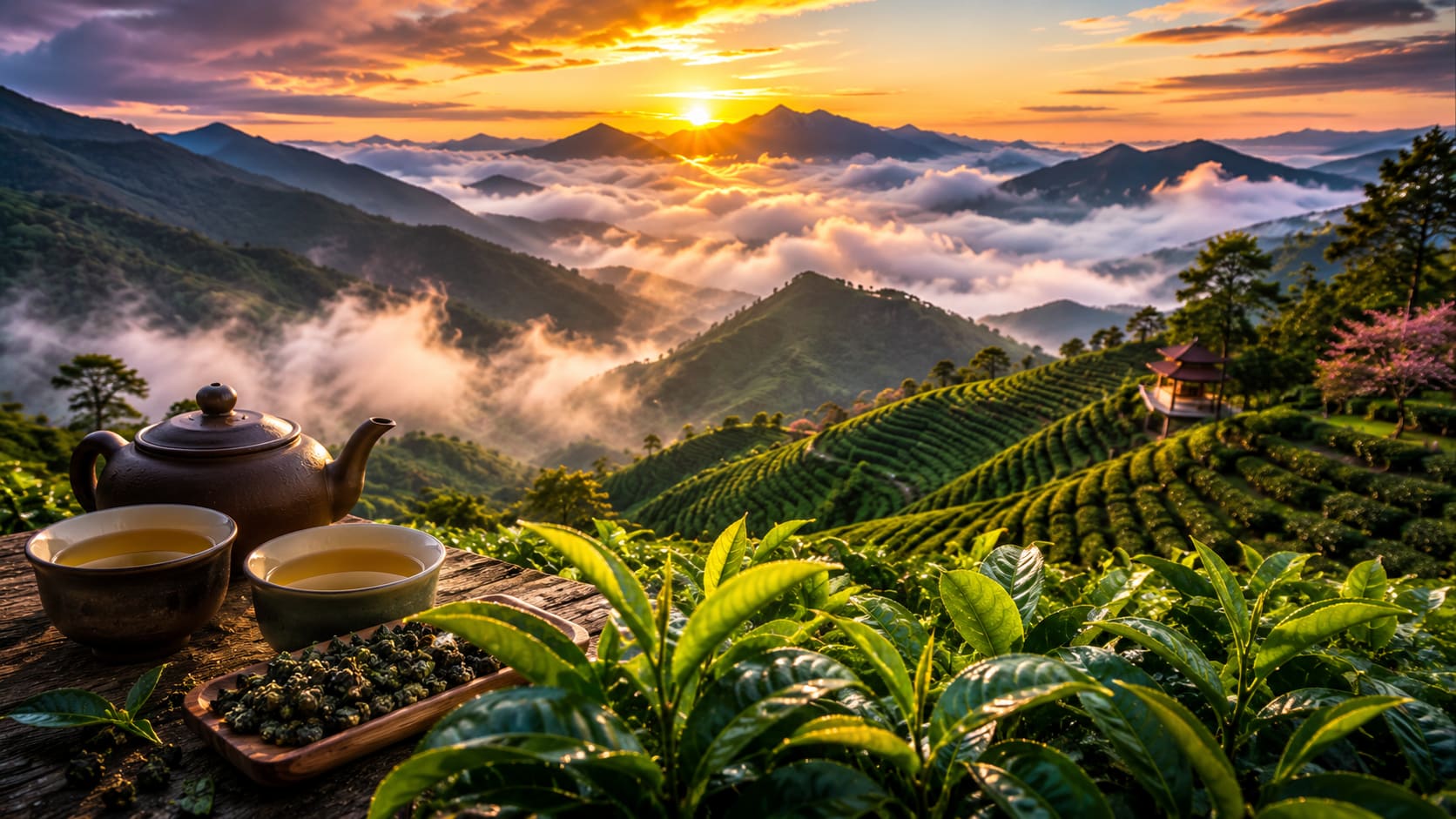
Assam, India: Bold, Malty, and the Backbone of Breakfast Tea
One of the largest tea-growing regions in the world produced about 650 million kilos of made tea in 2024. Inside the Indian floodplain that fills your morning mug.
Sameera
· 7 min read
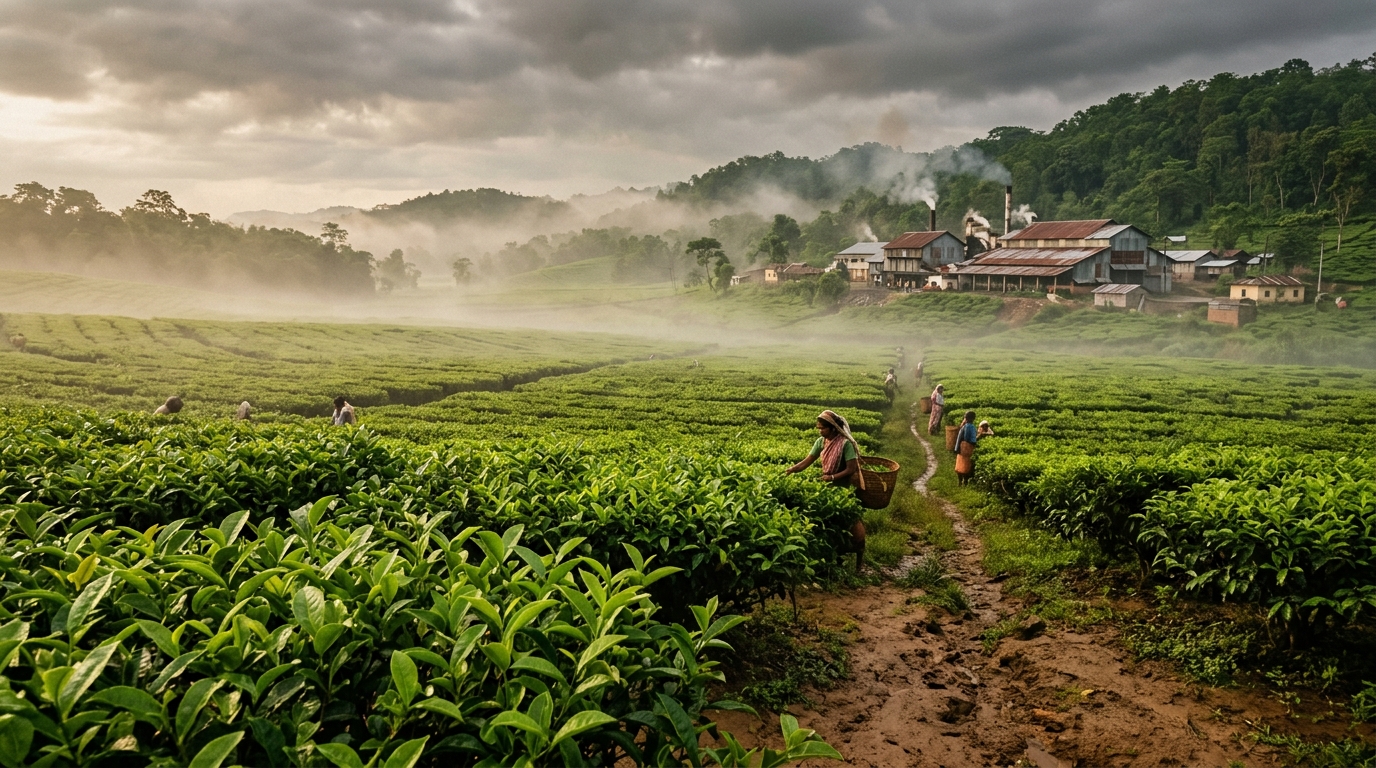
If you've ever drunk an English Breakfast tea, an Irish Breakfast, or any standard 'builder's brew' from a supermarket teabag, you've likely drunk Assam — often as a base alongside East African teas. Assam produced 649.84 million kilograms of made tea in calendar 2024 (down from 688.33 million kg in 2023, a poor-weather year), according to the Tea Board of India — more than half of India's national output. Whether that makes it the world's largest single tea-growing region depends on how you draw regional boundaries elsewhere (Kenya as a whole produced 598 million kg in 2024, and Chinese provinces are reported differently), so we describe it as among the largest rather than the largest.
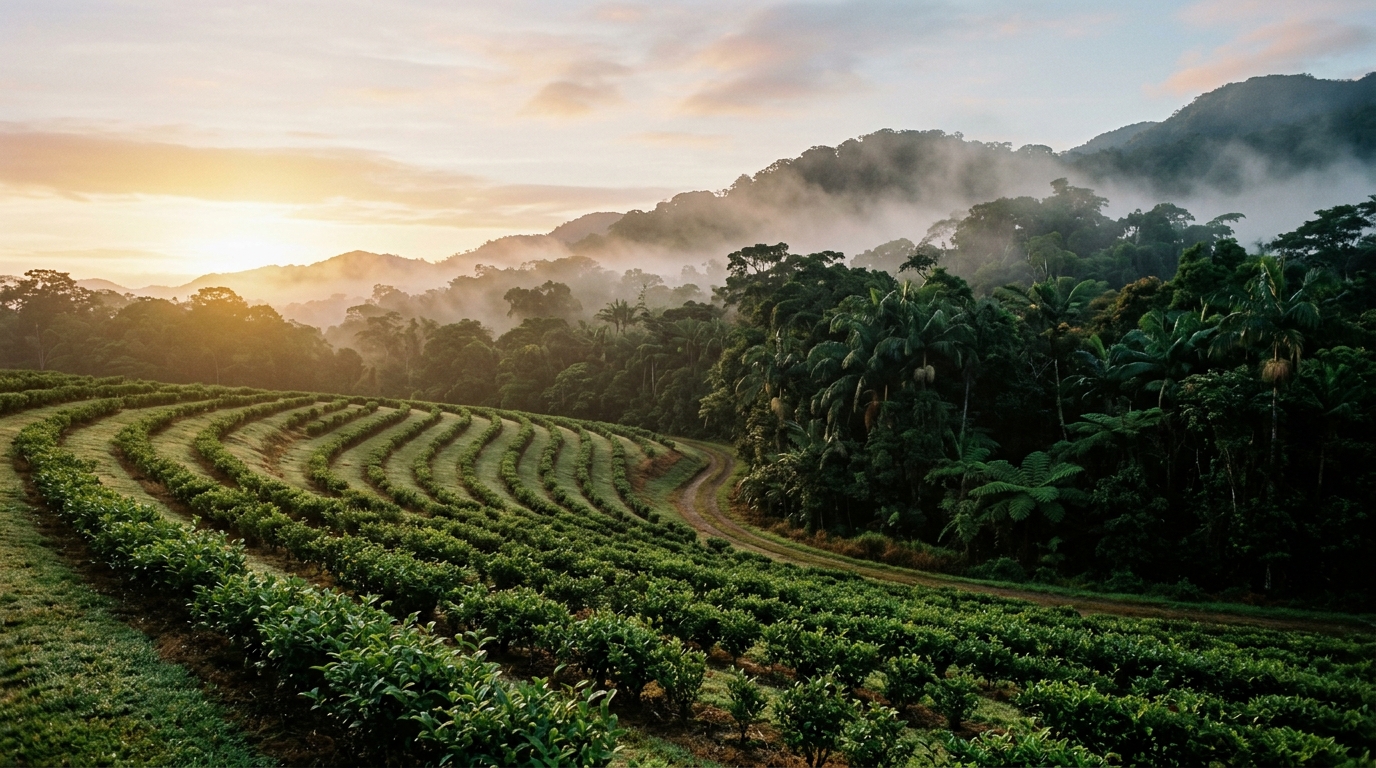
The geography. Assam is a state in northeastern India, sitting in the floodplain of the Brahmaputra River. Hot, humid, low-elevation (mostly under 100m), with annual rainfall of roughly 250–400 cm. The conditions are diametrically opposite to Darjeeling's — and the resulting tea is correspondingly different.
The native plant. Unlike Darjeeling, which uses the small-leaf Chinese sinensis, Assam uses its own native varietal: Camellia sinensis var. assamica. The plant has larger, thicker, darker leaves and often higher polyphenol levels, though this varies. The British 'discovered' it in the 1820s — though local Singpho tribespeople had been drinking it for centuries — and built the first commercial plantations in the 1830s.
The flavour. Assam tea is bold, full-bodied, dark-amber, and unmistakably malty — a roasted, almost biscuit-like character that no other black tea quite replicates. The malty note helps Assam stand up to milk and sugar; it complemented the British habit of taking tea with milk, and Indian masala chai typically uses robust Assam-style CTC as its base.
Two main harvests. First flush (March–April) is lighter, more delicate. Second flush (May–June) is the prized one — fuller-bodied, with a richer maltiness and a 'tippy' character (golden tips visible in the dry leaf, considered a mark of quality). The two are blended for most commercial Assam, but specialty single-estate Assams from estates like Halmari, Mokalbari, and Khongea are worth seeking out.
How to brew. Boiling water, four to five minutes, more leaf than you'd use for any other black tea — Assam can take it. Strong, with milk and a touch of sugar, is the classic preparation. As a base for masala chai, it has no peer.
Follow The Tea List