Taiwan High Mountain Oolong: A Complete Guide to Alishan, Dong Ding & Li Shan
Discover Taiwan's high mountain oolongs from Alishan and Li Shan, and the roasted Dong Ding style that sits alongside them. What makes these teas special, how they taste, and how to buy them with confidence.
Sameera
· 7 min read
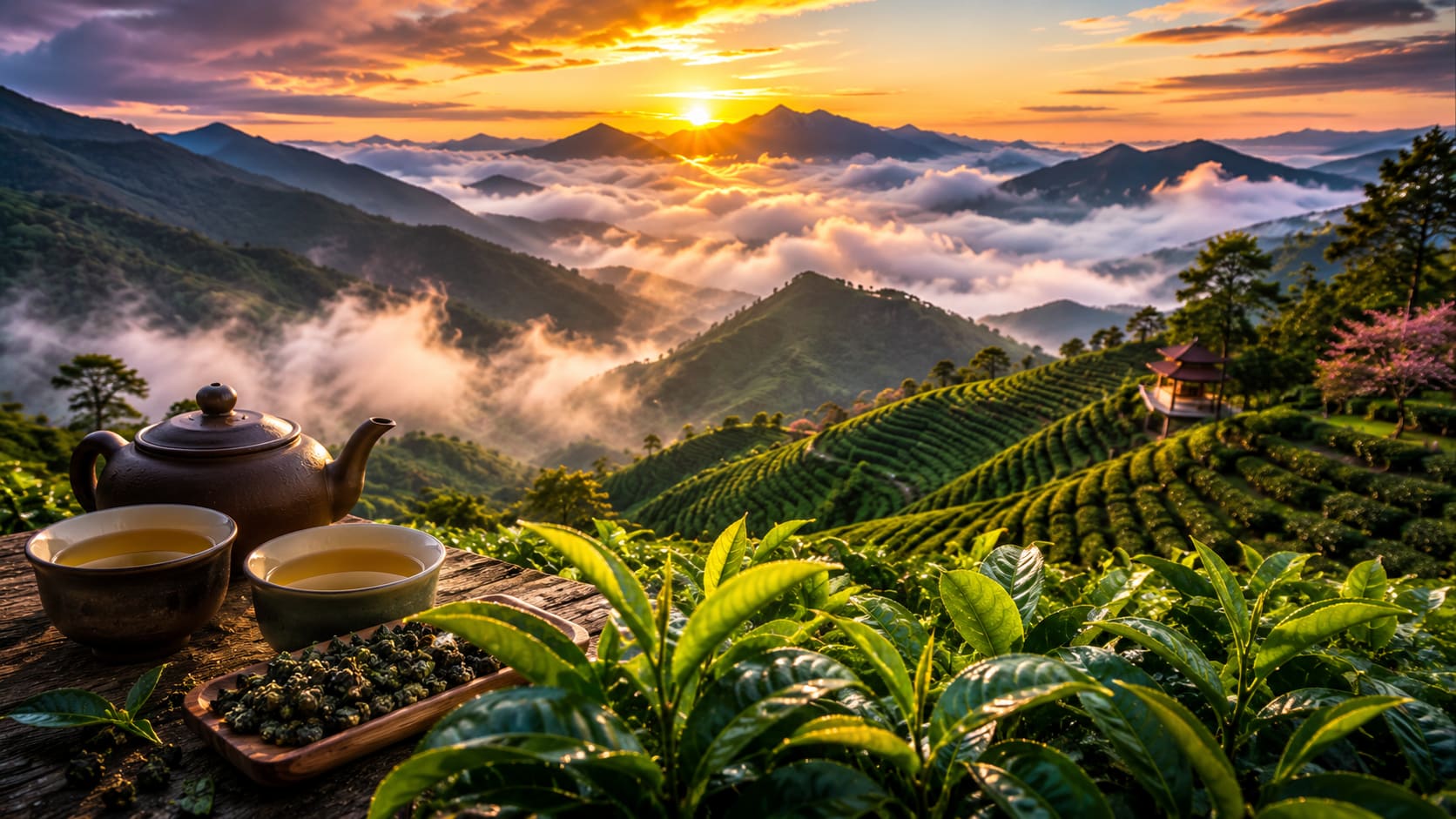
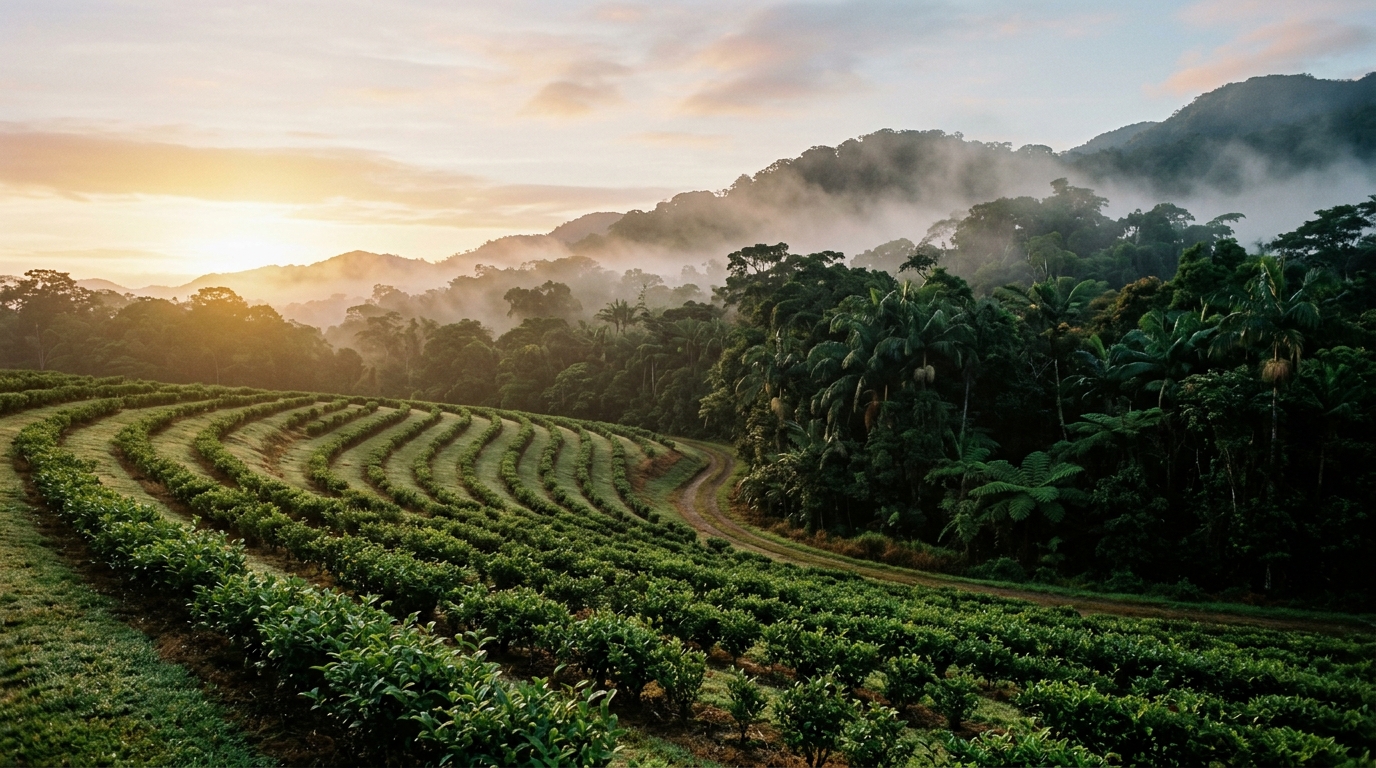
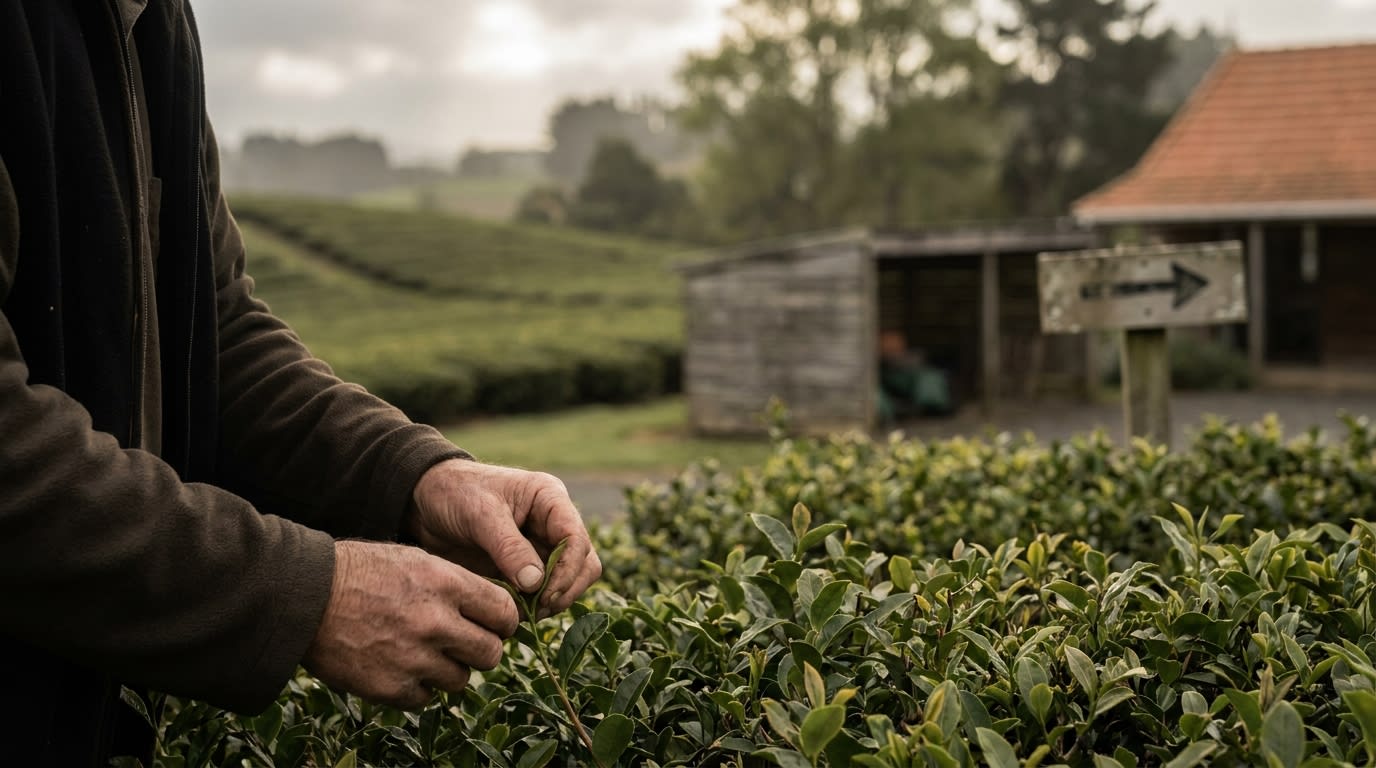
On a clear morning in central Taiwan, tea farmers begin their ascent at 4am, headlamps cutting through pre-dawn mist. By the time the sun strikes the uppermost terraces of Alishan—around 1,600–1,800 metres above sea level—they've already plucked two kilos of tender leaves, their fingers numb from altitude and dew. This is high mountain oolong country, where thin air, dramatic temperature swings, and cloud-wrapped slopes conspire to produce some of the world's most sought-after tea. And in Australia, where genuine Taiwan high mountain oolong sits firmly at the premium end of the market, knowing what you're actually drinking has never mattered more.
The Altitude Equation: Why Height Changes Everything
Taiwan's high mountain oolongs—gao shan cha in Mandarin—are defined not by processing alone but by geography. In Taiwanese trade usage, gao shan cha generally refers to tea grown above roughly 1,000 metres, with the most prized gardens considerably higher; the altitude figures in this article are commonly cited trade ranges rather than official designations, and individual gardens vary. At these elevations, Camellia sinensis grows slowly. Ultraviolet exposure intensifies. Diurnal temperature variations can reach around 10°C between day and night stress the plant in ways that increase free amino acids, including L-theanine, which contributes to sweetness and a smooth, sometimes creamy mouthfeel.
Photosynthesis slows. Leaves often develop thicker cuticles. The result is smaller, denser leaves with lower catechin bitterness and higher aromatic complexity. Where a lowland oolong might taste brisk and floral, a genuine Alishan or Li Shan oolong unfolds in waves—buttery, orchid-scented, with a mineral backbone that lingers for minutes after you've swallowed. Australian tea drinkers familiar with Darjeeling's first flush will recognise a parallel: altitude writes itself into the cup.
Alishan: The Gateway Mountain
Alishan sits in Chiayi County, its name translating to "Mount Ali". The region became famous for Japanese-era logging railways, but by the 1980s, tea had replaced timber as the area's economic heart. Today, Alishan oolong is Taiwan's most internationally recognised high mountain tea, produced across a sprawling area from 1,000 to 1,700 metres.
The signature profile is floral and bright—gardenia, lily, sometimes a whisper of stone fruit. Oxidation levels hover around 15–20%, placing Alishan firmly in the "jade oolong" category: lightly oxidised, minimally roasted, rolled into tight pearls that unfurl like green fists in hot water. The best Alishan teas are spring-harvested (March–May in Taiwan, which corresponds with our autumn here), when new growth is most tender and aromatic compounds peak.
If you're buying Alishan in Sydney or Melbourne, specialist tea retailers stock seasonal batches. Prices vary widely with grade, harvest and retailer margin, and we no longer print a range or a floor: price is a weak clue to authenticity in either direction.
Dong Ding: The Roasted Aristocrat
Dong Ding, or "Frozen Summit", occupies a strange middle ground in Taiwan's tea taxonomy. Dong Ding is better understood as a regional style than a high-mountain tea: its home gardens around Lugu in Nantou County are mid-elevation, and it's included in high mountain discussions because of its historical prestige and distinctive roasted processing, not its altitude. Located in Nantou County near Lugu township, Dong Ding has been producing oolong since the 1850s, when Fujianese settlers brought Qing Xin cultivar cuttings across the Taiwan Strait.
What sets Dong Ding apart is roasting. Unlike the green, minimally processed style of Alishan, traditional Dong Ding receives multiple slow roasts over charcoal, a technique called tan bei (charcoal roast). This develops caramelised, toasted grain notes—think roasted chestnuts, brown butter, baked pear—without erasing the tea's inherent floral brightness. Oxidation levels sit higher, around 30–40%, and the rolled leaves often appear darker, almost olive-brown.
Dong Ding has suffered from nomenclature inflation. Because the name carries cachet, teas from surrounding areas are often mislabelled. Authentic competition-grade Dong Ding—the kind judged in the Lugu Farmers' Association's seasonal contests—is rare and expensive. What you're more likely to encounter in Australia is "Dong Ding style" oolong: respectable mid-elevation tea processed with medium roast. It's still delicious. Just know what you're buying.
Li Shan: The Rarefied Summit
If Alishan is the gateway and Dong Ding the traditionalist, Li Shan is the extremophile. Perched at 2,000–2,600 metres in Taiwan's Central Mountain Range, Li Shan ("Pear Mountain") produces what many collectors consider the pinnacle of high mountain oolong. Annual yields are small. Growing seasons are short. Frost damage is common. A small high‑elevation farm might harvest only a few hundred kilograms of finished tea per year.
The sensory experience is unlike any other oolong. Li Shan's profile is less floral, more creamy and alpine—think sweet cream, raw cashew, white peach, with a cooling, almost menthol finish. The liquor is pale gold, nearly translucent, yet the body is thick enough to coat your tongue. Some describe it as drinking clarified butter infused with orchids. Oxidation is minimal, around 12–18%, and roasting is virtually nonexistent.
In Australia, genuine Li Shan is scarce. Specialist retailers and select independent importers occasionally offer small batches at the top of the market. Given Li Shan's rarity and reputation, it is also a name frequently applied to tea from elsewhere.
The Qing Xin Cultivar: Genetic Identity
When you read "Qing Xin" (also spelled Chin Shin or Ching Hsin) on a Taiwan oolong label, you're looking at a cultivar name, not a grade or region. Qing Xin translates to "green heart" or "clear heart", and it's a traditional cultivar introduced to Taiwan from Fujian in the 19th century. It's also the genetic backbone of Taiwan's high mountain oolong industry.
Qing Xin is slower-growing and lower-yielding than modern hybrids like Jin Xuan (the "milk oolong" cultivar), but its flavour complexity is unmatched. It produces smaller leaves with higher concentrations of aromatic terpenes and amino acids—exactly what thrives at altitude. Nearly all premium Alishan, Dong Ding, and Li Shan oolongs are made from Qing Xin.
In contrast, Jin Xuan—developed in the 1980s by Taiwan's Tea Research and Extension Station—offers buttery, creamy notes even at low elevations, making it commercially appealing but less terroir-expressive. If you're seeking true high mountain character, look for Qing Xin on the label.
Tasting Notes: A Comparative Framework
Alishan unfolds with immediate florality—jasmine, osmanthus, fresh-cut grass—and a light, slippery body. The finish is clean, slightly sweet, with no astringency. Steep it gongfu-style (6g in a 100ml gaiwan, 95°C water, 40-second infusions) and you'll pull six to eight flavourful rounds, each one revealing new layers.
Dong Ding announces itself with roasted grain and caramelised sugar on the nose, shifting to stone fruit and honeycomb on the palate. The body is rounder, more substantial, and the finish carries a gentle, warming dryness. It's less delicate than Alishan, more forgiving of hotter water (near-boiling) and longer steeps.
Li Shan is an exercise in restraint. The aroma is subtle—cream, raw almond, faint white flowers—but the texture is astonishing. It feels almost oily, coating the mouth in a way that lingers. Sweetness builds slowly, and the aftertaste (what Chinese tea culture calls hui gan, or "returning sweetness") can persist for ten minutes. It's the tea equivalent of a whispered conversation.
Authenticity: What Actually Helps
The counterfeit Taiwan oolong problem is real, and Australia is not immune. Because high mountain tea commands premium prices, some sellers blend lowland Taiwanese tea with oolong grown in Vietnam or Thailand, or relabel imported tea as "Alishan". Taiwan's own authorities have run origin-verification and traceability schemes for this reason. No single home test can prove origin, but these habits help:
Traceability first. Ask for the garden or township, the harvest season and year, and the cultivar. Reputable importers will tell you; many list it on the packet. Documentation beats any sensory test.
Price and appearance are clues, not proof. Very cheap "Li Shan" deserves scepticism, but a high price guarantees nothing, and genuine tea comes in many grades. Tightly rolled, intact leaves that unfurl whole are typical of well-made high mountain oolong, yet breakage can simply reflect handling or a lower grade of a genuine tea.
Origin transparency. Reputable sellers provide harvest season, elevation, and often farm name or cooperative. Vague labels ("Taiwan oolong", "High Mountain Tea") without specifics are red flags.
Taste tells you about quality, not geography. A grassy or astringent cup may mean a lesser grade, a poor season or over-hot brewing rather than false origin. Judge the tea on whether you enjoy it; judge the label on the supplier's documentation.
For those in Australia, buying from established importers with direct Taiwan relationships—specialist New Zealand tea shops that ship to Australia, specialist tea retailers in Melbourne, or specialist tea retailers in Sydney—significantly reduces counterfeit risk. These businesses stake their reputations on traceability.
Where to Buy in Australia and New Zealand
The Australian tea market has matured considerably in the past decade. Several retailers now import directly from Taiwan's tea auctions and cooperatives, offering seasonal high mountain oolongs with full provenance.
Specialist tea retailers in Melbourne (with nationwide shipping) regularly stock Alishan and occasional Dong Ding, with clear elevation and harvest data. Independent specialty tea shops in Sydney focus on small-batch imports and often carry Qing Xin Alishan. Specialty retailers in Australia source competition-grade oolongs and occasionally list Li Shan. In New Zealand, specialist tea shops offer curated Taiwan selections.
For those willing to import directly, specialist online retailers in Taiwan and elsewhere accept international orders; factor in current postage (check at checkout) and Australian biosecurity inspection of plant products before committing.
Brewing for Maximum Expression
High mountain oolongs reward patience and precision. Use a small vessel—a 100–150ml gaiwan or Yixing clay pot—with water between 90–95°C (just off the boil). Preheat your vessel. Measure 5–7g of tea. Rinse briefly (10 seconds) to awaken the leaves, then begin short infusions: 30 seconds for the first steep, adding 10 seconds per subsequent round.
Good Alishan will give you six rounds. Dong Ding, with its roast, often stretches to eight. Li Shan—despite its delicacy—can run ten infusions if treated gently, each one a ghostly echo of the last, still sweet, still layered.
The best time to drink high mountain oolong in Australia is winter—June through August—when Taiwan's spring harvest has been processed, auctioned, and shipped. The tea arrives here just as our cold weather settles in, and there's a particular comfort in cradling a porcelain cup of cloud-grown oolong while rain streaks the windows outside.
Follow The Tea List