Best Teapots for Every Budget in 2026: A Buyer's Guide
From a glass starter pot to a Yixing collector's piece — an honest, researched guide to choosing the right teapot type for how you actually brew.
Sameera
· 9 min read
A teapot doesn't have to cost a fortune to be great. This is a researched buying guide organised by type rather than by price: teapot prices move with exchange rates, retailers and sales, so we no longer print specific figures or tiers. Check capacity, construction and current price on the retailer's page before you buy.
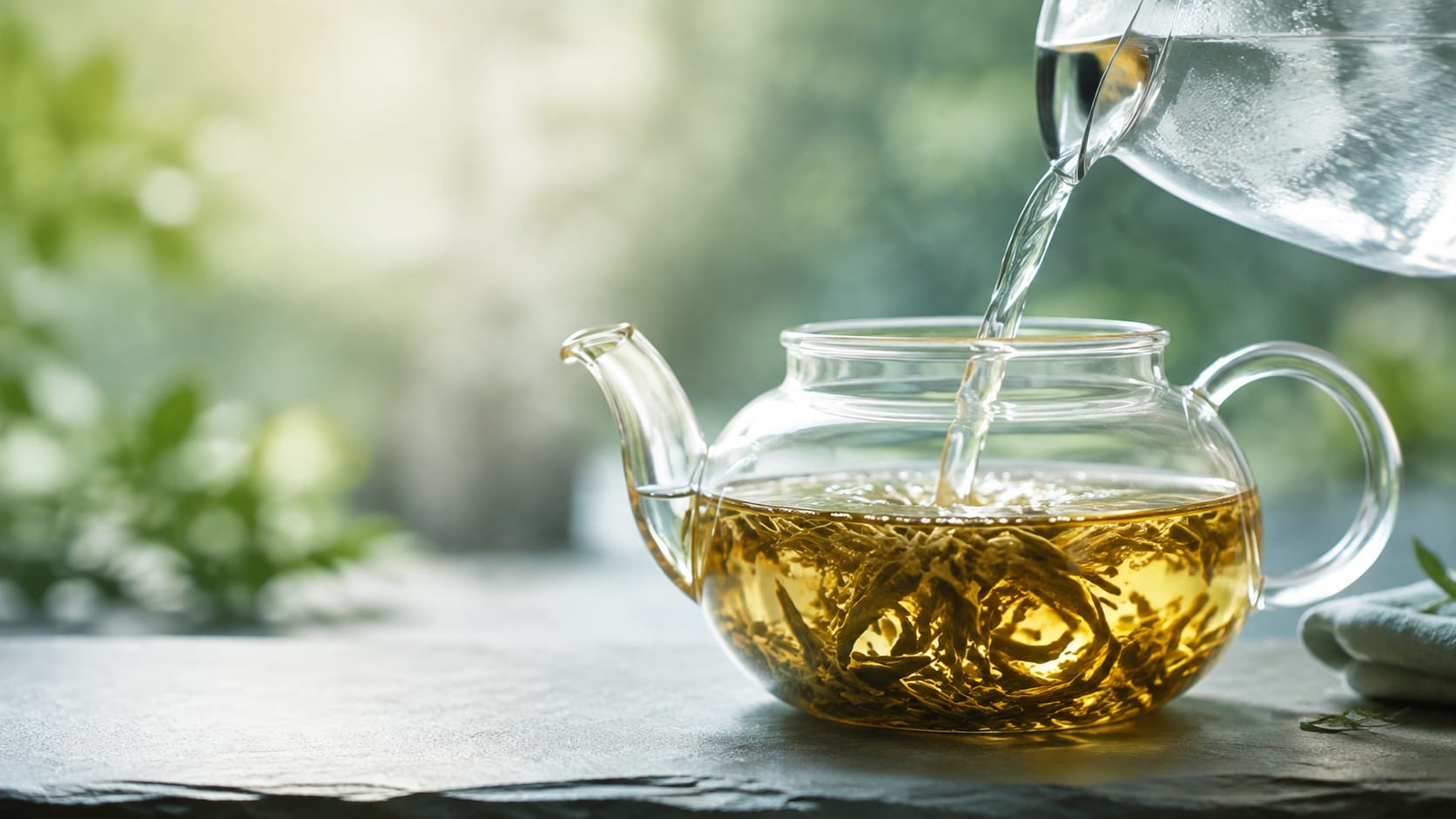
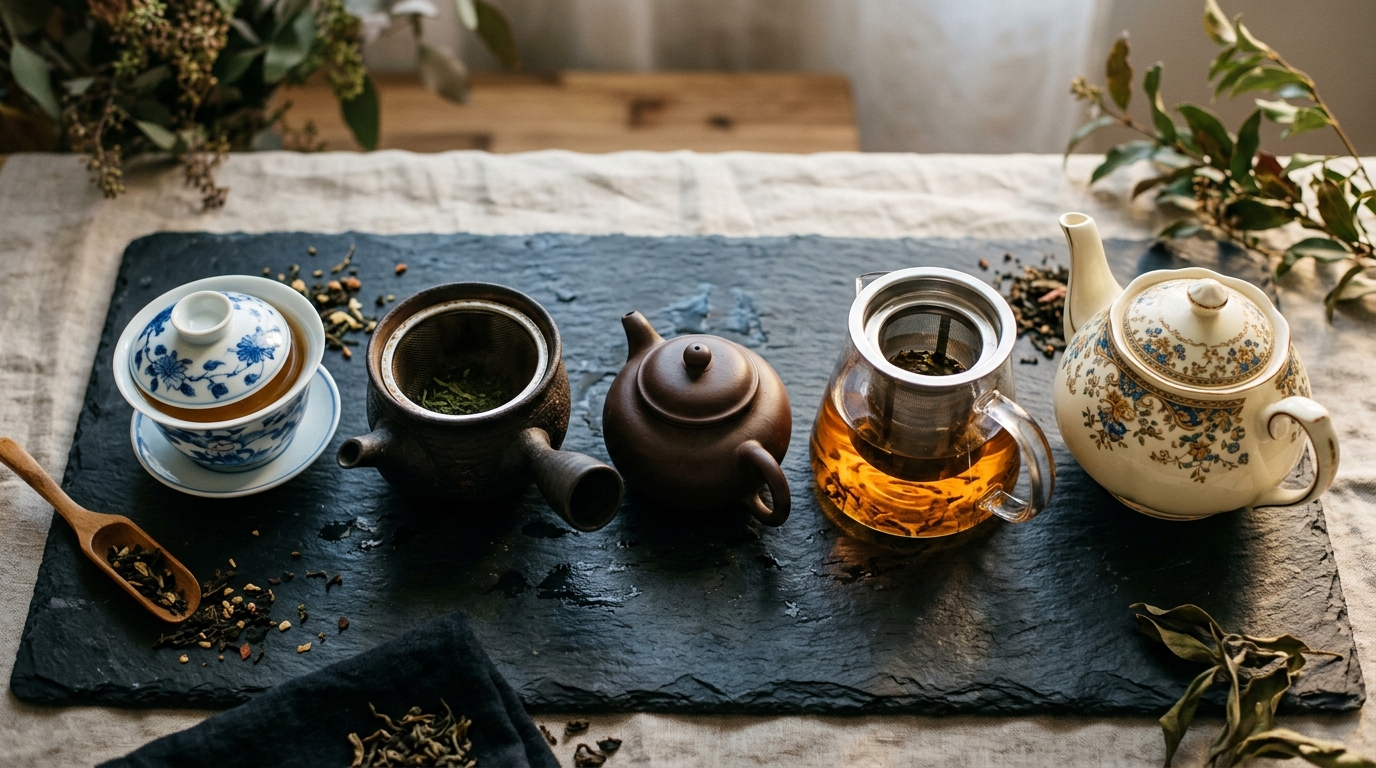
The starter glass pot. A borosilicate glass teapot with a removable stainless mesh infuser is the best entry point for any home tea drinker. (Some glass pots are double-walled for insulation and most are single-walled; check the listing, because we have not verified wall construction for any specific model.) You can see the leaves unfurl, the strainer is removable for easy cleaning, and the glass doesn't retain flavour between brews — which means you can use the same pot for green, white, and oolong without ghost flavours.
Look for: a glass infuser pot of roughly 500–700 ml from a reputable glassware or tea brand — GROSCHE and Hario both make widely available examples — or any equivalent from a specialty tea shop.
The Japanese kyusu. A side-handled clay or porcelain Japanese teapot, with a built-in mesh filter. Designed specifically for Japanese green teas. The smaller capacity (300–400ml) and pour control make it ideal for sencha and gyokuro.
Look for: a Tokoname-yaki kyusu from a specialty importer, with an integrated ceramic or fine stainless mesh filter, in the 250–350 ml range.
The dedicated gongfu set. For the brewer who wants to step into Chinese-style brewing. Look for a 100–150 ml porcelain gaiwan, a fairness pitcher of similar or slightly larger volume, and a set of small porcelain tasting cups. Buying the pieces separately usually gives better quality than a boxed set.
Look for: specialist tea retailers that sell teaware alongside their tea (Mei Leaf, What-Cha and Yunnan Sourcing are long-established examples). Very cheap boxed gongfu sets from marketplaces are a mixed bag — some are fine, many are thin-walled — so read reviews on the specific set.
The yixing pot. A genuine Yixing zisha (purple-clay) pot, made by a recognised potter, will take on the character of one specific tea over years of use — eventually 'memorising' the flavour. This is the long-game purchase: one pot, one tea family, decades of slow flavour development.
Look for: a small (around 100–150 ml) zisha pot from a seller who can state the clay type and maker. Be careful: the market is full of factory imitations, and we cannot authenticate any specific listing. Buy only from a specialist with provenance documentation.
A word on cast iron. Two different objects share the name. A traditional Japanese tetsubin is an unlined cast-iron kettle for heating water over a flame. The enamel-lined cast-iron pots sold in the West are teapots for brewing and must not be put on a stove. They are heavy, retain heat strongly (which can over-stew delicate teas) and don't develop a patina. They're beautiful, but for most drinkers a glass, porcelain or clay pot is more practical.
Follow The Tea List