Meet Your New Tea Tray Companion: The Wonderful World of Tea Pets
A tea pet is a small clay creature, often unglazed, that lives on your tea tray and slowly drinks tea alongside you. Over months and years it gathers a rich, luminous patina — a quiet record of every cup you've shared.
Amina
· 6 min read
With heartfelt thanks to Jesse's Teahouse — a beautiful post of theirs stopped us mid-scroll and sent us straight down a wonderful rabbit hole. You can find them on Facebook at facebook.com/jessesteahouse. This piece exists because of that quiet nudge.
If you've ever watched someone perform a Gongfu tea ceremony and noticed a small, silent clay figure sitting on the tea tray — seemingly minding its own business while tea gets poured and the world slows down — you've already met a tea pet, even if you didn't know it yet.
And trust us, once you know about tea pets, you'll want one of your own.
So, what exactly is a tea pet?
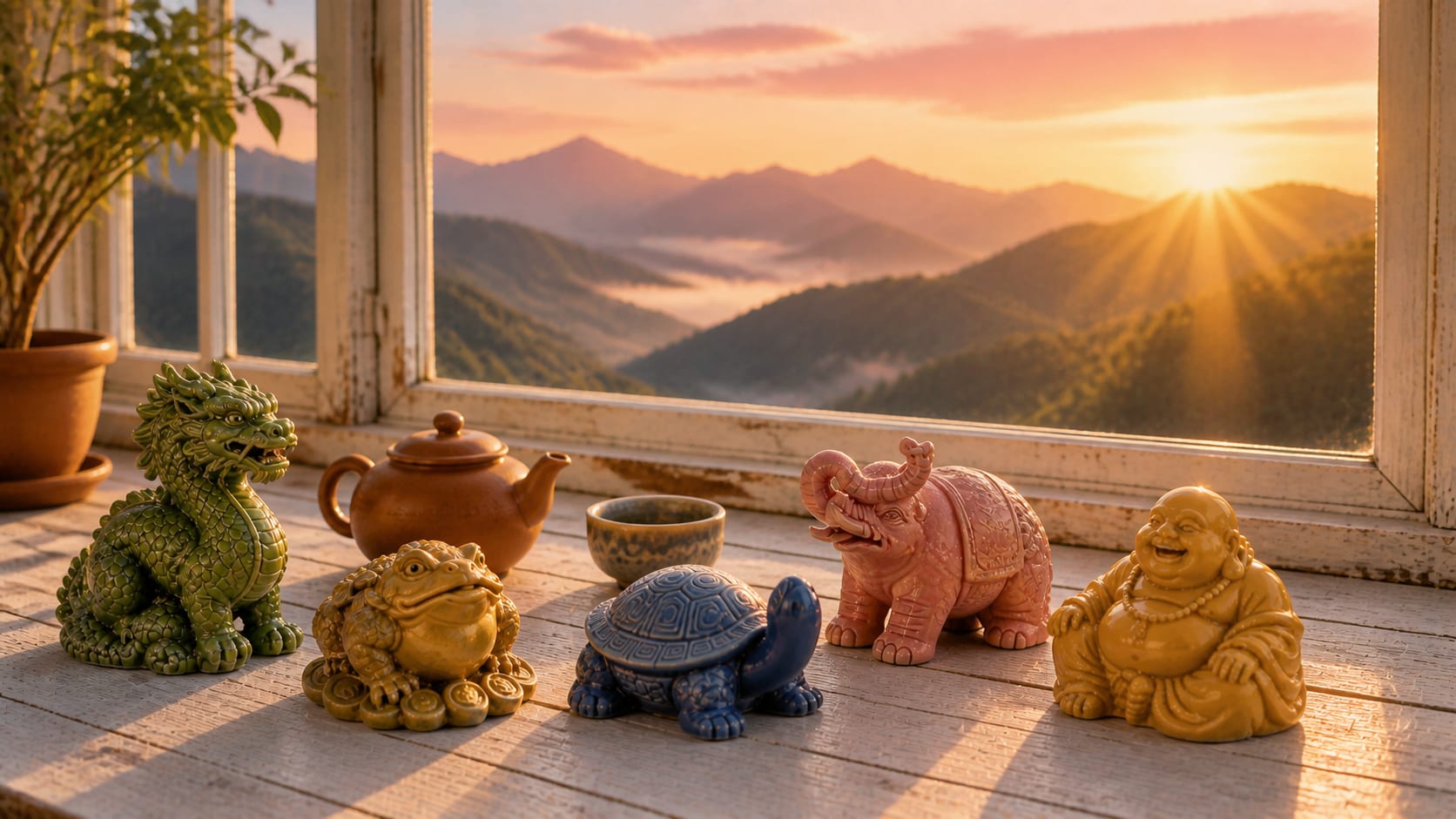
Known in Chinese as chachong, tea pets are small clay figures, often unglazed, that live on the tea tray and quietly participate in every tea session. They're most commonly crafted from Yixing clay — yes, the very same celebrated clay used to make those gorgeous Yixing teapots that serious tea lovers treasure. Because the clay is left unglazed and remains beautifully porous, it does something rather magical over time: it absorbs the tea poured over it, slowly developing a rich, smooth, and luminous patina.
That's right — your tea pet essentially drinks tea alongside you. Every single session.
Feeding your tea pet
During a tea ceremony, it's tradition to pour the leftover tea — the rinse water, the overflow, the last drops — gently over the tea pet. This practice is affectionately called feeding the tea pet, and it's every bit as lovely as it sounds.
Over months and years, this ritual creates something genuinely special: a bond between you and this small clay creature. It changes. It deepens in colour. It gains a glow. It starts to carry the memory of every tea session you've ever shared. There aren't many objects in daily life that transform alongside you quite like this, and that's a large part of what makes tea pets so quietly extraordinary.
What do they look like?
Tea pets come in an absolute array of shapes, each one steeped in symbolism.
Dragons are perhaps the most iconic — representing strength, protection, and tremendous good fortune. Frogs (particularly the three-legged money frog) are beloved symbols of wealth and prosperity. Pigs bring happiness and abundance to the tray, while turtles carry the quiet wisdom of longevity. You'll also find lions, cats, and figures from the Chinese zodiac, so there's almost certainly a tea pet that speaks directly to you.
Some tea pets are also wonderfully playful in design. Certain figures will squirt a tiny jet of water when hot tea is poured over them. Others change colour with the heat. These little surprises and personalities make the tea ritual feel alive — a reminder that tea culture has always made room for joy alongside mindfulness.
A tradition with roots in Yixing teaware
Tea pets are usually made of the same unglazed Yixing (zisha) clay as the famous teapots, and their story is bound up with it. Yixing ware itself is well documented from the Ming dynasty onward, and gongfu brewing matured through the Qing; the tea pet as a distinct tray ornament is harder to date, and the popular narrative that places its origin precisely in the late Ming is tradition rather than established art history. Many of the figures seen today are products of the modern revival of gongfu culture since the late twentieth century. Gongfu cha — with its emphasis on patience, presence, and a deep appreciation for flavour, aroma, and craft — was the perfect setting for the tea pet to find its place.
And so these small figures took up residence on tea trays across China, sitting quietly through countless ceremonies, witnessing conversations and contemplations, celebrations and ordinary Tuesday afternoons. In time, collectors and tea enthusiasts began choosing their tea pets not just for how they looked, but for what they meant — and what they were slowly becoming.
The beauty of something that ages
Here's what sets tea pets apart from every other decorative object: they are meant to age. The more you use them, the more beautiful they become. A well-loved tea pet — its surface worn smooth, its colour deepened to a warm honey or dark amber — tells a story without saying a single word.
Many tea drinkers speak of their tea pets the way you might speak of an old friend. They've been present for the quiet mornings, the long conversations, the grief and the celebrations. They are silent companions with excellent taste in tea.
What tea pets teach us
At their heart, tea pets carry the same values that make tea culture so enduringly beautiful: patience, mindfulness, and the art of being present in small rituals. Caring for a tea pet — slowly, deliberately, over years — is a gentle invitation to slow down and appreciate what's right in front of you.
It's no surprise, then, that tea pets have found admirers far beyond China. Today, collectors and tea lovers around the world seek them out, drawn equally to their artistic craftsmanship and their cultural depth.
Whether you choose a bold dragon or a sleepy little pig, a colour-changing turtle or a classic Yixing frog, your tea pet will become one of the most personal objects on your tea tray. And one day — after hundreds of sessions, thousands of pours, and more cups of tea than you can count — you'll look at it and see not just a clay figure, but a record of your tea journey.
That, we think, is something worth having.
---
Have a tea pet already? We'd love to hear about it — drop us a comment and tell us who's sitting on your tray.
Follow The Tea List