The Tea That's Harvested by Monkeys: Myth or Reality?
The legend of monkey-picked tea is delightful, persistent, and unsupported by any evidence of commercial monkey harvesting. The real story is more interesting.
Sameera
· 5 min read
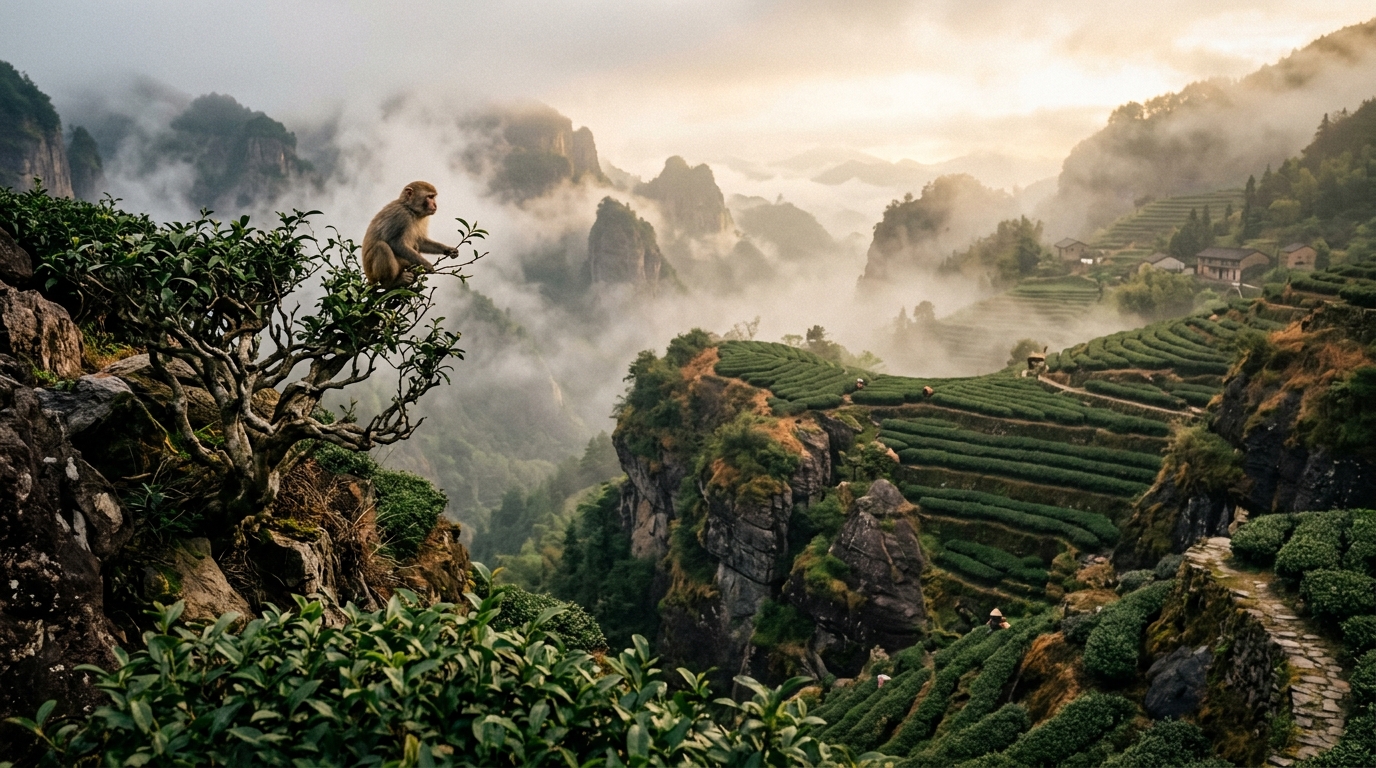
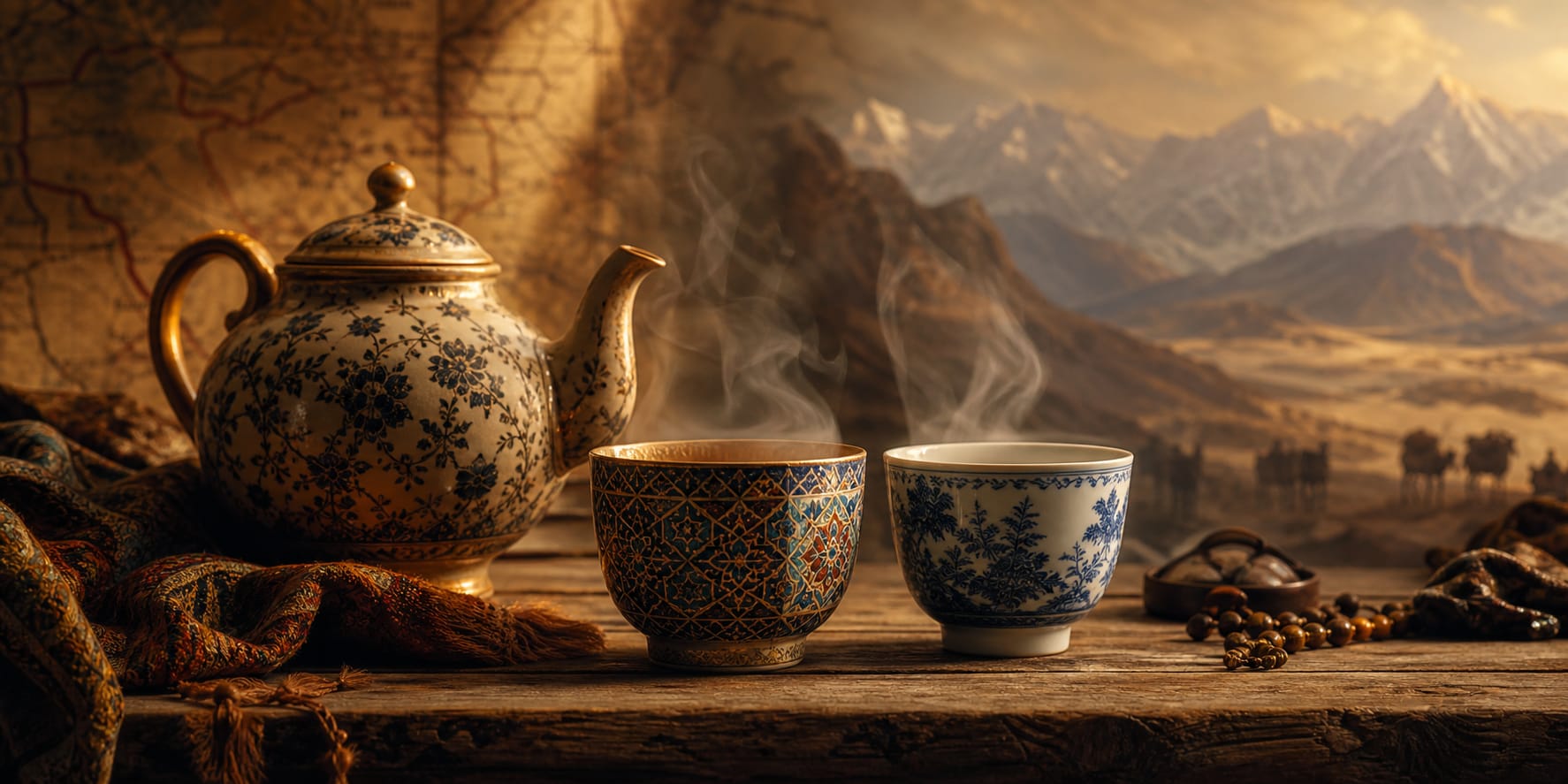
The story is irresistible. In remote Chinese mountains, where the cliff-side tea trees are too tall and too dangerous for human pickers to reach, Buddhist monks have trained troops of monkeys to climb up, pluck the choicest tender leaves, and drop them into baskets below. The resulting tea — sometimes labelled Ma Liu Mie or 'Monkey-Picked' — is supposedly one of the rarest and most valuable on Earth.
It is also almost entirely fictional.
The origin of the story. What follows is lore rather than documented history: versions of the monkey-picked tale circulate in Chinese tea folklore and in nineteenth-century Western travel writing, usually as poetic exaggeration — a way of saying 'this tea is so special it must come from the most inaccessible places.' The legend is most often attached to the Wuyi cliff teas, where bushes really do grow on steep, hard-to-climb rock faces. We have not found a primary source that pins the story to a specific text or date.
The 19th-century revival. When 19th-century European traders expanded commercial imports, they encountered the legend and either misunderstood it or chose to popularise it. 'Monkey-picked' became a marketing label, applied somewhat indiscriminately to high-grade Tieguanyin oolong from Anxi.
What 'Monkey-Picked Tieguanyin' actually is. The label, where it's used, is an informal marketing term some vendors apply to select Anxi Tieguanyin oolong — often spring-picked by skilled pluckers — and it is not an official grade and criteria vary. The 'monkey' name is purely marketing. There is no evidence that any commercial tea sold under this name is, or ever has been, picked by monkeys.
The Buddhist-monkey romance. Monastery-and-monkey anecdotes are part of the same body of lore; we cannot verify them, and there is no evidence that any monastery has ever systematically trained monkeys to harvest commercial tea.
The honest summary. If you see a tea labelled 'Monkey Picked' at a premium, you are paying for the legend. The tea inside may be perfectly good Tieguanyin, but the name tells you nothing about how it was picked. A more reliable label is the simple Anxi grading: Te Ji (top grade), Yi Ji (first grade), and so on. Skip the monkey marketing and buy by grade.
Sometimes the boring answer is the right one.
Follow The Tea List