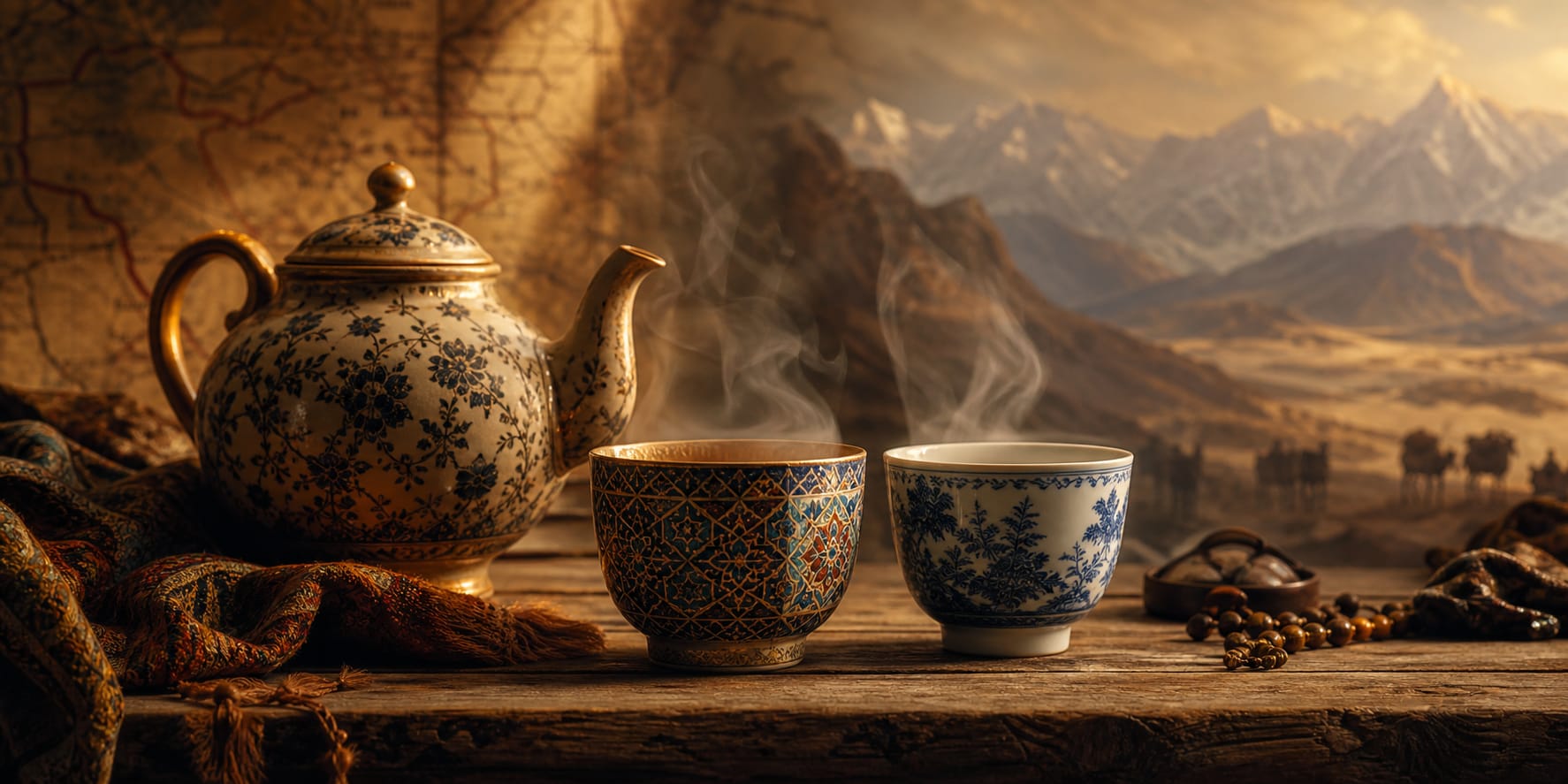
Tibet's Butter Tea: The Tea That's Not Quite Tea
Compressed brick tea, churned with yak butter and rock salt. The Himalayan staple that fuelled Tibetan life for a thousand years.
Sameera
· 6 min read
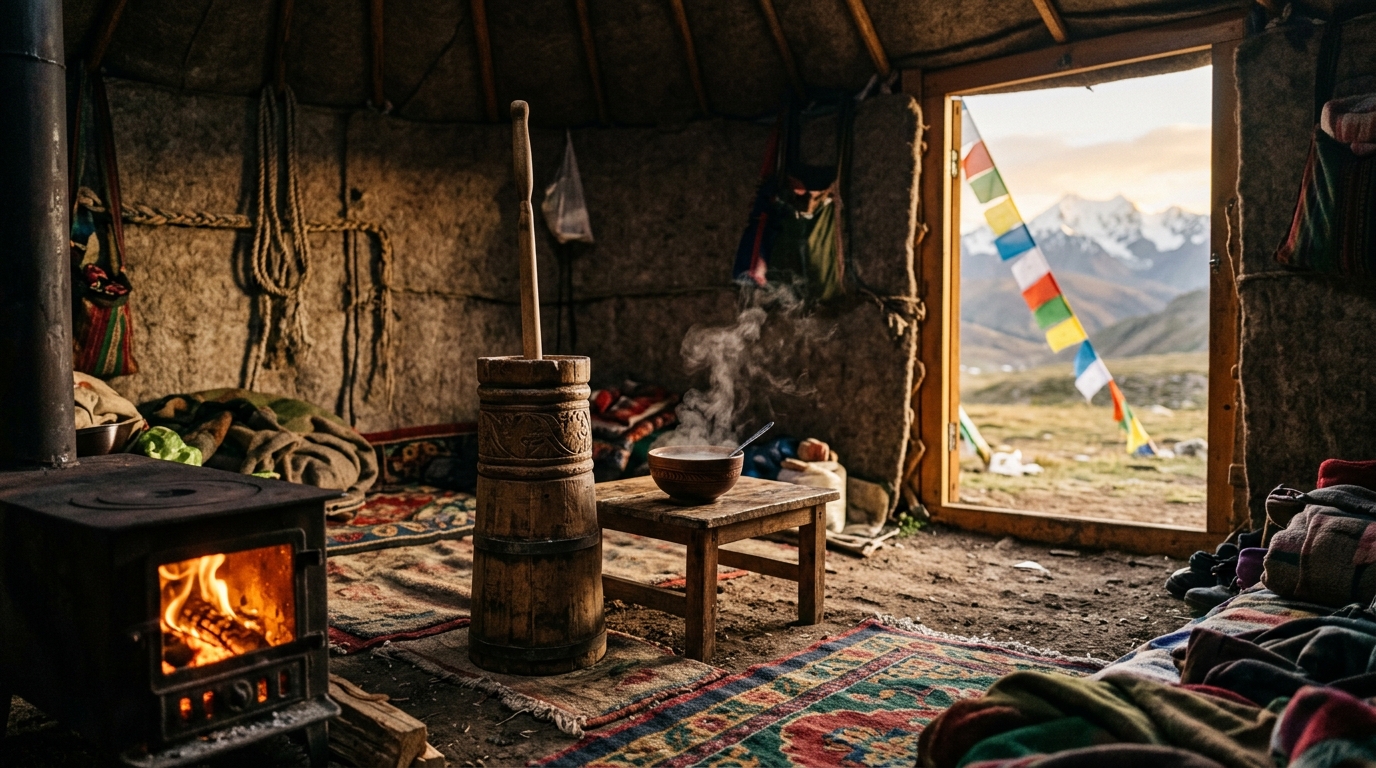
Po cha — Tibetan butter tea — is one of the strangest tea traditions on Earth, and one of the most logical. It's also called suja (butter tea). Imagine the strongest, smokiest black tea you've ever tasted, churned for ten minutes with a stick of butter and a tablespoon of salt, served at a rolling simmer. That's po cha.
Why butter and salt. Tibet sits at an average elevation of 4,500m. The traditional Tibetan diet — heavy in barley flour, dried meat, and dairy — is calorically dense but vitamin-poor. Tea, fermented and traded from China for over a thousand years, supplied small amounts of micronutrients such as riboflavin. Butter supplied energy-dense fat helpful for high-altitude living. Salt helped replenish sodium lost through sweat and exertion in the dry, cold air. Together, the three made a warming, calorie-dense drink well-suited to high-altitude life.
The traditional recipe.
1. Boil compressed brick tea (a coarse Pu-erh-like fermented tea from Sichuan) with water for half an hour.
2. Strain into a tall wooden churn (the dongmo).
3. Add a substantial knob of yak butter — perhaps 50g — and a teaspoon of rock salt.
4. Plunge a wooden churn-stick up and down for several minutes until the mixture is fully emulsified.
5. Pour into wooden bowls and drink hot, refilling continuously throughout the day.
Cultural meaning. Hospitality in Tibet is measured in butter tea. A guest's bowl is never allowed to empty — the host refills it every few sips. Refusing to drink is a serious breach of etiquette. Monks in monasteries may drink many small bowls across the day; the high fat content makes it almost a meal in itself.
Western reactions. Most Western travellers describe their first taste of po cha as 'salty melted butter mixed with smoky tea' — and they're not entirely wrong. It is an acquired taste, deeply tied to its environment. Drink it at altitude after a long day of trekking and you'll suddenly understand why it has sustained an entire civilisation for a thousand years.
Most of the world's butter tea today is still made in Tibet, Bhutan, Nepal, and the Tibetan-cultural regions of Sichuan and Qinghai — not exported. To try the real thing, you essentially have to go.
Follow The Tea List