Uji, Japan: Where Matcha Culture Was Born
A short train ride south of Kyoto, a riverbank town has been growing some of the world's finest tea for 800 years—and shaded matcha for about 400 of them. A guide to Uji.
Sameera
· 8 min read
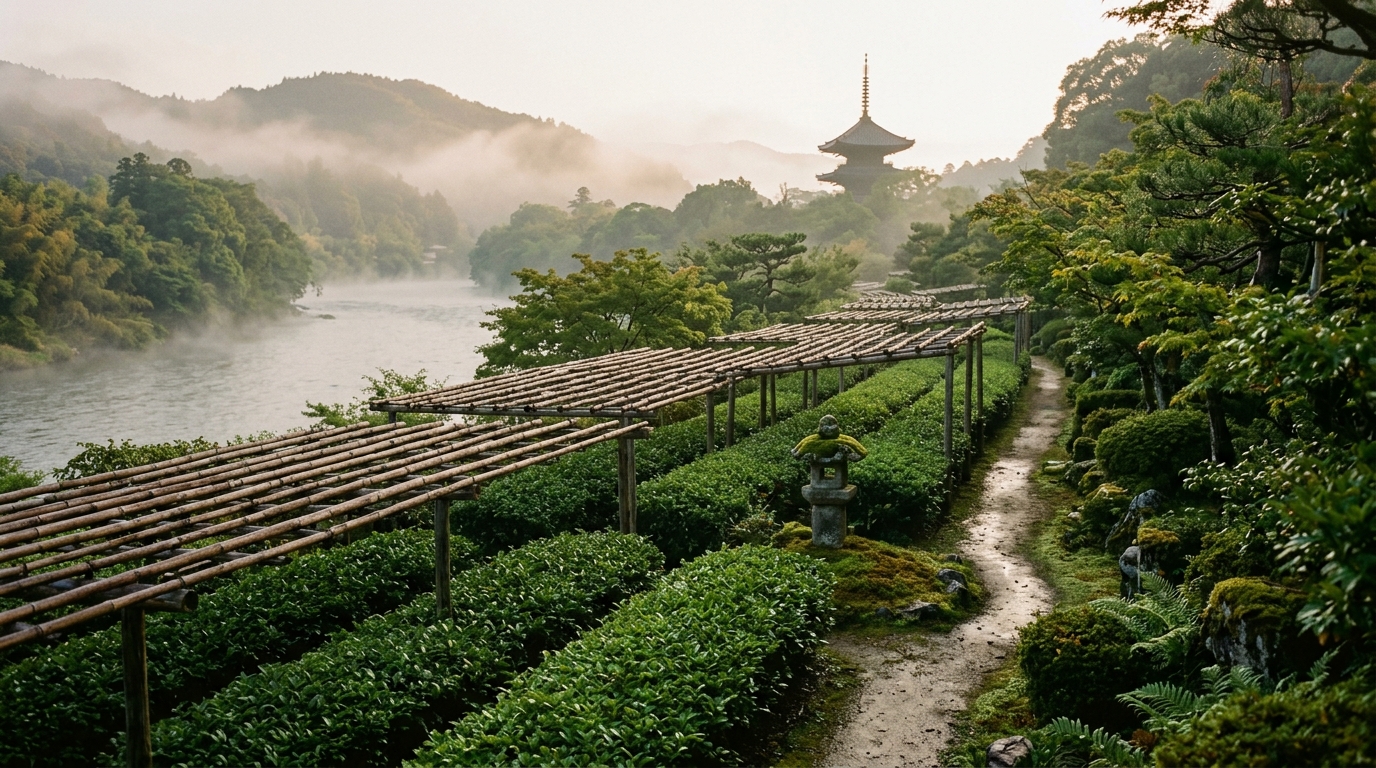
Uji is a town of about 180,000 people in southern Kyoto Prefecture. Most visitors come for the Byōdō-in temple, the 11th-century Pure Land masterpiece printed on the back of every Japanese ten-yen coin. They leave knowing the town for tea.
The 12th-century origin. Powdered tea came to Japan in the late 12th century with the Zen monk Eisai, who returned from Song China in 1191 with seeds and the Chinese practice of whisking ground tea. Tradition holds that seeds were planted at Kōzan-ji near Kyoto by the monk Myōe, and that cultivation spread from there to Uji. Shade-growing—the step that defines modern matcha—came much later: covering tea bushes before harvest is documented in Uji from around the sixteenth century, so the 12th-century drink was powdered tea but not matcha as we now define it. Over the following centuries Uji's climate, riverside soil and morning mist proved ideal for high-quality tea and then for shaded cultivation. By the 14th century, Uji matcha was supplied directly to the imperial court and the shogun.
The unchanged craft. The core steps are recognisable today, though cultivation and processing have changed considerably over the centuries. Tea bushes destined for matcha are covered with shade structures (originally bamboo and rice straw, now usually black mesh) for the last three to four weeks before harvest. Shading reduces sunlight, leading leaves to accumulate more chlorophyll and L-theanine while suppressing the formation of bitter catechins.
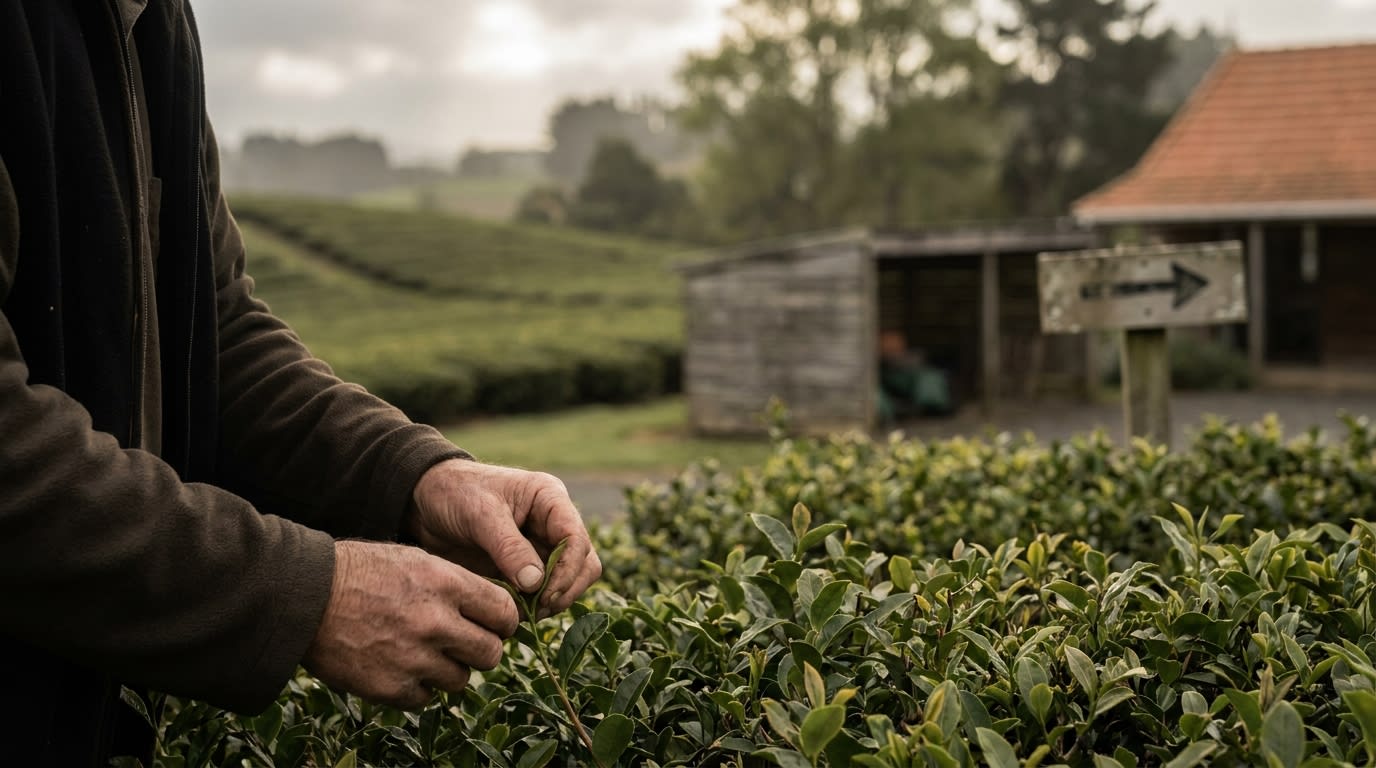
Top grades are hand‑plucked (many are machine‑sheared), steamed within hours, dried into flat fragments called tencha, and stone-ground into the bright green powder we now recognise. The stone-grinding step is famously slow. A single granite mill produces about 30–40 grams of matcha per hour. Industrial matcha is made by ball mills and air mills; the difference in flavour is significant.
The family shops. A walk along Byōdō-in Omotesandō, the main street between Keihan Uji Station and the temple, takes you past at least a dozen matcha shops, several of them family businesses going back four hundred years. Tsuen Tea, which traces its founding to 1160, claims to be the world's oldest continuously operating tea shop. Marukyu Koyamaen has been in the same family for 300 years.
If you visit. Take the JR Nara Line south from Kyoto Station to Uji; rapid services take roughly 20 minutes and local trains closer to 30, and the Keihan Uji Line from central Kyoto is an alternative. Walk about fifteen minutes from the station along the river. Order a bowl of koicha (the thick, ceremonial preparation) from any shop with a stone mill visible in the window. You will taste, in concentrated form, what eight centuries of accumulated craft tastes like.
Follow The Tea List