Green Tea Explained: Gyokuro vs Sencha vs Matcha
Three of Japan's most famous green teas come from the same plant. The differences are everything — and once you know them, you'll never confuse them again.
Sameera
· 7 min read
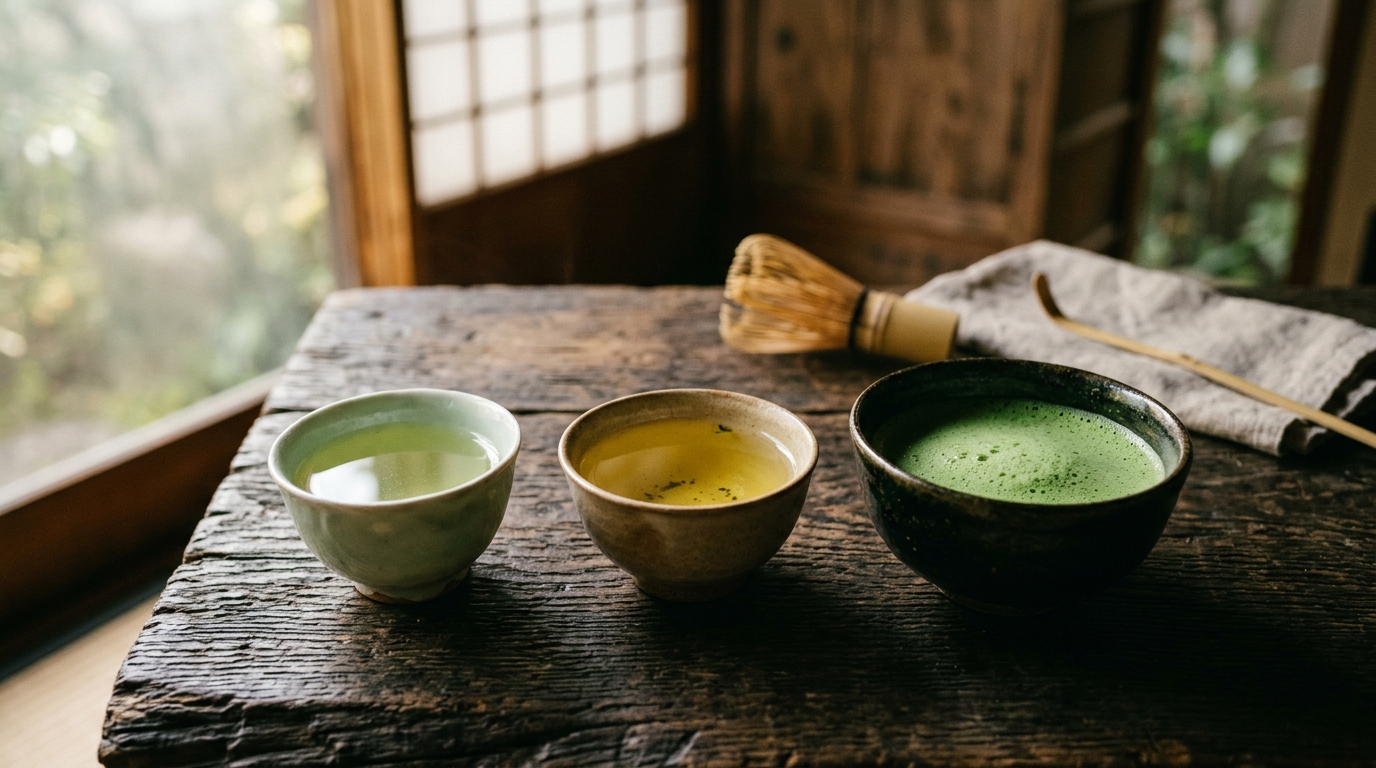
Japan produces hundreds of distinct green teas, but three names dominate any serious shelf: gyokuro, sencha, and matcha. They all come from the same plant. They differ in how the leaves are grown, processed, and consumed — and the differences are big enough that the cups have almost nothing in common.
Sencha — the everyday tea. Sencha is the workhorse of Japanese green tea. The bushes are grown in full sun. The leaves are picked, steamed within hours to halt oxidation, then rolled into tight needles and dried. The cup is bright green, vegetal, and a little astringent — notes of fresh seaweed and steamed spinach. Brew it at 70°C for one minute. Hotter water or longer time will increase bitterness; adjust to taste and avoid near-boiling.
Gyokuro — the shaded luxury. For about 20–30 days before harvest, gyokuro bushes are covered in shade-cloth or bamboo screens, often blocking 70–90% of sunlight. The plant responds by producing more chlorophyll and L-theanine, less catechin. The result is an almost broth-like liquor — sweet, deep green, noticeably savoury, almost like a clear vegetable stock. Brew it at 50–60°C for two minutes, in tiny amounts.
Matcha — the powdered ceremony. Matcha takes the shading idea further. The shade-grown leaves are not steeped; they are stone-ground into a vivid green powder, then whisked directly into hot water. You consume the entire leaf. The cup is intensely concentrated — much of the L-theanine, caffeine, and antioxidant content ends up in the bowl because the ground leaf is consumed.
How to choose. If you want a daily green tea: sencha. If you want a once-a-week treat that tastes like nothing else: gyokuro. If you want the most concentrated, ritualised, and visually striking experience: matcha. None of them is 'better' than the others. They are three different answers to the same plant.
Follow The Tea List