Herbal 'Teas' That Aren't Actually Tea — and Why It Matters
Chamomile isn't tea. Rooibos isn't tea. Peppermint isn't tea. The technical distinction matters more than you think — for taste, caffeine, and how to brew.
Sameera
· 6 min read
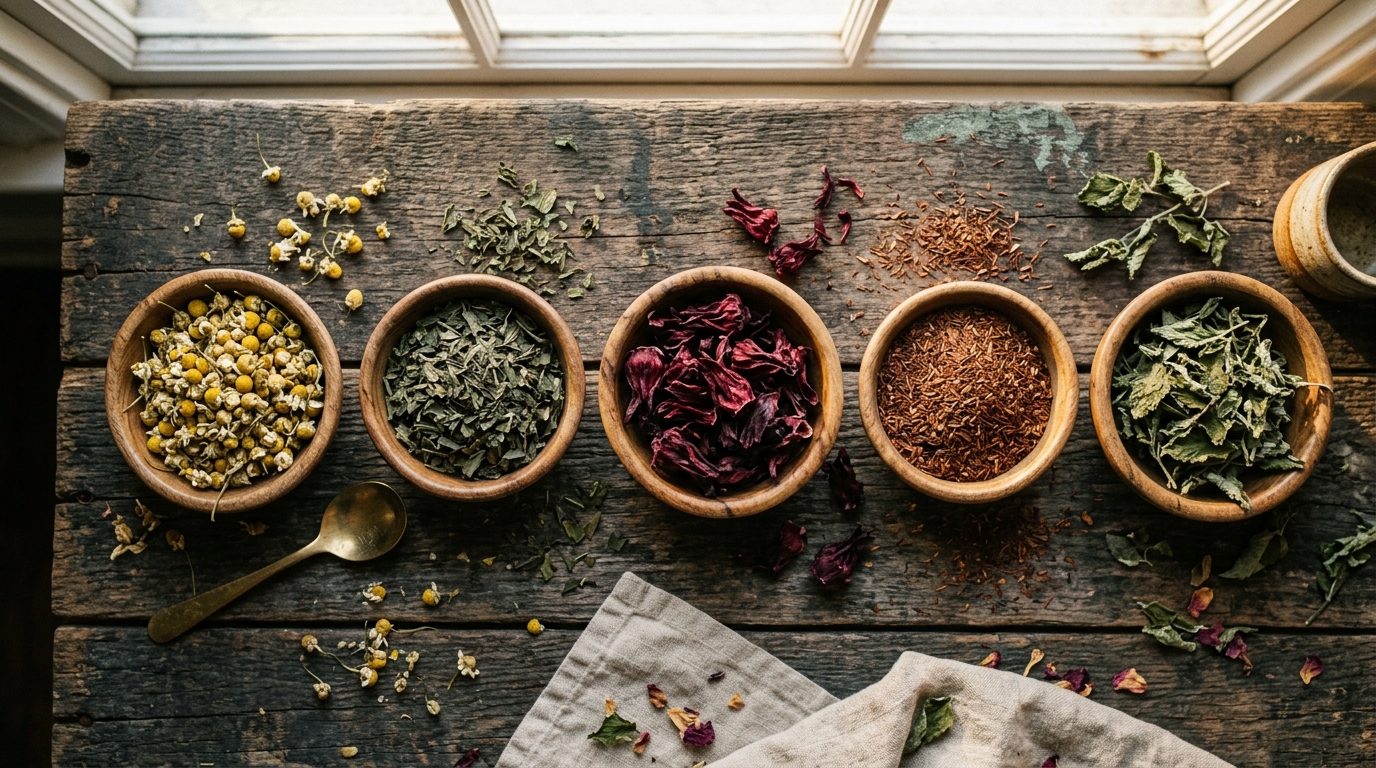
If a beverage didn't come from the Camellia sinensis plant, it isn't, technically, tea. The proper word is tisane (or infusion, or herbal). Most people use 'tea' interchangeably for both, which is fine in everyday speech — but the distinction matters more than it might seem.
Why the technical distinction matters. Real tea — green, white, oolong, black, pu-erh — contains caffeine, L-theanine, and tea polyphenols (catechins in green; theaflavins/thearubigins in darker styles). Most tisanes lack theanine and caffeine, though some (e.g., yerba mate/guayusa) contain caffeine and many contain other polyphenols. Their effects on the body can differ markedly, and typical brewing instructions and flavour expectations often differ as well. Calling them all 'tea' has confused millions of well-meaning drinkers.
The herbal headliners.
• Chamomile — dried Egyptian or Croatian flowers. Contains apigenin (a flavone studied for mild calming effects). Brew at 90°C for five minutes. Tastes of apple skin and warm hay.
• Rooibos — a South African shrub (Aspalathus linearis), not a tea plant at all. Naturally caffeine-free, mineral-rich, with a sweet, earthy, slightly woody flavour. Brews well very strong — six to eight minutes at full boil.
• Peppermint — leaf of Mentha piperita. Bright, cooling, often used for digestive comfort. Brew at 90°C for five minutes. Better as a digestif than a breakfast drink.
• Yerba mate — South American holly leaves (Ilex paraguariensis). The exception that proves the rule: yerba mate is a tisane technically, but it contains substantial caffeine (roughly 30–80mg per cup). Drunk through a metal straw from a hollowed-out gourd.
• Hibiscus — dried calyxes of Hibiscus sabdariffa. Tart, ruby-red, a source of vitamin C. May modestly lower blood pressure with regular consumption.
Brewing tisanes correctly. Most tisanes prefer fully boiled water and longer steep times than real tea. Use more leaf — herbs are bulkier and lighter than tea leaves. And never under-steep: a four-minute chamomile is just yellow water. Five minutes minimum.
The honest summary. Tisanes are wonderful drinks. They are not, in any technical or chemical sense, tea. Knowing the difference will make you a better drinker of both.
Follow The Tea List