Pu-erh: The Aged Tea That Gets Better with Time
Sheng, shou, and one of the few tea families that can genuinely improve over decades — when it's good tea, well stored. A practical primer on the world's most rewarding (and confusing) tea.
Sameera
· 9 min read
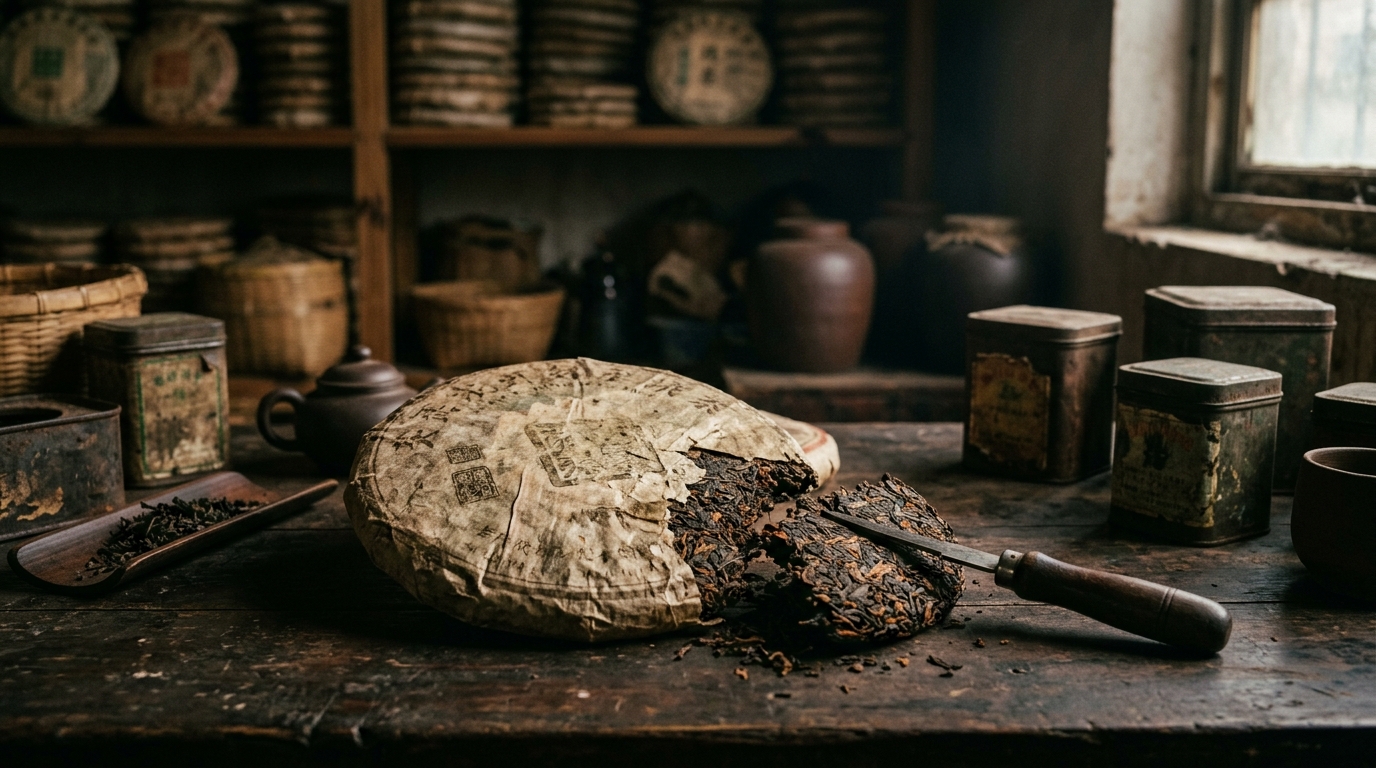
Pu-erh, named after a market town in southern Yunnan, is the post-fermented dark tea that has fascinated and confused Western drinkers for the last two decades. Pu-erh is unusual in having two distinct production paths — and understanding the difference is the first step to drinking it well.
Sheng pu-erh (raw, 生). Made the slow way. Sun-dried maocha is steamed and pressed into cakes (or sold loose), and may then be aged for years — sometimes decades — in a suitably humid, ventilated environment; plenty of sheng is also drunk young. Microorganisms gradually transform the leaves. Young sheng tastes bright, green, and aggressive. Properly aged sheng — say, fifteen years on — tastes mellow, dried-fruity, with notes of camphor and old wood.
Shou pu-erh (ripe, 熟). The modern shortcut. Developed in the early 1970s by Yunnan tea factories (notably Menghai and Kunming), the wo dui method piles moistened, sun-dried maocha under breathable covers for 45–60 days and accelerates the fermentation that would otherwise take years. The result is dark, earthy, and chocolatey from day one. Less mysterious, more accessible, dramatically cheaper. Most pu-erh in Western cafés is shou.
How to brew. Pu-erh is a gongfu tea. Around five grams of leaf in a small (120ml) yixing pot or gaiwan is a common starting point. Hot water — boiling is fine, this isn't a delicate green. Many drinkers give compressed leaf a quick rinse to loosen it (a flavour habit, not a sterilisation step). Then steep briefly, pour, drink, lengthening each infusion by taste. A good cake may give you eight to twelve infusions; a lot depends on the tea and how tightly it's pressed.
What to buy first. Start with a 2010s shou cake from a reputable producer (Menghai, Xiaguan, or a specialist Western importer). Drink it for three months until the flavour profile is familiar. Then buy a young sheng (5–10 years old) and notice the contrast — the bright, almost smoky aggression that aged sheng eventually mellows into.
The aging promise—and its limits. Well-made sheng pu-erh stored in suitable conditions can keep developing for decades, and some sought-after 1990s factory cakes now change hands for very large sums. But ageing improves only good tea in good storage: a poor cake stays poor, a badly stored one goes musty, and the collector market is opaque, with provenance hard to prove. Buy pu-erh to drink, not as an investment, and treat any promised "appreciation" with the scepticism you'd give any other unregulated collectible.
Follow The Tea List