When the Sky Turned Orange: How Bushfire Smoke Reshapes Australian Tea
Australia's bushfire seasons raise an obvious question for the tea grown under the same skies. We set out what is documented about smoke taint, what is borrowed from wine science, and what remains unknown for tea.
Sameera
· 6 min read
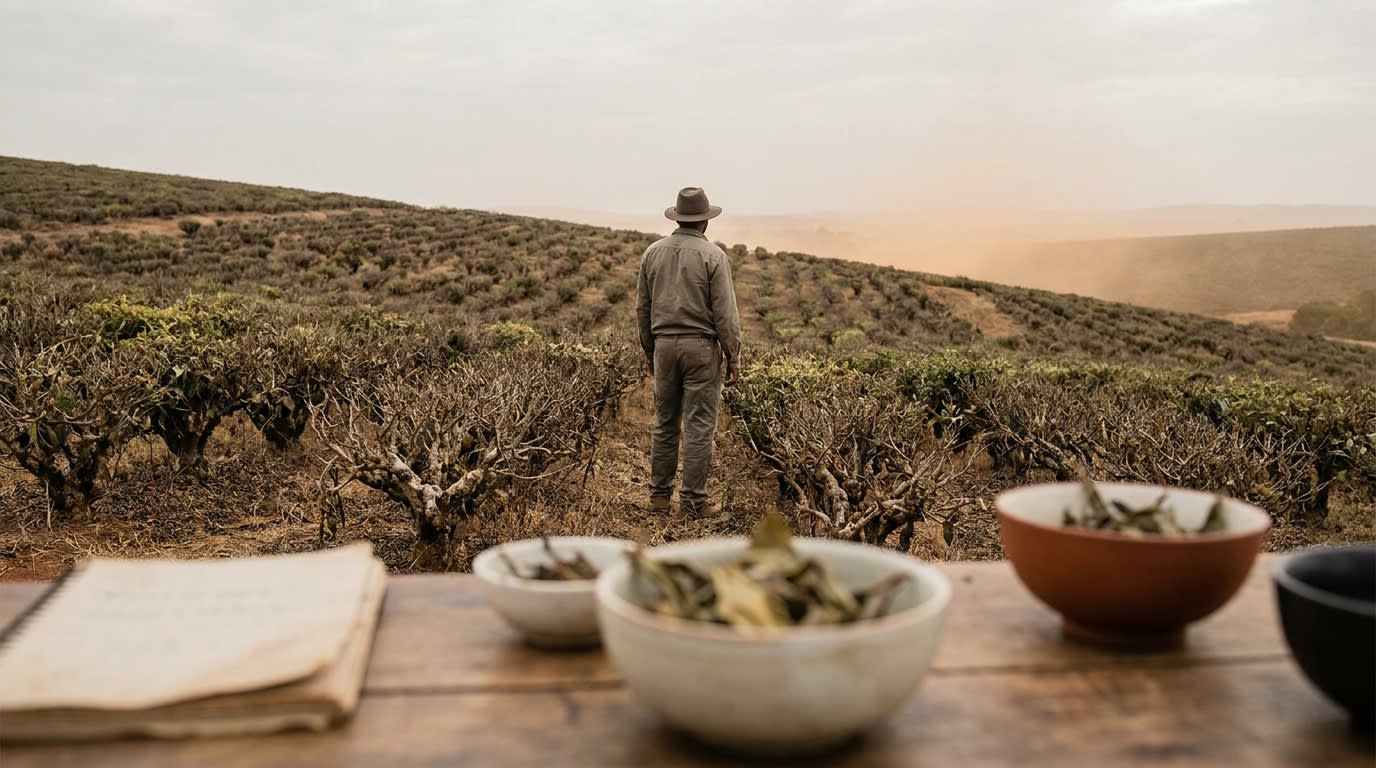
During Australia's worst bushfire seasons, the sky over farming country can turn the colour of rust: the sun reduced to a dull copper coin, the air thick with particulate matter drifting from fires hundreds of kilometres away. Vineyards learned long ago that smoke you can see is only part of the story—the compounds you can't see settle on leaves and can linger in the crop. Tea, grown on the same continent and under the same skies, has had far less attention. This article sets out what is documented, what is borrowed from wine science, and what remains an open question.
Editor's note (October 2026): an earlier version of this article included interview quotations, crop-loss figures and research findings that we could not trace to original records. They have been removed. Nothing below is attributed to a named individual unless it comes from a linked public source.
Australia's Small Tea Belt
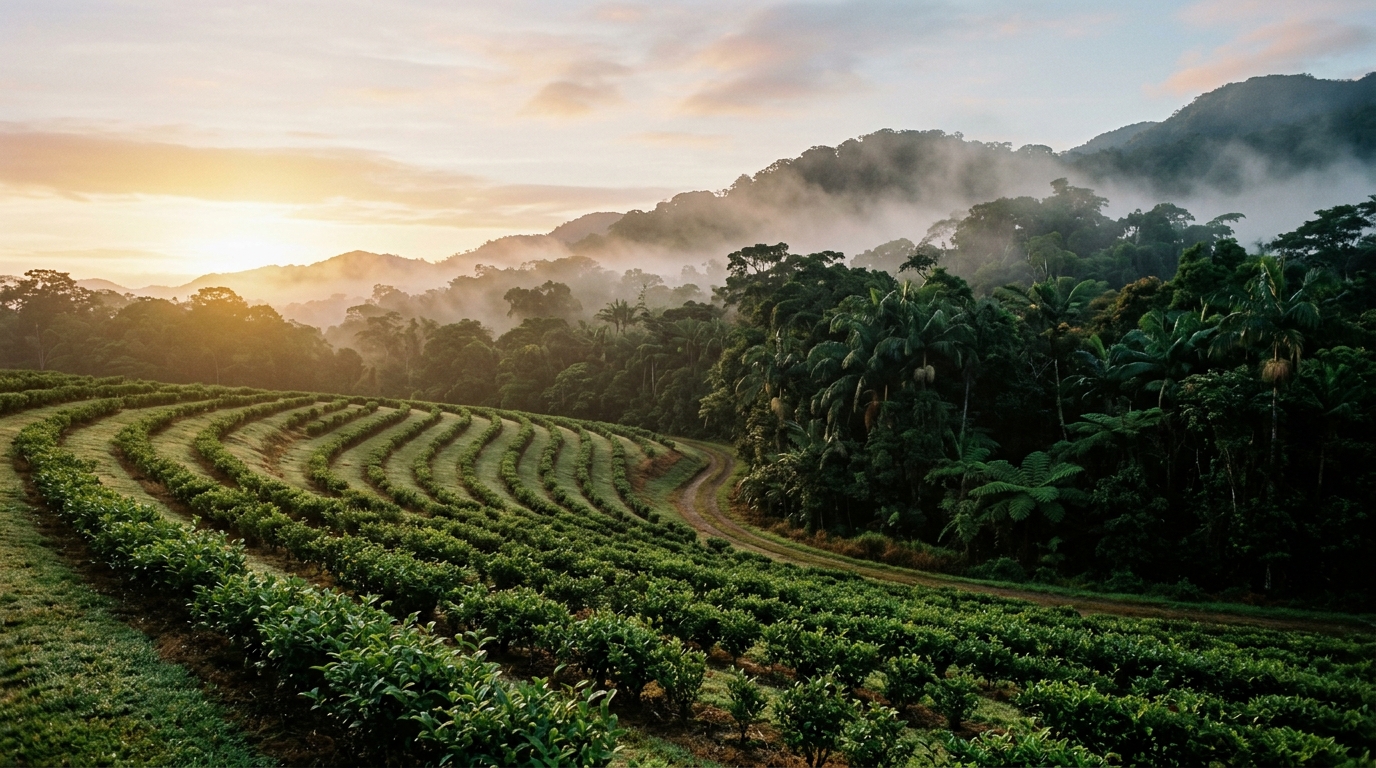
Commercial tea in Australia is a small industry concentrated in the tropical north, with smaller plantings in northern New South Wales and experimental plots in cooler southern microclimates. The largest producer, Nerada, farms a roughly 360-hectare estate at Malanda on the Atherton Tablelands, west of Cairns; in 2023 the company told the ABC the plantation and factory handled more than six million kilograms of fresh tea leaf a year. Fresh leaf is not finished tea—made black tea weighs roughly a fifth to a quarter of the green leaf it came from—so national production figures should always say which one they mean, and this article does not quote a current national total because we have not found a dated official one.
The industry has been under pressure for reasons that have nothing to do with smoke. In May 2023 Nerada announced it would put the Malanda estate into "hibernation" from the end of June 2023, citing drought in earlier years, rising fuel and fertiliser costs and a steady decline in supermarket demand for black tea, while it sought investment to move into higher-value products. Company director John Russell and farm operations manager Tony Poyner were both quoted by the ABC at the time; Mr Poyner said he expected production to resume within about two years. We have not verified whether, or on what scale, harvesting has restarted since, and readers should check with the company directly for its current status. Any account of Nerada harvesting through late 2023 should be treated with caution unless the company has confirmed it.
What Smoke Does to a Crop: The Wine Evidence
Smoke taint is best understood in wine grapes, where Australian researchers have studied it for two decades. When bushfire smoke passes over a vineyard, volatile phenols—guaiacol, 4-methylguaiacol, cresols and syringol among them—are taken up by leaves and fruit. Inside the plant tissue many of these phenols are bound to sugars as glycosides, which are odourless until enzymes or acid conditions during fermentation and ageing release them again. The result in affected wine is a persistent ashy, medicinal character that is difficult to remove, and the Australian Wine Research Institute now offers routine laboratory testing for both free phenols and their glycoside precursors.
It is tempting to transfer all of this directly to tea. Camellia sinensis is a leafy perennial that also absorbs airborne compounds through its stomata, and the same phenols are the backbone of deliberately smoked teas such as lapsang souchong. But tea leaves undergo far more processing than wine grapes—withering, rolling, oxidation and firing—and each step could plausibly amplify, transform or drive off smoke compounds. Whether unintended bushfire smoke produces measurable taint in finished tea, at what exposure, and for how long after the event, are questions that need tea-specific research. We are not aware of published Australian studies that settle them, and findings from grapes cannot simply be assumed to apply.
Plant Stress Beyond Flavour
Smoke and haze affect plants in ways that go beyond off-flavours. Heavy particulate loads reduce the light reaching leaves and can prompt stomatal closure, which reduces photosynthesis for as long as the smoke persists. Ash deposition can alter soil surface chemistry. These are general plant-physiology observations, documented across many crops; the magnitude of any effect on a tea bush, and whether it carries into subsequent flushes, has not been measured in Australian conditions as far as we can establish. The more serious and better-documented agricultural stressor in the same period was drought, which Nerada itself cited as the start of its difficulties.
What Growers Can Reasonably Do
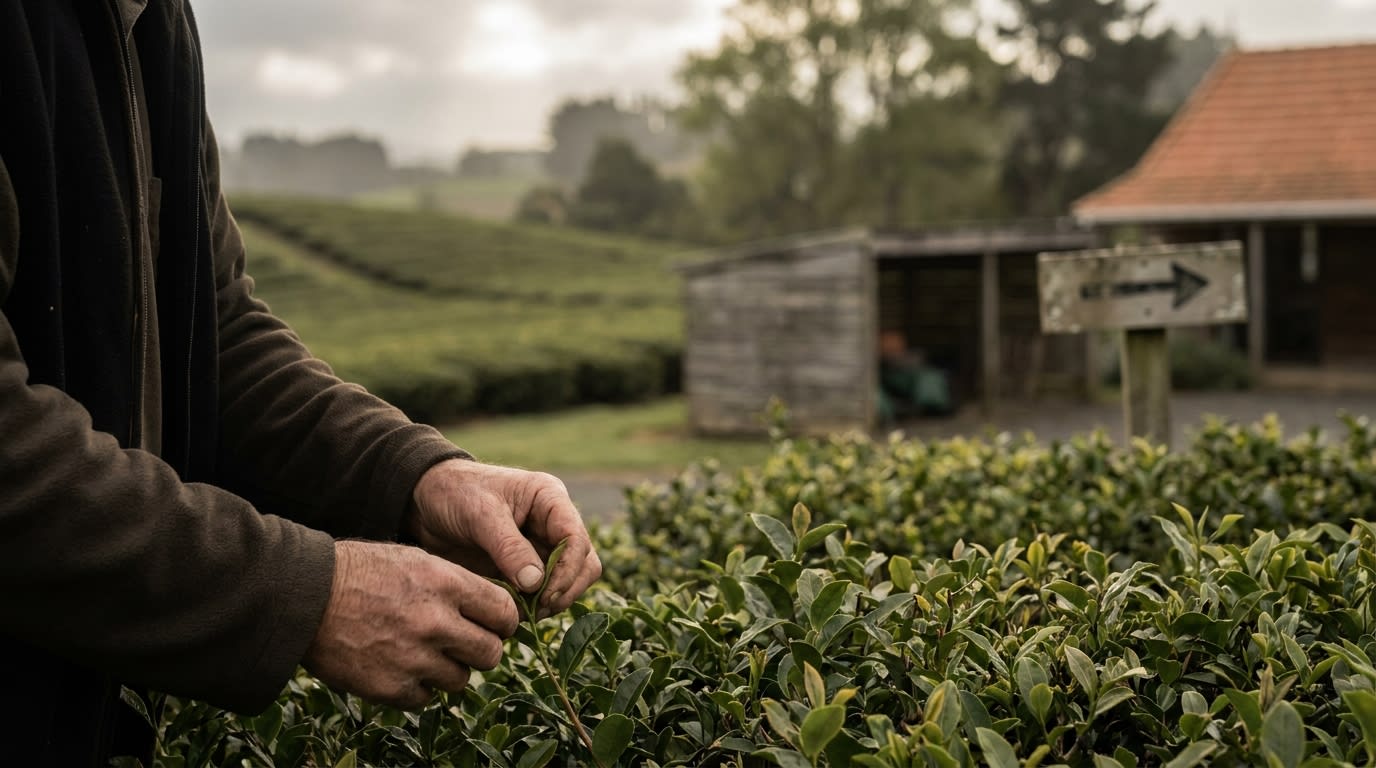
Without tea-specific data, the sensible playbook borrows from wine and from common sense. Watching regional air-quality readings during fire season gives an objective record of exposure for any given harvest window. Separating leaf plucked during heavy smoke from the rest of production, and tasting it after processing and again after a few months in storage, is the simplest way to learn whether taint is present—remembering that glycoside-bound phenols may only express later. Keeping records of exposure alongside batch numbers would also let producers and buyers compare notes in a way the industry has not yet done systematically.
For small producers working in hundreds of kilograms rather than tonnes, the economics of a lost or downgraded batch are obviously harsher than for a large estate. That is an observation about scale, not a report of specific losses; we have not been able to verify the individual grower outcomes previously described in this article.
The Longer View
Climate projections for eastern Australia point to longer and more intense fire seasons. If smoke becomes a recurring feature of the growing environment rather than an aberration, Australian tea producers will need the research infrastructure that wine already has: validated analytical methods for tea, exposure thresholds, and recovery data across seasons. Until that exists, the honest position is that bushfire smoke is a potential agricultural concern for Australian tea whose real-world effects on yield, chemistry and flavour remain largely unquantified.
For now, the tea bushes on the Atherton Tablelands continue their patient work of turning sunlight into flavour, their roots deep in volcanic soil, their leaves reaching toward a sky that may, on any given spring morning, turn the colour of rust again.
Follow The Tea List