Zealong: New Zealand's Only Tea Estate
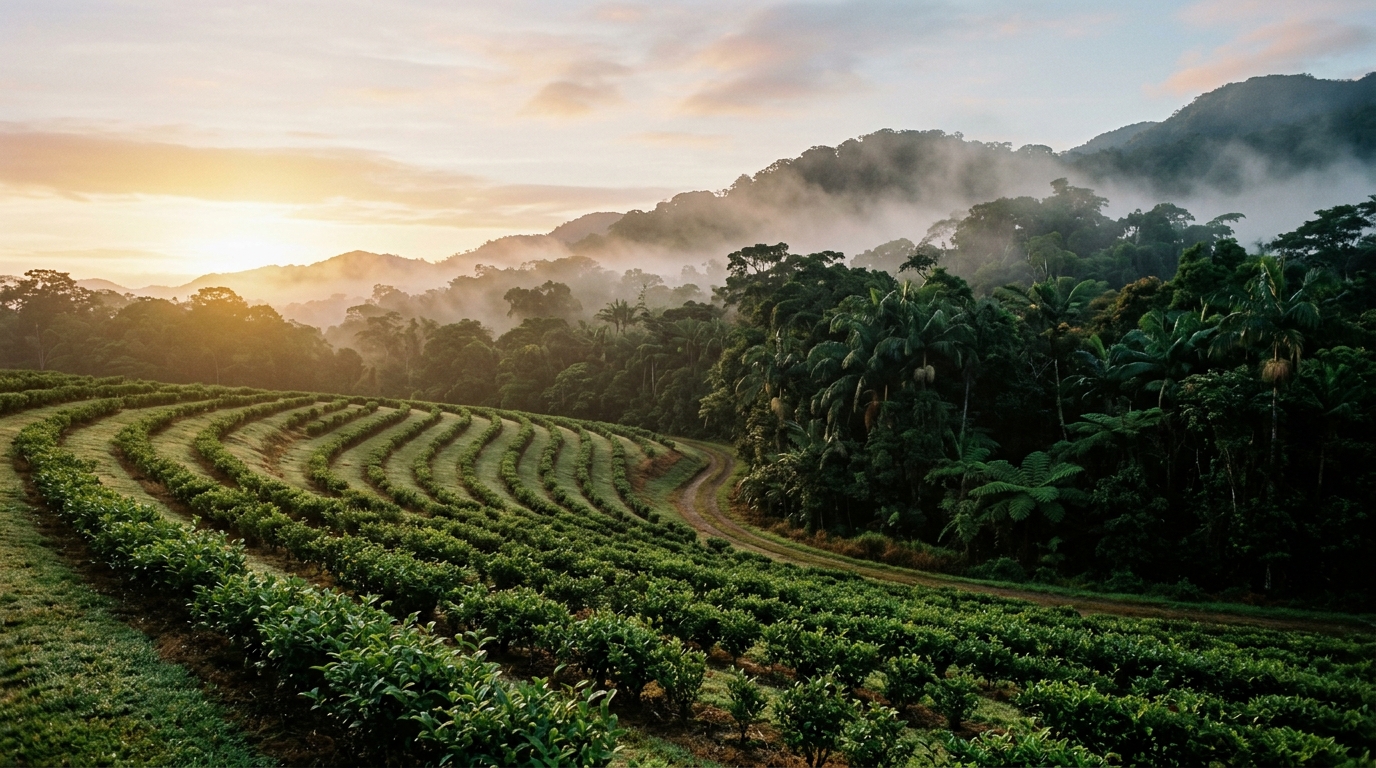
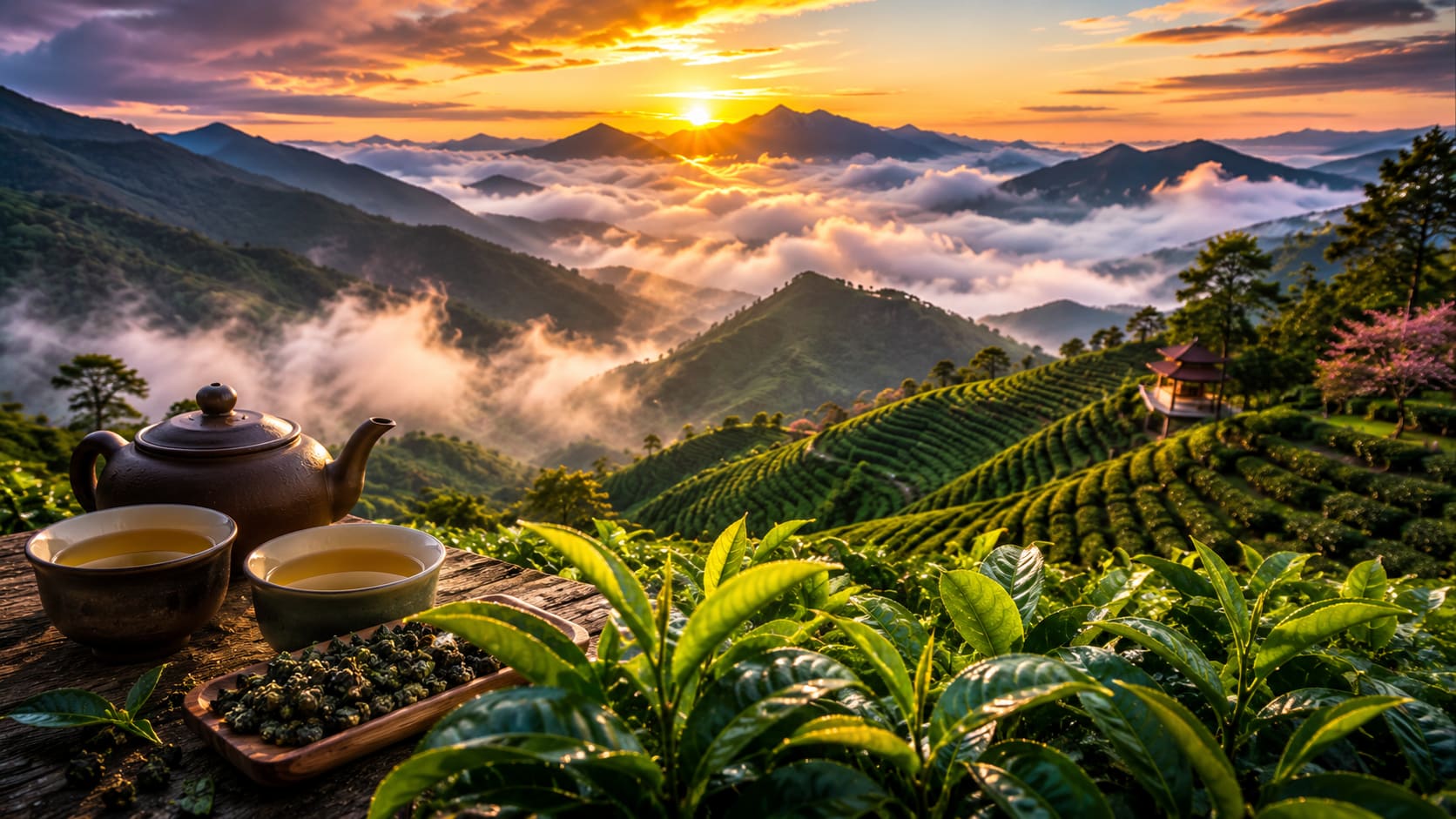
In the rolling green hills of the Waikato, a singular experiment has been quietly unfolding for nearly three decades. Zealong is New Zealand's only commercial tea estate—certified organic, and rewriting what we thought possible about terroir far from Asia.
Sameera
· 9 min read
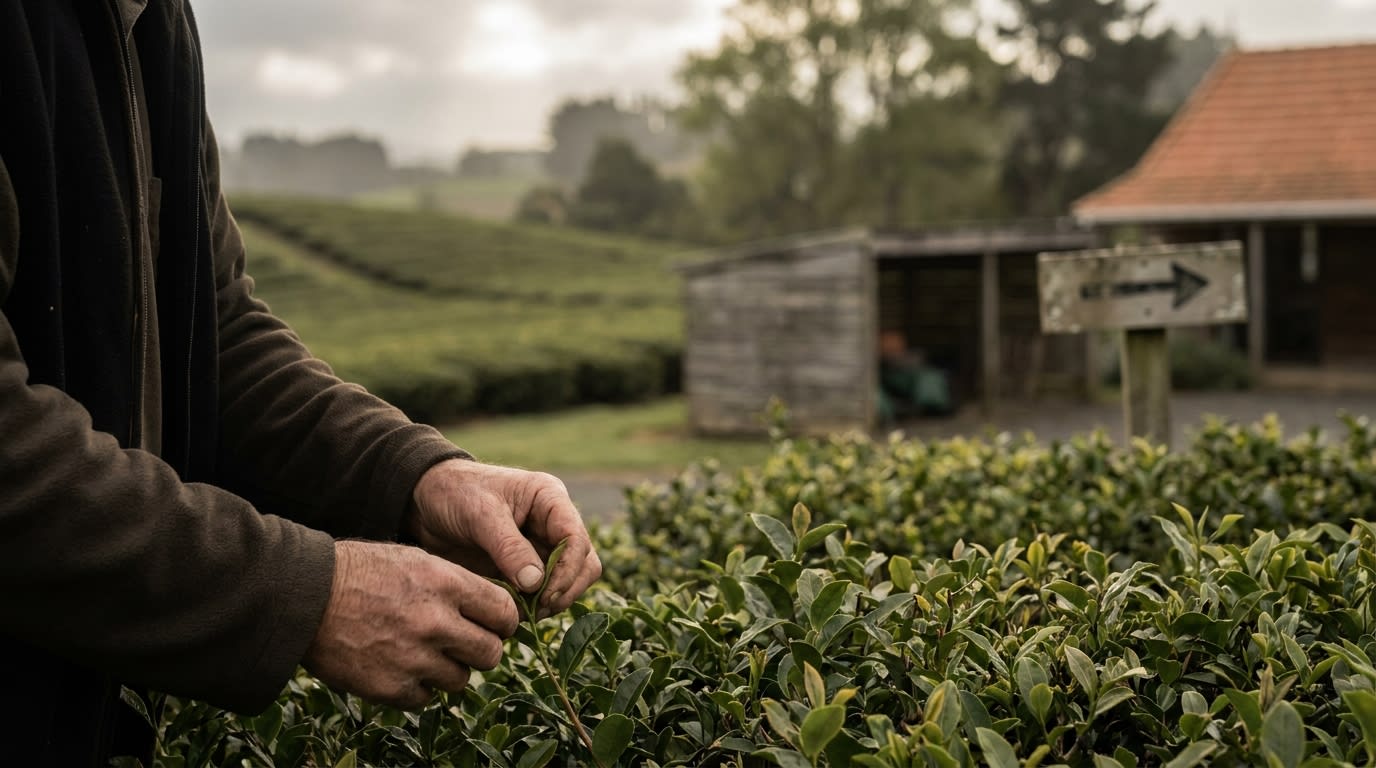
In the rolling green hills of the Waikato, just north of Hamilton, a singular experiment has been quietly unfolding for nearly three decades. Zealong is New Zealand's only commercial Camellia sinensis estate—the pioneer of a tea industry that had never existed in the country—and it's rewriting what we thought possible about terroir, climate adaptation, and the future of tea outside Asia.
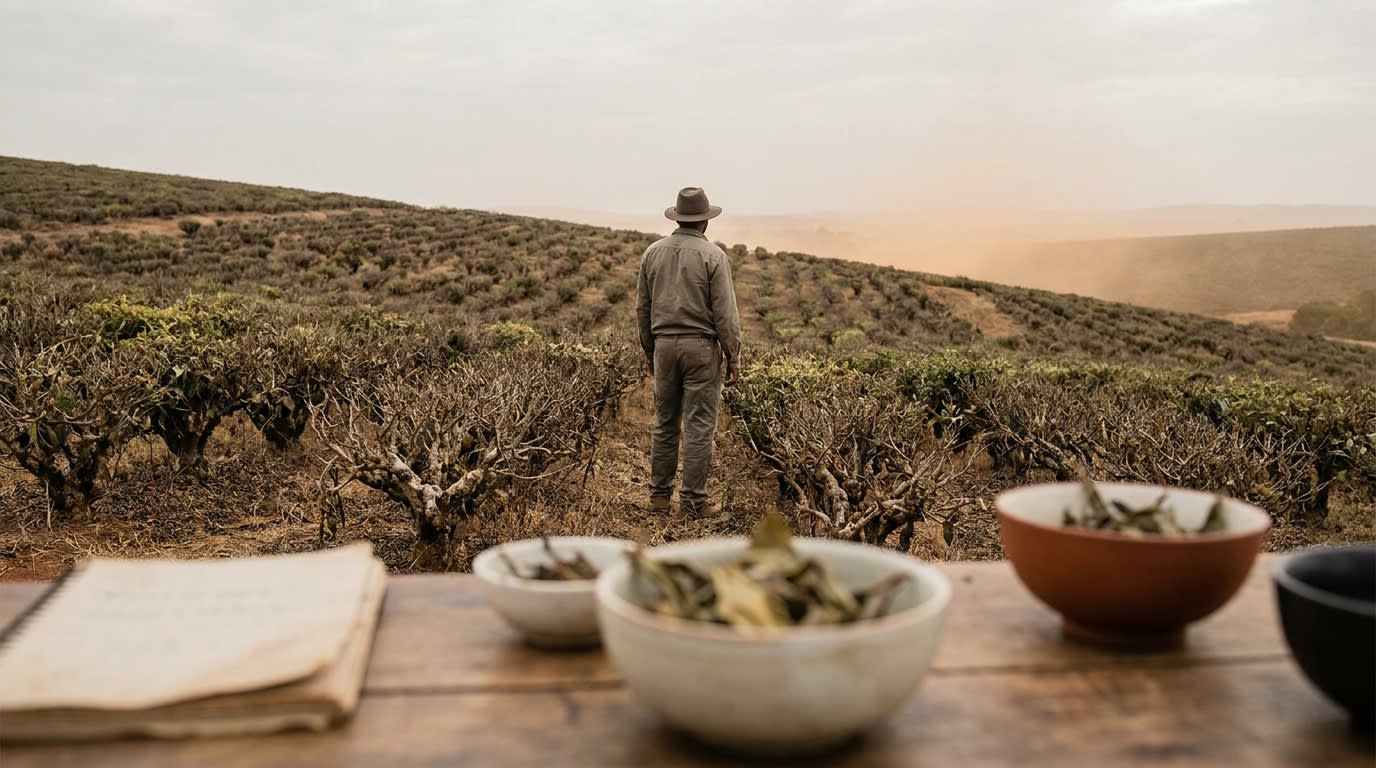
Most Australians and New Zealanders drink tea grown in India, Sri Lanka, China, or Japan. The idea of a commercial tea estate thriving in New Zealand seems improbable at first—too far south, too temperate, too unlike the misty highlands of Darjeeling or the volcanic slopes of Shizuoka. Yet here, on 48 hectares of certified organic former dairy farmland, Zealong grows some 1.2 million tea bushes and produces up to 20 tonnes of tea a year, proving that Camellia sinensis can adapt to the unique conditions of Aotearoa with surprising elegance.
The Waikato Terroir Experiment
Zealong's story begins in 1996, when Taiwanese entrepreneur Vincent Chen purchased land near Gordonton, a rural area roughly 20 kilometres north of Hamilton. Chen came from a family with deep roots in Taiwan's tea industry and saw potential in New Zealand's clean air, reliable rainfall, and mineral-rich volcanic soil. The Waikato region receives approximately 1,200mm of rain annually, spread relatively evenly across the year—far more consistent than many traditional tea regions, which rely on distinct monsoon seasons.
The estate sits at a latitude of roughly 37°S, comparable to parts of northern Tasmania or southern Victoria. While this places it well outside the traditional "tea belt" (between about 45°N and 35°S globally), the maritime climate moderates temperature extremes. Winter lows often drop to around 1–4°C, and summer highs average about 23–25°C—conditions that stressed the plants initially but ultimately produced leaves with distinctive flavour compounds.
The estate's own account begins in 1996, when 1,500 selected tea cuttings were imported from Asian growing regions; after a long quarantine imposed by New Zealand's Ministry of Agriculture only 130 plants survived, and today's 1.2 million bushes were propagated from them. Zealong does not publish a first-commercial-harvest date on its site, so this article no longer states one. The patience involved reflects the reality of establishing Camellia sinensis in new terroir: the shrubs needed time to develop deep root systems, adapt to local soil microbiology, and reach the maturity necessary for quality leaf. The estate now has its own indoor processing factory and a public teahouse in the original farmhouse.
From Taiwanese Cultivar to Kiwi Leaf
Zealong grows primarily Taiwanese oolong cultivars, brought as cuttings from established tea gardens in Taiwan's central highlands. These plants are genetically predisposed to produce the floral, creamy notes characteristic of high-mountain oolong, but their expression in New Zealand soil is subtly different.
The Waikato's volcanic terroir imparts a distinct minerality—a clean, almost sweet earthiness that Taiwanese tasters have described as "bright" compared to the heavier, more resinous notes of traditional Formosa oolongs. The estate is certified organic by BioGro New Zealand (with compliance to EU, USDA, Chinese and Japanese organic rules), and the company says its farm team works with zero sprays. Those are two separate things: certification verifies compliance with an organic standard that restricts inputs, while the no-spray practice is Zealong's own stated choice. Some argue the approach lets the terroir express itself more clearly; that is a tasting opinion rather than a measurable fact.
The absence of tea pests common to Asia is another hidden advantage. New Zealand's biosecurity protocols and geographic isolation mean Zealong faces fewer specialist tea pests like tea mosquito bugs, though generalist pests such as spider mites and some fungal diseases can still occur. This makes organic farming not just idealistic but genuinely practical.
Hand-Harvest and Seasonal Rhythms
Zealong harvests through the Southern Hemisphere's warmer months—broadly spring to autumn—with the exact schedule varying by season and by the tea being made; the estate does not publish a fixed calendar, so treat month ranges as approximate. Its oolongs are described as made from the top three leaves, rolled into the tight balls that unfurl in the cup.
Zealong describes its approach as combining traditional tea-making knowledge with bespoke machinery for grading, roasting and packaging, and says processing is carried out entirely indoors under strict food-safety protocols. We have not verified the proportion of leaf that is hand-plucked versus machine-harvested, so earlier claims about all-hand harvesting have been removed.
Oolong is a partially oxidised tea: after plucking, the leaves are withered, bruised to start oxidation, heated to stop it, then rolled, dried and—for some styles—roasted. Zealong's three oolongs are distinguished on the estate's own descriptions chiefly by roasting rather than by stated oxidation levels, and the company does not publish oxidation percentages, so none are given here. Generations of tea masters, in the estate's words, bring their knowledge to the process; Zealong's brand name itself is a contraction of "New Zealand" and "Oolong", the first tea perfected on the estate.
Tasting Notes: What Makes Zealong Distinct
Zealong's Origins Collection currently lists five teas: a Green Tea, three oolongs—Pure (unroasted, which the estate describes as buttery with vanilla and toasted-bread notes), Aromatic (roasted at high temperature, sweet and toasty with floral hints) and Dark (roasted longer, with honey and toasted sesame)—and a Black Tea. Flavoured blends, tea powders and limited-edition New Zealand botanical blends sit alongside them.
The Pure is perhaps the most surprising to those expecting a Taiwanese High Mountain profile. It's lighter-bodied, with a pronounced floral lift—jasmine and honeysuckle—but a crisp, almost saline finish that doesn't appear in subtropical oolongs. Some describe it as having a "green edge," reminiscent of New Zealand's native bush after rain.
The Aromatic, with its high-temperature roast, develops richer fruit notes—white peach, apricot, a touch of lychee—but retains that signature minerality. It's less creamy than a classic Taiwanese nai xiang (milk oolong), but perhaps more refreshing, with brighter acidity.
The Dark is the boldest, roasted longest of the three. Here, you taste roasted chestnuts, dark honey, and a gentle smokiness—not from lapsang-style smoking, but from the roasting. It's closer to a traditional Wuyi oolong in spirit, though lighter in body.
Where to Experience Zealong in Australia and New Zealand
The Zealong tea estate itself, at 495 Gordonton Road, Hamilton, is open for tastings, estate tours and tea service in its teahouse and award-winning glass-walled retail boutique. Check the estate's website for current opening hours and bookings, which are recommended, especially during summer weekends.
Within New Zealand, Zealong sells through its own online shop and estate boutique, and through retail stockists that change over time; the estate's website is the reliable place to check current stockists rather than any list we could print here.
In Australia, availability through grocers and tea specialists has been intermittent and we have not been able to confirm current stockists, so none are named.
Online, Zealong ships from New Zealand via its website; check the checkout for current international postage rates and delivery times, which we have not verified.
The Economics of Southern Hemisphere Tea
Zealong's teas are not inexpensive—they sit in the premium tier alongside high-mountain Taiwanese oolongs and competition-grade Chinese teas (see the estate's shop for current prices, which we do not reproduce here). The pricing reflects genuine costs: New Zealand wage rates, organic certification, small-batch processing, and the reality of being a single-estate producer without economies of scale.
Zealong's premium is explained not by scarcity marketing, but by labour realities and organic inputs. It's also worth noting that buying Zealong supports a genuinely local (from a trans-Tasman perspective) agricultural experiment—your money goes to New Zealand farmers and processors, not multinational commodity chains.
Climate Resilience and the Future
One of the more intriguing aspects of Zealong's success is what it suggests about Camellia sinensis adaptation. As climate change shifts traditional tea-growing zones—droughts in Darjeeling, erratic monsoons in Assam, warming in Japanese highlands—Zealong demonstrates that tea can thrive in cooler, more temperate zones previously thought unsuitable.
New Zealand's stable maritime climate, abundant water, and strict environmental standards may represent a model for future tea cultivation in non-traditional regions. Across the Tasman, Australia has had commercial tea estates for decades—Nerada on the Atherton Tablelands, Daintree in Far North Queensland and Madura in northern New South Wales among them—alongside smaller experimental plantings in cooler southern states. Zealong's success adds to that Southern Hemisphere industry rather than standing alone in it; what makes it singular is that it built a tea industry in a country that had none.
Green and black teas are now part of Zealong's core Origins Collection rather than experiments. The estate describes its Green Tea as silky and floral with toasted-chestnut notes and a sweet finish, and its Black Tea as full-bodied and deep amber with a honeyed undertone—both recognisably gentler than a Zhejiang green or an Assam, which is the terroir speaking.
Gongfu Brewing at Home
Zealong oolongs are forgiving—they'll produce a decent cup with a simple western-style steep (3g per 250ml, 90°C water, 3–4 minutes)—but they genuinely shine when brewed gongfu style. Use a small gaiwan or Yixing pot (100–120ml), 5–6g of leaf, and water at 95°C for the first infusion.
Rinse briefly (5 seconds), discard, then steep for 20–30 seconds for the first proper infusion. Increase by 10 seconds for each subsequent steep. Zealong's Pure is good for 4–5 infusions; the Aromatic and Dark can go 6–7 if you're patient. The flavour arc is classic oolong: floral and bright early on, deepening to honey and stone fruit in the middle infusions, finishing with a gentle grain sweetness.
The minerality becomes most apparent in the third and fourth infusions—that clean, almost chalky finish that reminds you this tea came from volcanic soil half a world away from where oolong was born.
A Quiet Revolution in a Teacup
Zealong will never compete with the volume production of Fujian or the heritage prestige of Taiwan's Alishan. But it doesn't need to. What Vincent Chen and his team have built over nearly three decades is proof that Camellia sinensis is more adaptable than colonial tea history suggested, that organic methods can be commercially viable at small scale, and that terroir—real terroir, not marketing terroir—can be tasted in a cup.
For those of us in Australia and New Zealand, it's also a reminder that the tea in our cupboards doesn't have to come from the other side of the world. Sometimes the most interesting cup is the one grown two hours up the road, in soil that smells like home.
Follow The Tea List