What Makes Oolong Unique? The Art of Partial Oxidation
Not green, not black — oolong is the in-between family that rewards craft. The science (and art) of partial oxidation, explained.
Sameera
· 8 min read
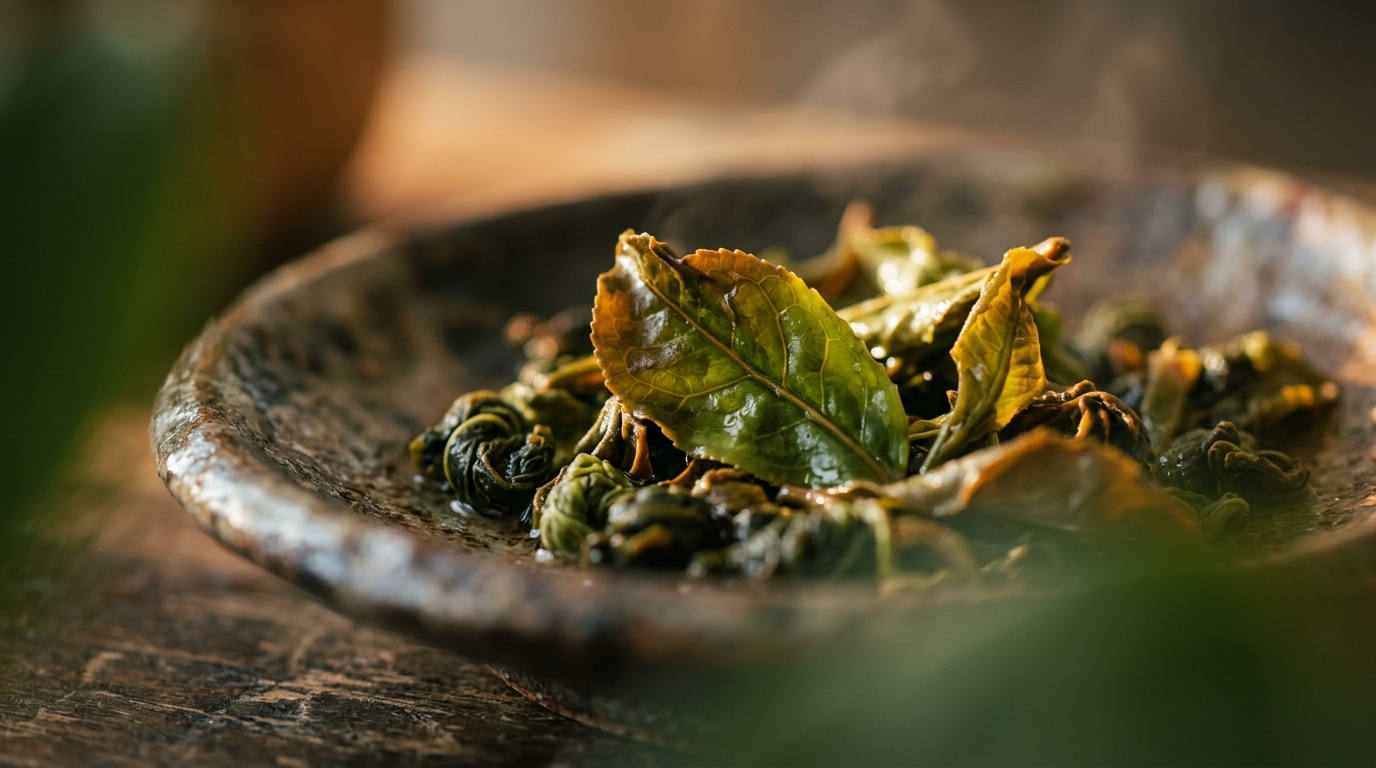
Oolong is the most under-appreciated of the six tea families in the West, partly because it's the hardest to pin down. White, green, and black teas have a clear identity — minimally processed, unoxidised, heavily oxidised. Oolong is everything in between, and that 'in between' is one of the most fertile creative spaces in beverage-making.
The science. Oxidation in tea is the same process that browns a sliced apple — enzymes in the leaf react with oxygen and convert pale catechins into darker, more complex compounds (theaflavins, thearubigins). Green tea halts this process within hours of picking; black tea pushes it to a very high level. Oolong stops it somewhere in the middle, generally showing partial oxidation to varying degrees, depending on the maker.
Lightly oxidised oolong (roughly 10–30%). Rolled into tight green pellets, these teas — Taiwanese High Mountain, Tieguanyin from Anxi — open up to taste of orchid, butter, sweet pea, and gardenia. Bright, almost creamy. The most accessible entry point for new oolong drinkers.
Heavily oxidised oolong (often around 50–80%). Long, twisted dark leaves from China's Wuyi mountains (Da Hong Pao, Rou Gui) taste of stone fruit, dark chocolate, woodsmoke, and an unmistakable mineral pull called yan yun, or 'rock rhyme.' Often roasted multiple times over charcoal. Closer in character to a single-malt whisky than to most teas.
Why it rewards craft. Because the oxidation level is a continuous variable, oolong is the family where the maker's hand shows most clearly. Two oolongs from the same garden, picked on the same day, can taste completely different depending on how the maker chooses to wither, bruise, oxidise, and roast. The leaf is canvas; the maker is the artist.
If you've never explored oolong seriously, start with a Taiwanese Dong Ding or a Wuyi Shui Xian. Brew gongfu-style — small pot, lots of leaf, short infusions — and you'll understand within twenty minutes why oolong is the connoisseur's tea.
Follow The Tea List