Yunnan, China: Birthplace of Tea and Home of Pu-erh
The tea forests of Yunnan are home to trees that local tradition counts in centuries. A journey to the misty homeland of Camellia sinensis.
Sameera
· 10 min read
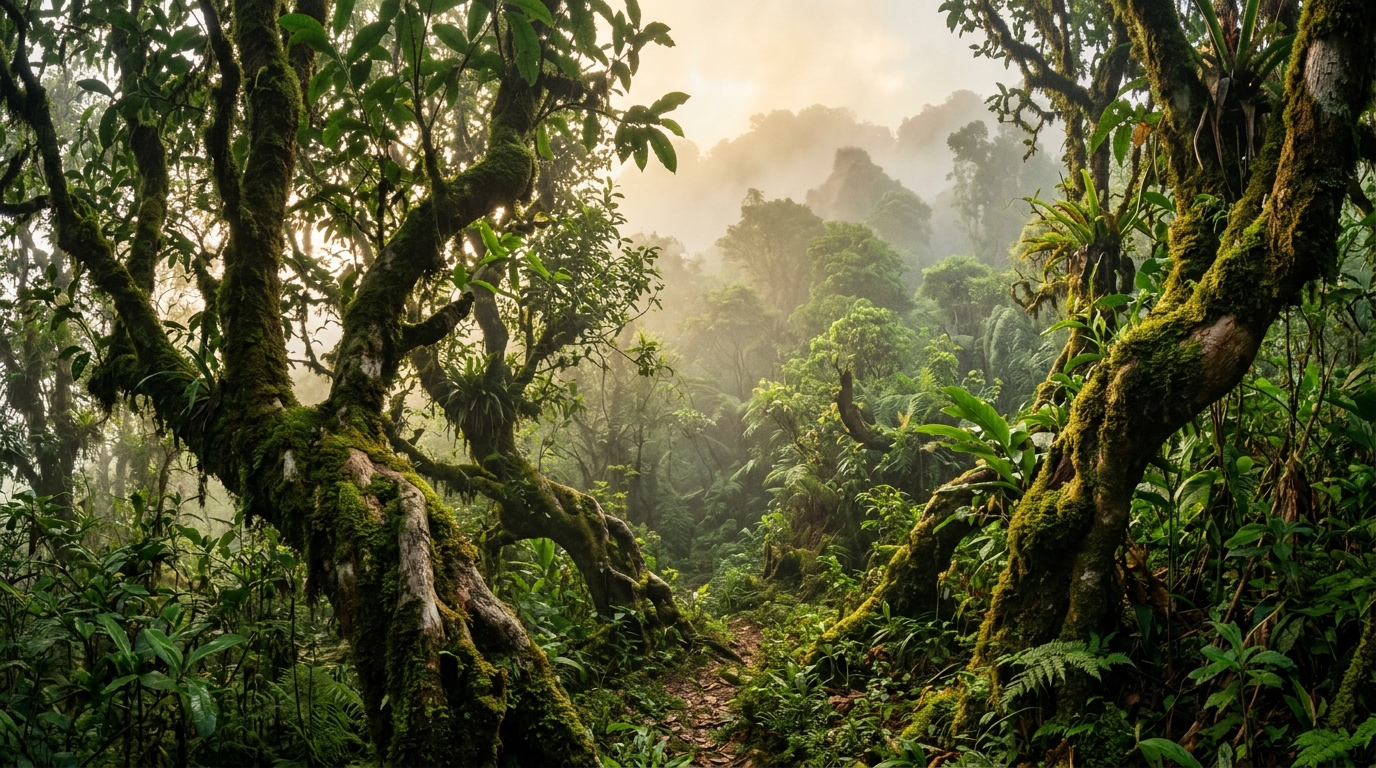
If tea has a homeland, Yunnan is a primary center. The mountainous southwestern province of China, bordering Myanmar, Laos, and Vietnam, is a major genetic and historic center of Camellia sinensis diversity. Wild and ancient cultivated tea trees still grow in its forests — some of them claimed by local tradition to be over 1,000 years old, with trunks thick enough to require two arms to circle. Those ages are estimates and claims rather than measurements; trees are rarely cored to count rings.
The ancient tea tree forests. The most famous of Yunnan's old trees was the Bada "king" wild tea tree in Menghai County, Xishuangbanna, popularly described as around 1,700 years old; it was reported to have died and fallen in 2012, so it is a landmark of the recent past rather than a living tree you can visit. Other ancient groves in Lincang and Pu'er prefectures contain trees locally said to be hundreds of years old, still harvested by Dai, Hani and Bulang villagers. These are not the trimmed waist-high bushes of an industrial estate. They are forest trees, climbed by hand each spring with bamboo ladders.
Why Yunnan tea tastes different. The local varietal — Camellia sinensis var. assamica — has larger, thicker leaves and often higher polyphenol levels than many small-leaf Chinese cultivars, depending on cultivar and growing conditions. Combined with the mineral-rich mountain soils and the high-elevation climate, the result is a tea with substantial body, depth, and a notable aging potential prized by many collectors.
The pu-erh capital. Under Chinese geographical-indication law, Yunnan is the only place where genuine pu-erh can be made. The two main styles are sheng (delicate, floral, slow-aged) and shou (rich, earthy, pile-fermented), with famous regional profiles from areas like Menghai and Yiwu. Both are commonly pressed into bingcha (cake), tuocha (bowl) or zhuancha (brick) shapes, though loose-leaf pu-erh is also sold, and much of it is drunk young rather than aged; ageing for years in suitable storage is one path, not a requirement.
Beyond pu-erh. Yunnan also produces excellent black tea — Dianhong — bright golden-tipped leaves that brew into a malty, honey-sweet cup. Less famous internationally than Indian black teas, but a growing favourite among specialty buyers.
Why visit. If you ever have the chance to spend a week in Yunnan during the spring harvest, take it. You will eat tea-leaf salads, watch villagers climb ancient trees barefoot, and drink, in a single sitting, more variety than most Western cafés stock in a year. It is the most direct connection to tea's deep past that the modern world still offers.
Follow The Tea List